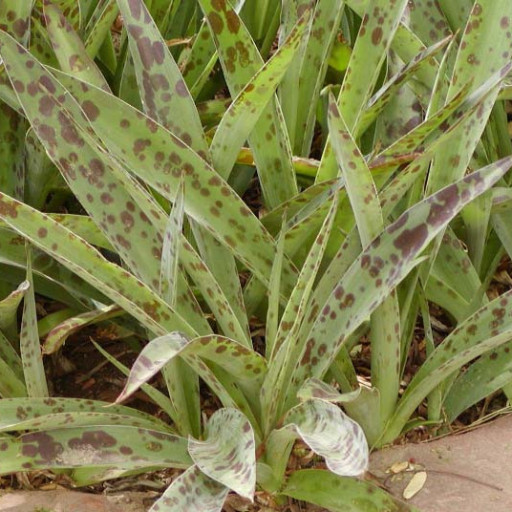
Plant Overview
Often called the Texas Tuberose or Spice Lily, this plant is a hidden gem of the Chihuahuan Desert. While it was once classified in the Manfreda genus, it has recently joined the Agave family, bringing a touch of spotted mystery to succulent collections. It is beloved by night-gardeners for its intoxicatingly sweet fragrance that drifts through the air after sunset.
🔍 How to Identify
- 🐆 The "Leopard" Leaves: Unlike the stiff, sharp leaves of most Agaves, these are soft, flexible, and rubbery, decorated with distinct dark purple or chocolate-colored spots.
- 📏 Low-Profile Rosette: It grows in a low, spreading star shape, rarely reaching more than a foot in height, making it an excellent "understory" succulent for larger desert landscapes.
- 🌸 Metamorphic Flowers: It sends up a tall, slender spike topped with flowers that perform a color-changing act, starting as a pale creamy-white or green and deepening into a rosy pink or maroon as they age.
🏡 In Your Garden
- 🏜️ The Drainage Dilemma: Because it evolved in rocky, limestone-rich soils of Texas and Mexico, it is prone to crown rot if left in soggy potting mix. It prefers "neglectful" watering and a gritty, sandy substrate that mimics its desert home.
- ☀️ Light & Pigment: The vibrancy of the purple spots depends heavily on sunlight. In deep shade, the spots may fade to a dull green, so give it bright, filtered light to keep its "leopard" look sharp.
- 🦋 Pollinator Magnet: The flowers are rich in nectar and highly fragrant, specifically designed to attract sphinx moths and other nocturnal pollinators to your yard.
⚠️ Safety & Toxicity
- 🌵 Mild Irritant: Unlike its larger Agave cousins, it lacks the lethal "end-spine," but the sap contains saponins.
- 🐾 Pet & Child Safety: If leaves are crushed or chewed, the sap can cause mouth irritation or skin rashes. It is best kept on a high shelf or in a decorative pot away from curious nibblers.
✨ Fun Fact
The flowers of the Agave maculata are famous for their "fragrance timeline"—they smell most potent at night to attract moths, but by morning, the scent shifts to a spicy, ginger-like aroma, giving it the nickname "Spice Lily."

Detailed Care Instructions
To grow Agave Maculata, also known as the Century Plant, you can follow these steps:
- Choose the right location: Agave Maculata thrives in full sun to partial shade. Make sure to select a well-draining location, as excessive moisture can cause root rot.
- Prepare the soil: Agave plants prefer sandy or loamy soil with good drainage. You can amend the soil with organic matter, such as compost, to improve its fertility and drainage.
- Planting: Dig a hole slightly larger than the root ball of the plant. Place the Agave Maculata in the hole and backfill with soil, pressing it gently to remove any air pockets. Ensure that the plant is planted at the same depth as it was in the container.
- Watering: After planting, thoroughly water the Agave Maculata to settle the soil. During the establishment period, water the plant regularly to keep the soil slightly moist, but not waterlogged. Once the plant has established, it is drought-tolerant and requires less frequent watering.
- Mulching: Apply a layer of organic mulch around the base of the plant to aid in moisture retention and weed suppression. Keep the mulch away from the stem to prevent rotting.
- Fertilization: Agave Maculata doesn't require frequent fertilization, but you can apply a slow-release, balanced fertilizer in spring to provide nutrients throughout the growing season.
- Pruning: Agave Maculata doesn't require regular pruning, but you can remove dead or damaged leaves as needed. However, be cautious of the sharp spines along the leaf margins.
- Protection from frost: If you live in a region with cold winters, it's important to protect the Agave Maculata from frost. Cover the plant with a frost cloth or move potted plants indoors during cold spells.
- Propagation: Agave Maculata can be propagated from seeds, offsets (pups), or by removing rhizomes during repotting. Allow the rhizomes or offsets to dry for a few days before replanting.
- Maintenance: Agave Maculata is generally a low-maintenance plant. Regularly inspect for pests like mealybugs or scales and take appropriate measures to control them. Monitor the plant's growth and adjust water and sunlight as needed.
Remember, Agave Maculata takes several years to flower, and after blooming, the plant typically dies. However, it produces offsets or pups that can be replanted to continue growing the species.

Place in a bright room that is sun drenched almost all day. Or directly in a south-facing window.

Agave Maculata is a type of succulent plant with long, spiky leaves that grow in a rosette shape. To water this plant, you want to make sure that the soil is dry before adding any water. Watering too often can lead to root rot, so it's important to let the soil dry out completely between waterings.
When you do water, you want to give the plant a deep watering, making sure that the water reaches all the way down into the roots. It's best to water from the base of the plant, rather than pouring water directly onto the leaves. This helps prevent any water from getting trapped in the center of the rosette, where it can lead to rot.
In general, Agave Maculata is drought-tolerant and can go for long periods of time without water. During the growing season, you may want to water every 2-3 weeks, but in the winter months, you can cut back to once a month or even less frequently. Just be sure to monitor the soil and only water when it's completely dry.
To fertilize Agave Maculata plant, follow these instructions:
- Choose a balanced, water-soluble fertilizer with an N-P-K ratio of 10-10-10 or 20-20-20.
- Dilute the fertilizer according to the instructions on the package.
- Apply the fertilizer during the plant's active growing season, typically from spring to fall.
- Ensure that the soil is slightly moist before applying the fertilizer.
- Use a watering can or sprayer to evenly distribute the diluted fertilizer around the base of the plant.
- Avoid getting the fertilizer on the leaves to prevent potential damage.
- Water the plant thoroughly after fertilizing to help the nutrients penetrate the soil.
- Repeat the fertilization process every 4 to 6 weeks during the growing season, adjusting the amount and frequency based on the plant's response and the fertilizer manufacturer's recommendations.
Remember to always follow the specific instructions and guidelines provided on the fertilizer packaging for best results.
The soil that is ideal for this plant will have good drainage, moderate organic matter, and a slightly acidic to neutral pH level. A loose, sandy soil with minimal clay is preferred to ensure that water can easily move through the soil and avoid waterlogging at the roots. The presence of organic matter aids in nutrient retention and promotes healthy root growth. Avoid using heavy, compacted soil that may suffocate the roots. A blend of sandy loam, peat moss, and perlite is a great choice for this plant. Mixing in some coarse sand can also help improve drainage.
Agave Maculata is a succulent plant native to certain regions. Here are the steps to propagate Agave Maculata:
- Select a healthy Agave Maculata plant from which you will take the cuttings. Ensure that the plant is mature and has several leaves.
- Prepare your tools: you will need a sharp, sterilized knife or pruning shears, a clean container, well-draining soil, and rooting hormone (optional).
- Choose a suitable leaf or offset. An offset is a baby plant that grows near the base of the mother plant. It should have several leaves and its own root system.
- With a clean, sharp knife or pruning shears, cut the chosen leaf or offset from the mother plant at its base. Ensure that the cutting is clean and that you avoid damaging the main plant.
- If using a leaf cutting, allow it to callus over by placing it in a cool, shaded area for a few days. This allows a protective layer to form on the cut surface.
- Fill a clean container with well-draining soil. You can use a specialized succulent or cactus soil mix, or create your own by combining regular potting soil with coarse sand or perlite for better drainage.
- If desired, dip the cut end of the offset or leaf cutting into rooting hormone to encourage faster root development. This step is optional but may increase success rates.
- Make a planting hole in the soil using your finger or a small tool, and gently place the cutting or offset inside. Ensure that the planting hole is deep enough to secure the cutting or offset, but avoid burying it too deeply.
- Place the container in a bright location with indirect sunlight. Avoid exposing it to harsh, direct sunlight as it may scorch the young plant.
- Water the newly planted cutting or offset lightly, moistening the soil but avoiding overwatering. Agave Maculata is a succulent and can withstand drought, so it's important not to overwater and risk root rot.
- Allow the cutting or offset to establish itself in its new container. The rooting process may take several weeks to months, depending on environmental conditions and the health of the cutting.
- Monitor the plant's progress, paying attention to new leaf growth or root development. Once the new plant shows healthy growth, you can begin treating it like a mature Agave Maculata plant.
Remember to be patient during the propagation process, as successes may vary. With proper care and attention, your new Agave Maculata plant will thrive and become a beautiful addition to your garden or indoor collection.
Common pests of the spice lily include Scale insect, mealybugs. Make a habit of checking your spice lily frequently for pests so that any infestations can be caught and managed early.








