Plant Overview
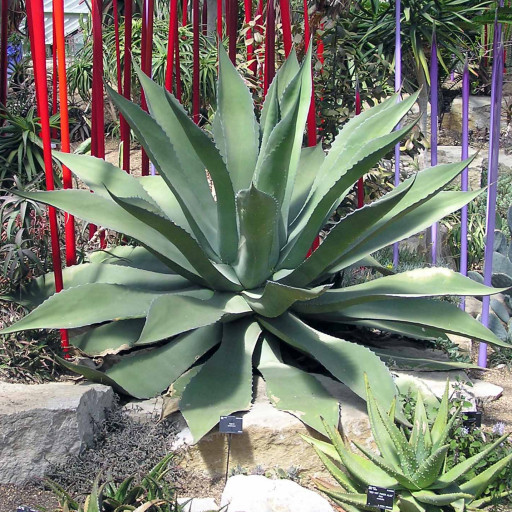
Known as the Butterfly Agave, this architectural masterpiece looks like a frozen, turquoise lotus rising from the desert floor. Native to the high altitudes of Mexico, it is a favorite among succulent collectors for its compact size and perfectly symmetrical rosette. In its homeland, it is famously used to produce "Tobalá," one of the most prized and flavorful varieties of artisanal Mezcal.
🔍 How to Identify
- 🦋 The Rosette: Grows in a tight, cabbage-like shape, usually reaching only 12–18 inches in diameter, making it much smaller and more manageable than its giant relatives.
- 🍃 Leaf Texture: The leaves are thick, spatulate (spoon-shaped), and covered in a waxy, glaucous coating that gives them a silvery-blue or sea-foam green hue.
- 📌 Ornamental Spines: The leaf margins are wavy with small teeth, ending in a prominent, often twisted, reddish-brown terminal spine that darkens as the plant matures.
🏡 In Your Garden
- ☀️ Light and Color: While it loves bright light, this Agave appreciates a bit of afternoon shade in scorching climates. Intense sun often "stresses" the leaf tips into beautiful shades of red and purple.
- 💧 The Drought Strategy: This plant is the definition of "set it and forget it." It stores vast amounts of water in its fleshy leaves, meaning it is far more likely to die from over-pampering (root rot) than from thirst.
- 🪴 Pot Culture: Because it has a relatively shallow root system and stays small, it is one of the best Agaves for decorative containers or small rock gardens where space is a premium.
⚠️ Safety & Toxicity
- 🌵 Physical Hazard: The terminal spines are very sharp and rigid. Place this plant away from walkways or areas where children and pets play to avoid accidental punctures.
- 🧪 Sap Irritation: Like many Agaves, the internal sap contains calcium oxalate crystals. If the leaves are cut or crushed, the sap can cause skin rashes or "Agave dermatitis" upon contact.
- 🐾 Pet Safety: Ingestion can cause mouth irritation and stomach upset in cats and dogs, though the prickly exterior usually acts as a natural deterrent.
✨ Fun Fact
Unlike many other Agaves that produce "pups" (clones) around their base, Agave potatorum often grows as a solitary plant. Because it rarely produces offsets, it must be grown from seed, which is why it remains a sought-after gem in the nursery trade!

Detailed Care Instructions
To grow Agave Potatorum plant, you can follow these steps:
- Choose a suitable location: Agave Potatorum requires full sun, so select a spot in your garden that receives at least 6-8 hours of direct sunlight every day. Make sure the soil is well-drained as Agave plants cannot tolerate wet feet.
- Prepare the soil: Agaves prefer sandy or loamy soil that is slightly acidic to neutral (pH 6-7). Amend the soil with compost or well-rotted manure to improve its fertility and drainage.
- Planting: Dig a hole that is slightly larger than the root ball of your Agave Potatorum plant. Place the plant in the hole, ensuring the top of the root ball is level with or slightly above the soil surface. Backfill the hole with soil, gently firming it around the plant.
- Watering: Water the plant thoroughly after planting to settle the soil around the roots. Agaves are drought-tolerant plants, so water sparingly once the plant is established. Water only when the top inch of soil feels dry. Overwatering can lead to root rot.
- Mulching: Apply a layer of organic mulch around the base of the plant to conserve moisture, suppress weeds, and moderate soil temperature. Avoid piling the mulch against the stem as it can cause rot.
- Fertilizing: Agave Potatorum plants are low-maintenance and do not require frequent fertilization. However, you can apply a balanced slow-release granular fertilizer once or twice during the growing season to provide essential nutrients.
- Pruning: Agave Potatorum does not need pruning unless there are dead or damaged leaves. Simply remove any brown or yellowed leaves close to the base of the plant using clean and sharp pruning shears.
- Protecting from frost: Agave Potatorum is not frost-tolerant, so if you live in a cold climate, it's best to grow it in a container that can be brought indoors during winter or provide it with frost protection, such as a frost cloth or covering during cold spells.
Remember to check your local plant hardiness zone to ensure Agave Potatorum is suitable for your area, as it is native to Mexico and may not tolerate extremely cold temperatures.

Place in a window with dappled sun or a spot in the middle of a room. Or directly in a window facing west or east.

To water this plant, ensure that the soil is completely dry before watering, and do not overwater as it can cause root rot. Use a watering can or a hose to water the soil directly, being careful not to get water on the leaves or stem. The frequency of watering will depend on the climate and humidity of its environment, but generally it needs to be watered every two to three weeks. Inspect the soil regularly to ensure it is not too wet or too dry.
To properly fertilize this plant, you should first make sure it is well-established and has been potted in a well-draining soil mix. You can then fertilize it once a month during the growing season (typically spring and summer) using a balanced water-soluble fertilizer. Be sure to dilute the fertilizer according to the package instructions before applying it to the plant. Avoid fertilizing in the fall and winter months as the plant is dormant during this time.
Agave Potatorum plants prefer a well-draining soil mixture that is roughly balanced in terms of nutrient content. It is recommended that the soil be a mix of fine sand, perlite, and gritty soil amendments to improve drainage and aeration. Additionally, organic matter such as compost or peat moss can be incorporated to improve water retention and provide additional nutrients. It is important to avoid heavy, compact soils that can trap moisture and lead to root rot. A soil pH of 6.0 to 7.0 is ideal for Agave Potatorum plants. Overall, a well-draining soil mixture with good nutrient availability and a slightly acidic pH is key to ensuring successful growth and health of the plant.
To propagate this plant, you will need to propagate it by using pup or offset. Locate the offsets or small pups that have grown around the base of the mother plant. Carefully remove them using a sharp, sterile knife or shears. Allow the offset to dry for a few days before planting it in well-draining soil. To do this, create a small hole in the soil and insert the offset. Cover it with soil and water it thoroughly.
Another way to propagate is by using leaf cuttings. Cut a healthy leaf from the mother plant using a sharp, sterile knife. Allow the leaf to dry for a few days before planting. Fill a pot with well-draining soil and insert the leaf into the soil at a slight angle, ensuring the base of the leaf is in contact with the soil. Water the soil thoroughly and keep it moist until the new plant develops roots.
It's also possible to propagate this plant by seed. Collect ripe seeds from the mother plant and plant them in well-draining soil. Cover them with a thin layer of soil and keep them moist until they begin to germinate. Once they have developed into seedlings, transplant them into pots or the ground.
Common pests of the verschaffelt agave include Scale insect, mealybugs. Make a habit of checking your verschaffelt agave frequently for pests so that any infestations can be caught and managed early.








