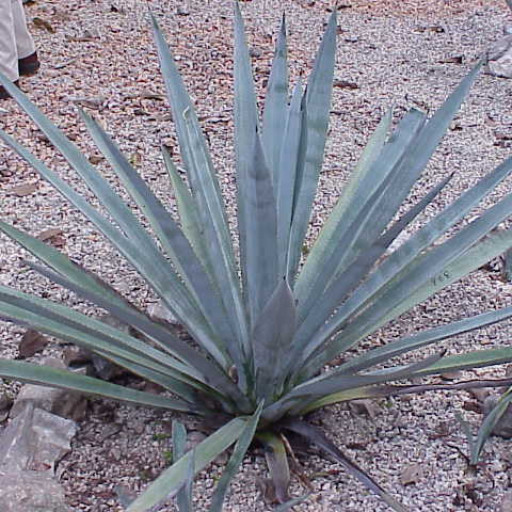
Plant Overview
Known as the "Blue Agave" or "Agave Weber," this stunning succulent is the soul of Mexico’s most famous spirit: Tequila. While it thrives in the volcanic soils of Jalisco, its architectural silhouette and striking silver-blue hue have made it a global favorite for modern xeriscaping and dramatic garden statements. It is a slow-growing masterpiece that spends years storing sugar before its one-and-only spectacular bloom.
🔍 How to Identify
- 💙 Silvery-Blue Foliage: The leaves are thick, fleshy, and coated in a waxy "bloom" (epicuticular wax) that gives them their signature dusty, cool-toned color.
- ⚔️ Formidable Spines: Each leaf is lined with small, sharp teeth and tipped with a dark, needle-like terminal spine that can easily pierce heavy clothing.
- 📏 Architectural Rosette: It grows in a symmetrical, starburst-like cluster. At maturity, a single plant can reach over 6 feet in height and width, resembling a giant, rigid pineapple.
🏡 In Your Garden
- 🌋 Volcanic Origins: This plant evolved in rocky, mineral-rich soils. In a garden setting, it demands excellent drainage; it would rather be parched for months than have "wet feet," which causes the base to rot almost overnight.
- 🌵 The Long Game: Agave tequilana is "monocarpic," meaning it blooms only once at the end of its life (usually after 8–15 years). It sends up a massive flower spike that can reach 15 feet high, after which the main plant dies, leaving behind small clones at the base.
- 🧬 The Pup Parade: As the mother plant matures, it will produce "hijuelos" or pups around its base. These can be easily detached and replanted to expand your collection or share with friends.
⚠️ Safety & Toxicity
- 🛡️ Physical Hazard: The terminal spines are extremely sharp. If planted near walkways or in households with curious pets and children, it is common practice to "tip" the plant by snipping off the very point of the thorns with pliers.
- 🧪 Sap Sensitivity: The internal juice contains calcium oxalate crystals. If a leaf is cut or crushed, the sap can cause "Agave Dermatitis"—a stinging, itchy, and sometimes blistering rash on the skin.
- 🐾 Pet Warning: While not usually tempting to eat due to its toughness, the sap is considered mildly toxic to cats and dogs if ingested, causing mouth irritation and stomach upset.
✨ Fun Fact
The Blue Agave relies almost entirely on the Greater Long-nosed Bat for pollination! The plant produces towering flower stalks that open at night, offering a nectar feast to the bats, which in turn carry pollen across the desert to ensure the species' genetic diversity.

Detailed Care Instructions
To successfully grow Agave Tequilana, also known as Blue Agave, follow these steps:
- Climate and Location:
- Choose a location with full sun exposure.
- Ensure the climate is dry and arid, similar to the highlands of Mexico.
- Agave Tequilana thrives in USDA hardiness zones 8 to 11, where temperatures do not drop below 10°F (-12°C).
- Choose a location with full sun exposure.
- Soil Preparation:
- Agave prefers well-draining soil with low organic matter.
- Amend heavy soils with sand or gravel to increase drainage.
- The pH level should range between 6 and 7.
- Agave prefers well-draining soil with low organic matter.
- Planting:
- Plant Agave Tequilana in the early spring, after the last frost.
- Dig a hole two times the width and depth of the root ball.
- Place the plant in the hole and backfill with soil, ensuring the crown remains above ground level.
- Firm the soil gently around the base of the plant.
- Plant Agave Tequilana in the early spring, after the last frost.
- Watering:
- Water the newly planted Agave Tequilana initially to settle the soil.
- Once established, water sparingly as the plant is drought-tolerant.
- Water only when the soil is dry about 2 inches (5 cm) below the surface.
- Avoid overwatering, as it can lead to root rot.
- Water the newly planted Agave Tequilana initially to settle the soil.
- Fertilization:
- Agave Tequilana plants generally do not require much fertilization.
- Apply a slow-release, balanced fertilizer in early spring if desired.
- Avoid excessive nitrogen, as it can negatively impact the plant's health.
- Agave Tequilana plants generally do not require much fertilization.
- Maintenance:
- Remove any dead or damaged leaves by cutting them off at the base.
- Protect the plant from extreme cold by covering it or moving it indoors during freezing temperatures.
- Watch out for pests like mealybugs or spider mites and treat as needed.
- Agave Tequilana typically takes 8 to 10 years to mature and produce flowers.
By following these steps and providing the appropriate care, you can successfully grow Agave Tequilana plants at home.
- Remove any dead or damaged leaves by cutting them off at the base.

Place in a bright room that is sun drenched almost all day. Or directly in a south-facing window.

To properly water this type of plant, it is recommended to check the soil for dryness and water accordingly. It is important to avoid overwatering, which can lead to root rot. Watering should be done deeply and infrequently to encourage a healthy root system and prevent water from pooling on the surface. Depending on the climate and location, watering may need to be adjusted during different seasons. Additionally, rainwater can be a good option for watering as it is natural and free of chemicals. Overall, the key is to be mindful of the plant's needs and ensure proper drainage to avoid any issues.
First, prepare a well-draining soil mix with equal parts sand, perlite, and potting soil. Use a balanced, water-soluble fertilizer with a ratio of 10-10-10 during the growing season. During the dormant season, reduce the frequency of fertilizer application. Apply the fertilizer at the base of the plant and avoid getting it on the leaves or stem. Water the plant after fertilizing to help the nutrients reach the roots.
The best soil for the particular plant you are referring to needs to be well-draining and coarse to provide adequate oxygen to the plant's roots. An ideal mixture could consist of a mix of sand, gravel, and perlite. The soil should also be slightly acidic with a pH range of 6.5 to 7.5. The plant prefers not to be watered too frequently, so the soil should be allowed to dry out between watering. Adding organic matter to the soil, like compost, can also improve drainage and provide nutrients for the plant.
Propagation of this plant can be done through the use of its small offsets, also known as pups that grow from the main plant. Once the offsets have grown a few inches tall, they can be carefully removed with a clean, sharp knife or pruning shears. It is important to make sure the pup has its own roots before removing it from the mother plant.
Once separated, the pup should be allowed to dry in a cool, dry place for a few days before planting. It is important to plant the pup in a well-draining soil mix and water sparingly until it has established roots and begins to show signs of new growth. The newly planted Agave Tequilana should be placed in a sunny location and watered only when the soil has completely dried out. With proper care, the plant will continue to grow and produce new pups, allowing for continued propagation.
Common pests of the tequila agave include Scale insect, mealybugs. Make a habit of checking your tequila agave frequently for pests so that any infestations can be caught and managed early.








