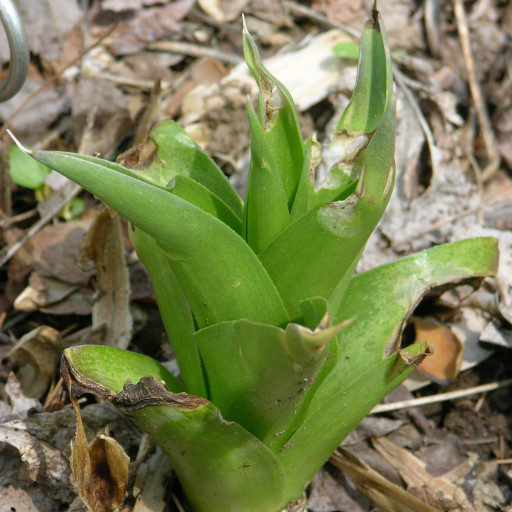
Plant Overview
Known affectionately as the False Aloe or Virginia Agave, this unique succulent is a quiet rebel of the plant world. While most Agaves are synonymous with the arid deserts of the Southwest, this species is the only one native to the Eastern United States. It brings a touch of prehistoric, structural beauty to meadows and rock gardens, transitioning from a low-profile rosette to a towering, alien-like flower spike in mid-summer.
🔍 How to Identify
- 🌿 The Rosette: It forms a basal cluster of fleshy, strap-shaped leaves that are olive green and often decorated with striking purple or maroon spots.
- 📏 The Texture: Unlike the stiff, "armed" leaves of its desert cousins, these leaves are surprisingly rubbery and lack the sharp terminal spines or teeth that define many Agave species.
- 🌻 The Bloom Spike: In summer, it sends up a dramatic, leafless stalk that can reach up to 6 feet tall, topped with fragrant, greenish-yellow flowers that look like tiny, tubular lilies.
🏡 In Your Garden
- 🌱 Winter Dormancy: Unlike the evergreen Agaves most people know, the False Aloe is deciduous. Don't worry if it disappears in late autumn; it is simply tucking itself away underground to survive the frost, ready to emerge again in spring.
- ☀️ Humidity Hero: Because it is native to the humid Southeast, it is far more tolerant of damp air and "wet feet" than its Mexican relatives, making it a perfect choice for gardeners in climates where traditional succulents often rot.
- 🦋 Pollinator Magnet: The flowers are exceptionally fragrant, especially at night, as they are specifically designed to attract sphinx moths and other nocturnal pollinators.
⚠️ Safety & Toxicity
- 🟢 General Status: Generally considered non-toxic to humans and common household pets, making it a "safe" succulent for high-traffic areas.
- 🧴 Sap Sensitivity: Like many plants in the Asparagus family, the sap can contain saponins. While not deadly, the milky liquid inside the leaves may cause mild skin irritation or "itchiness" for those with sensitive skin if a leaf is broken.
✨ Fun Fact
The False Aloe is a "slow-motion" performer. While it takes years for many Agaves to bloom (often dying afterward), Agave virginica is a polycarpic perennial—meaning it can bloom year after year without dying, rewarding patient gardeners with its strange, sweet-scented spikes every summer.

Detailed Care Instructions
To grow Agave Virginica (also known as the Virginia Century Plant), you can follow these steps:
- Choose the right location: Agave Virginica thrives in full sun to partial shade. Make sure to select a spot in your garden that receives at least six hours of direct sunlight per day.
- Prepare the soil: Agave plants generally prefer sandy, well-draining soil. Amend the soil with organic matter, such as compost or perlite, to improve drainage if needed.
- Planting: Plant the Agave Virginica in the spring or early summer when the soil has warmed up. Dig a hole that is deep and wide enough to accommodate the root ball of the plant. Place the plant in the hole, ensuring that the top of the root ball is level with the soil surface. Fill the hole with soil and gently tamp it down to remove air pockets.
- Watering: Agave Virginica is drought-tolerant once established, but they require regular watering during the first few months after planting. Water deeply but infrequently to encourage the plant to develop deep roots. Allow the soil to dry out between watering intervals to avoid waterlogged conditions.
- Mulching: Apply a layer of organic mulch around the plant to help conserve soil moisture and suppress weed growth. Avoid allowing the mulch to touch the stem of the Agave, as this can cause rot.
- Fertilizing: Agave plants do not require heavy fertilization. However, you can apply a slow-release, balanced fertilizer in early spring or use a liquid fertilizer diluted at half strength during the growing season. Follow the manufacturer's instructions for application rates.
- Pruning: Agave Virginica does not require regular pruning. However, remove dead or damaged leaves at the base to maintain its appearance and promote new growth.
- Protection: If you live in a region with harsh winter conditions, protect your Agave Virginica by covering it with a frost cloth or moving it to a sheltered location. Agave plants are generally hardy, but extreme cold temperatures can damage them.
Overall, Agave Virginica is a low-maintenance plant that is well-suited to dry or xeriscape gardens. With proper care and suitable growing conditions, it will thrive and add beauty to your landscape.

Place in a window with dappled sun or a spot in the middle of a room. Or directly in a window facing west or east.

The best way to water this plant is to give it a deep and thorough watering, allowing the soil to completely dry out before the next watering. It is important not to overwater as this can cause root rot. Check the soil moisture level by using a moisture meter or sticking your finger into the soil up to the second knuckle. If the soil feels dry at that depth, it is time to water. Ensure that the water reaches the roots by either watering around the base of the plant or using a soaker hose. It is also important to water the plant less frequently during the winter months when the plant is dormant.
First, prepare a well-draining soil mix with equal parts sand, perlite, and peat moss. Avoid using heavy, clay soils. Next, fertilize the plant during the growing season, which is typically in the spring and summer. Use a balanced fertilizer with equal parts nitrogen, phosphorous, and potassium. Dilute the fertilizer to half strength, and apply it once every two weeks. Be careful not to over-fertilize, as this can damage the plant. Finally, water the plant thoroughly after fertilizing to help distribute the nutrients throughout the soil.
A well-draining soil mix consisting of sand, gravel, and a small amount of organic matter is recommended for this plant. The soil should have a pH level between 5.5 and 7.0, and should not be overly rich in nutrients. It is important to avoid heavy, compacted soils that do not allow for proper drainage, as this can cause root rot and other issues with the plant's health. The soil should also be kept slightly moist but not overly wet, as these plants are adapted to dry and arid growing conditions.
Agave Virginica can be propagated through its vegetative offsets, which are also called pups. To propagate the plant using its offsets, remove the offsets from the parent plant using a sharp and sterile tool, such as a knife or pruning shears. Cut a clean line at the base of the pup, and ensure that it has some roots and leaves attached.
Plant the pup into a pot filled with well-draining soil, such as cactus or succulent mix, and keep the soil moist but not overly wet. It's also important to keep the potted Agave in a warm and brightly lit area, but out of direct sunlight.
The Agave Virginica pup should begin forming roots and growing within a few weeks. After several months and once the pup has established roots, it can be transplanted into a larger pot or directly into the ground in well-drained soil with ample sunlight. With proper care, the propagated pup can grow into a mature and healthy Agave Virginica plant.
Common pests of the false aloe include Scale insect, mealybugs, thrips. Make a habit of checking your false aloe frequently for pests so that any infestations can be caught and managed early.








