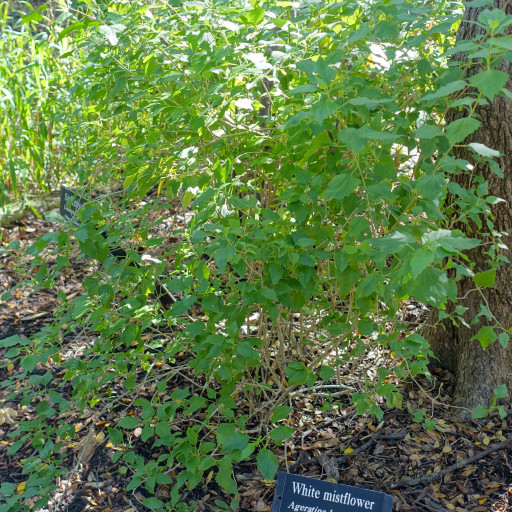
Plant Overview
Often called the Havana Snakeroot or Shrubby Mistflower, this resilient perennial transforms into a snowy cloud of white blossoms just as other plants begin to fade. Native to the rocky hillsides of Texas, Mexico, and the Caribbean, it is a cornerstone of the late-season garden. Its sweet, spicy fragrance acts as a powerful siren song for migrating butterflies and hummingbirds preparing for their long journeys.
🔍 How to Identify
- ☁️ Flower Clusters: Dense, fuzzy heads of pure white flowers that look like tiny bursts of mist or cotton.
- 🍃 Foliage: The leaves are bright green, triangular to arrow-shaped, with noticeably "toothed" or serrated edges.
- 🪵 Growth Habit: Unlike many wildflowers, this species is semi-woody; it forms a rounded, multi-stemmed shrub that can reach up to 6 feet tall.
🏡 In Your Garden
- 🦋 Pollinator Magnet: This is arguably one of the best plants for a "Wildscape." It is a critical nectar source for Monarch butterflies during their autumn migration.
- 🪨 Hardy Resilience: It thrives in rocky, limestone-rich soils where other plants might struggle. It is remarkably drought-tolerant once established, making it perfect for xeriscaping.
- ✂️ Pruning Strategy: Because it blooms on new wood, gardeners should cut it back significantly in late winter. This prevents the plant from becoming "leggy" and ensures a massive explosion of flowers the following fall.
⚠️ Safety & Toxicity
- 🐾 Toxic to Livestock: Like its cousins in the Ageratina genus, this plant contains tremetol. While usually avoided by animals due to its bitter taste, it can cause "trembles" or poisoning in horses, cattle, and goats if consumed in large quantities.
- 👶 General Caution: Keep out of reach of curious pets and small children. While not typically a skin irritant, ingestion can cause digestive upset.
✨ Fun Fact
In the wild, Havana Snakeroot is famous for its "disappearing act." For most of the year, it is a quiet, unassuming green shrub that blends into the background, but within a single week in October, it seemingly "explodes" into a brilliant white focal point that can be seen from across a valley.

Detailed Care Instructions
To grow Ageratina havanensis, also known as White Snakeroot, follow these steps:
- Choose the right location: Ageratina havanensis prefers partial shade to full shade. It can tolerate a wide range of soil types but prefers moist, well-draining soil.
- Planting: Dig a hole slightly larger than the root ball of the plant. Place the plant in the hole and backfill with soil, gently firming it around the roots. Water thoroughly after planting.
- Watering: Keep the soil consistently moist, but not waterlogged. Ageratina havanensis prefers moist conditions, so water regularly during dry periods. Mulching around the plant can help retain moisture.
- Fertilizing: Apply a balanced, slow-release fertilizer in spring to promote healthy growth. Follow the instructions on the fertilizer packaging for the appropriate dosage.
- Pruning: Regularly remove any dead or damaged foliage to encourage new growth. Pruning can also help maintain a tidy appearance and prevent overcrowding.
- Propagation: Ageratina havanensis can be propagated through division or stem cuttings. Divide the plant in early spring or take stem cuttings in late spring or early summer. Dip the cut end of the stem in rooting hormone and plant it in a pot filled with a well-draining potting mix. Keep the soil consistently moist until roots develop.
- Pests and diseases: Ageratina havanensis is generally resistant to pests and diseases. However, it may occasionally face issues such as powdery mildew or aphid infestations. Monitor your plant regularly and take appropriate measures if any issues arise.
By following these steps, you can successfully grow Ageratina havanensis and enjoy its beautiful white flowers and attractive foliage.

Place in a bright room that is sun drenched almost all day. Or directly in a south-facing window.

To water this plant, ensure that the soil is dry before watering. Place your finger approximately an inch deep into the soil to determine if it's time to water. If the soil feels dry, water the plant slowly and deeply, making sure that the water reaches the roots. Avoid overwatering the plant, as this can cause root rot and other issues. Consider using a watering can with a long spout to deliver water directly to the base of the plant and avoid wetting the foliage or flowers. Water the plant regularly, usually once a week, and adjust the frequency of watering based on the environmental conditions and climate of your location. Ensure that the soil has good drainage to prevent waterlogging.
- Choose a balanced fertilizer that contains a good amount of nitrogen, phosphorus and potassium.
- Apply the fertilizer in early spring just as new growth begins, and again in mid-summer.
- Mix the fertilizer with soil before applying around the base of the plant.
- Water the soil immediately after fertilizing to help the plant absorb the nutrients.
- Avoid over-fertilizing as this can lead to excessive growth and weak stems.
When planting Ageratina Havanensis, it is recommended to use a well-draining soil that is rich in organic matter. This plant prefers slightly acidic to neutral soils with a pH between 6.0 and 7.0. The soil should have good water retention without becoming waterlogged as this can lead to root rot. Ageratina Havanensis thrives in soils that are moist but not wet and can tolerate periods of drought. It is important to avoid using soils that are heavy in clay or sand as these can negatively affect the plant's growth and health. Additionally, it is recommended to add a slow-release fertilizer to the soil at the time of planting to provide necessary nutrients for growth.
To propagate this plant, you will need to take stem cuttings. The best time to do this is in spring or summer when the plant is actively growing. Choose a healthy stem that is about six inches long and has several leaves on it. Use a sharp and sterile pair of pruners to make a clean cut just below a leaf node.
Remove the leaves from the bottom two-thirds of the stem, leaving only a few leaves at the top. Dip the cut end of the stem into a rooting hormone powder to help encourage root growth. Plant the cutting in a pot with well-draining soil and water it thoroughly. Cover the pot with a plastic bag to create a humid environment and place it in a bright but indirect light. Check the soil regularly, making sure it stays moist but not too wet. After several weeks, you should notice new growth appearing, indicating that roots have formed. Once the cutting has established roots, you can transplant it to a larger pot or into your garden.








