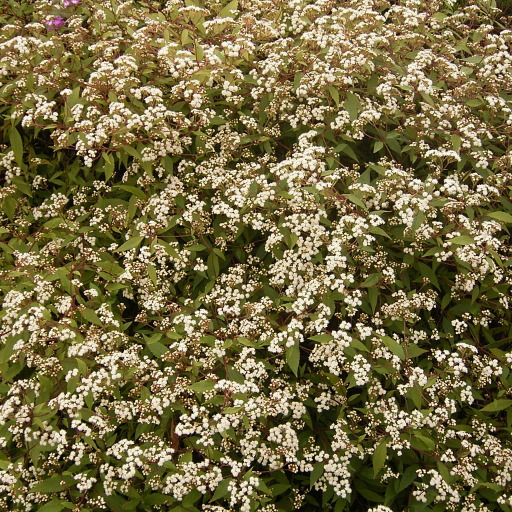
Plant Overview
Often called the Mistflower or River Eupatorium, this delicate-looking Mexican native is a master of disguise. It gets its name from the hazy, cloud-like appearance of its white blooms that seem to float over damp riverbanks. While it looks like a soft garden ornamental, it is a hardy traveler that has made its way across the globe, often settling in places where it wasn’t invited.
🔍 How to Identify
- ☁️ The "Mist" Flowers: Tiny, fuzzy white flower heads arranged in dense, flat-topped clusters. They lack the traditional "petals" seen on daisies, giving them a soft, fringed texture.
- 🍃 Serrated Foliage: The leaves are lance-shaped with distinct, jagged "teeth" along the edges. They grow in opposite pairs along the stem.
- 🍷 Reddish Stems: The stems are often a striking reddish-purple color and have a slightly hairy texture, especially when young.
🏡 In Your Garden
- 💧 The Moisture Seeker: As the name riparia suggests, this plant thrives near water. In a garden context, it will aggressively seek out the dampest spot, making it a "thirsty" neighbor for other plants.
- 🌱 Creeping Habits: It spreads via "stolons"—stems that creep along the surface and sprout new roots wherever they touch the ground. This makes it excellent for erosion control but a nightmare for gardeners trying to keep a tidy border.
- ⛰️ Hardy Survivor: It is remarkably shade-tolerant and can grow in vertical rock crevices or steep embankments where other plants struggle to gain a foothold.
⚠️ Safety & Toxicity
- 🐴 Livestock Warning: While generally safe to touch for humans, it is significantly toxic to horses. In parts of Australia and Hawaii, it is known for causing chronic lung disease in equines, often referred to as "Numinbah Horse Sickness."
- 🐾 Pet Caution: Keep grazing pets away from this plant. While not typically fatal to cats or dogs in small amounts, ingestion can cause digestive upset.
✨ Fun Fact
In many parts of the world, including New Zealand and Hawaii, the Mistflower is considered a "transformer" species. This means it doesn't just grow in the wild—it actually changes the ecosystem by creating dense mats that prevent native trees from ever germinating!

Detailed Care Instructions
| Toxicity | Poisonous |
To grow Ageratina riparia, also known as white snakeroot, you can follow these steps:
- Choose the right location: White snakeroot prefers partial shade to full shade and moist, well-draining soil. It can tolerate a wide range of soil types but thrives in loamy or sandy soil.
- Planting: Prepare the soil by removing any weeds or grasses from the planting area. Dig a hole slightly larger than the root ball of the plant. Place the plant in the hole, ensuring that the top of the root ball is level with the soil surface. Backfill the hole with soil, gently firming it around the plant.
- Watering: After planting, water the plant thoroughly to settle the soil and provide adequate moisture for root establishment. Keep the soil consistently moist, especially during dry periods. Avoid overwatering, as it can lead to root rot.
- Mulching: Apply a layer of organic mulch around the base of the plant to help conserve soil moisture and suppress weed growth. Keep the mulch about 2-3 inches away from the stem to prevent stem rot.
- Fertilization: Ageratina riparia typically does not require heavy fertilization. However, you can apply a balanced slow-release fertilizer in early spring or use compost to provide nutrients to the plant.
- Pruning: Prune the plant in early spring before new growth begins to remove any dead or damaged branches. This will help promote healthy growth and maintain a compact shape.
- Division and Propagation: White snakeroot can be propagated through division. In early spring or fall, carefully dig up the plant and divide it into smaller sections, ensuring each division has some healthy roots. Replant the divisions in suitable locations and provide adequate water until they establish themselves.
- Pest and disease control: Ageratina riparia is generally resistant to pests and diseases. However, keep an eye out for common garden pests like aphids or spider mites. If necessary, treat with organic insecticides or use appropriate pest control methods.
Remember to check for any specific requirements or recommendations for your particular region or climate. White snakeroot is a hardy plant that, when given the right conditions, can thrive and grow.

Place in a bright room that is sun drenched almost all day. Or directly in a south-facing window.

To properly water this plant, it is important to consider its specific watering needs. Ageratina Riparia typically prefers moist soil, but it is important not to overwater as this can lead to root rot. The best way to ensure proper watering is to check the soil moisture level regularly using a soil moisture meter or by sticking your finger into the soil. If the top inch of soil feels dry, it is time to water.
When watering, give enough water to thoroughly saturate the soil, but allow excess water to drain away so that the plant is not sitting in water. It may also be helpful to mulch around the base of the plant to help retain moisture in the soil. During periods of hot, dry weather, it may be necessary to water more frequently.
It is important to note that the specific watering needs of Ageratina Riparia may vary depending on environmental factors such as temperature and humidity, as well as the type of soil and pot or container size. Regular monitoring of soil moisture levels and adjusting watering frequency accordingly is the best way to ensure the health and vitality of this plant.
To fertilize this plant, use a balanced fertilizer with equal parts nitrogen, phosphorus, and potassium. Apply the fertilizer in early spring before new growth emerges. Make sure to follow the manufacturer's instructions for the amount to use. Water the plant well after fertilizing to help the nutrients absorb into the soil. Repeat the fertilization process every 4-6 weeks throughout the growing season.
The best type of soil to use for Ageratina Riparia plant is a rich, well-draining soil. It should be a loamy soil with a pH level between 6.0 to 7.5. The soil should also be able to retain moisture but not stay waterlogged. Ageratina Riparia plants prefer soil that is moderately fertile with good organic matter content. It is important to avoid using soil that is too compact or heavy as it can lead to waterlogging. To ensure proper soil drainage, it is recommended to add a layer of peat moss, compost, or sand to the soil before planting.
To propagate this particular plant, you will need to obtain cuttings from mature plants. It is recommended to take cuttings in the early summer when the plant is actively growing and healthy.
- Choose a healthy stem to take a cutting from, avoiding any that appear damaged or diseased. The stem should be 2-3 inches long and have several leaves.
- With a sharp, sterile knife or pruning shears, cut the stem at an angle just below a node (where the leaves attach to the stem). Remove any lower leaves that would be below the soil line when planted.
- Dip the cut end of the stem into rooting hormone powder, tapping off any excess.
- Insert the cutting into a pot or tray filled with moist potting soil, making sure that the node is buried. You can place several cuttings in one pot if desired.
- Cover the pot or tray with a plastic bag to create a humid environment. Place the pot in a bright, but indirect sunlight location.
- Keep the soil moist but not soggy. After a few weeks, new growth should appear indicating that the cutting has taken root.
- Once the new growth appears, gradually remove the plastic bag and transition the plant to more direct sunlight.
- After a few months, the new plant should be strong enough to be transplanted into a larger pot or directly into the ground if desired.








