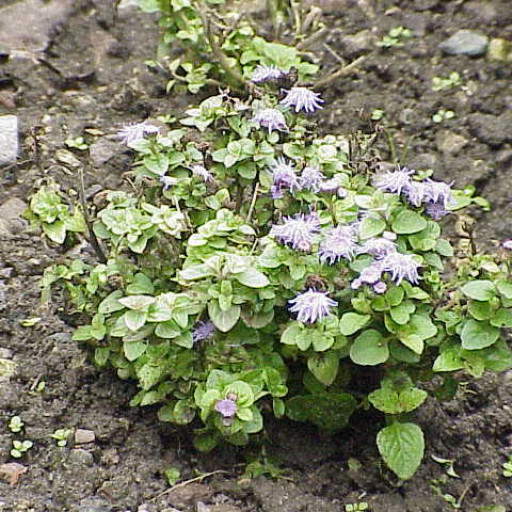
Plant Overview
Known affectionately as the Flossflower or "Mexican Ageratum," this garden favorite looks like it’s straight out of a cozy storybook with its soft, fuzzy pom-poms. Native to Central America, it is one of the rare plants that provides a true, vibrant blue to the landscape. While it appears delicate and "tousled," it is a sturdy bedding plant that adds a unique velvety texture to borders and containers.
🔍 How to Identify
- 🌸 The Blooms: Tiny, tubular flowers packed into dense, fringe-like clusters that resemble silk thread or embroidery "floss." While most famous in electric blue, they also come in pink and white.
- 🍃 The Foliage: Heart-shaped or ovate leaves with a slightly quilted texture. They are covered in fine, soft hairs and have lightly serrated edges.
- 📏 The Silhouette: Typically grows in neat, compact mounds, creating a low-lying "cloud" effect in the garden.
🏡 In Your Garden
- 🦋 Pollinator Magnet: These flowers are high in nectar and act as a landing pad for butterflies and bees. It is a fantastic choice for those looking to support local biodiversity.
- ✂️ The Deadhead Secret: To keep the "carpet of blue" going all season, you should regularly snip off faded flower heads. This prevents the plant from putting energy into seeds and forces it to produce more velvety blooms.
- 💧 Thirsty Roots: Unlike some desert-hardy annuals, Ageratum hates "dry feet." It prefers consistently moist, well-draining soil. If it dries out too much, the lower leaves will yellow and drop quickly.
⚠️ Safety & Toxicity
- 🐾 Toxic to Pets: Ageratum houstonianum contains pyrrolizidine alkaloids, which can be harmful if ingested in large quantities.
- 🐕 Details: It is particularly dangerous to grazing livestock (like horses or cattle) but should also be kept away from curious dogs and cats, as it can cause liver distress if chewed on.
✨ Fun Fact
The name "Ageratum" is derived from the Greek ageratos, meaning "ageless" or "not growing old." This refers to the plant's incredible ability to maintain its bright flower color for a very long time, making it a favorite for dried flower arrangements!

Detailed Care Instructions
| Humidity | High |
| Invasive | Weed |
| Lighting | Full Sun |
| Soil Type | Well-Drained |
| Difficulty | Medium |
| Plant Type | Annual Plant |
| Mature Size | Height Of 1-2 Feet |
| Temperature | 5°C - 25°C |
| Sun Exposure | Full Sun To Partial Shade |
| Hardiness Zones | 10A - 13B |
To grow Ageratum Houstonianum, also known as floss flower, follow these steps:
- Choose a suitable location: Ageratum grows best in a well-draining soil with full or partial sun exposure. Select a location that receives at least 4-6 hours of sunlight daily.
- Prepare the soil: Loosen the soil to a depth of about 8-10 inches and remove any weeds or debris. Add organic matter like compost or well-rotted manure to improve soil fertility and drainage.
- Sow the seeds: Ageratum can be grown from seeds or purchased as young plants from a nursery. If starting from seeds, sow them indoors 6-8 weeks before the last frost date or directly in the garden after the danger of frost has passed. Sow the seeds lightly on the soil surface and gently press them down.
- Watering: Keep the soil consistently moist but not waterlogged. Water the plants evenly, providing about 1 inch of water per week. Avoid overhead watering, as this can lead to fungal diseases. Water at the base of the plant to keep the leaves dry.
- Fertilization: Ageratum is not a heavy feeder but benefits from light feeding. Apply a balanced, water-soluble fertilizer every 4-6 weeks during the growing season, following the package instructions for dosage.
- Mulching: Mulch around the plants with a layer of organic mulch, such as straw or shredded bark, to conserve moisture, suppress weeds, and regulate soil temperature.
- Pruning: Pinch back the growing tips of Ageratum when they reach about 4-6 inches in height to promote bushier growth. Deadhead spent flowers regularly to encourage continuous blooming.
- Pests and diseases: Ageratum is generally resistant to pests and diseases, but keep an eye out for common garden pests like aphids and spider mites. Treat infestations with insecticidal soap or neem oil if necessary.
- Winter care: Ageratum is typically grown as an annual, but in mild climates, it may survive as a perennial. If you want to save the plant over winter, either move it indoors or take cuttings before the first frost.
By following these guidelines, you should be able to successfully grow Ageratum Houstonianum.

Place in a bright room that is sun drenched almost all day. Or directly in a south-facing window.

To properly water this plant, first check its soil for moisture levels by inserting your finger into the soil to the depth of an inch. If the soil feels dry, it's time to water it. When watering, do so at the base of the plant, avoiding the leaves, as wet foliage can lead to fungal diseases. Water until the soil is moist but not waterlogged, and do not allow the plant to sit in standing water. It is best to water in the morning to allow the plant to dry off before nighttime. Depending on the humidity, temperature, and location of the plant, it may require watering anywhere from once a week to daily.
- Start fertilizing your Ageratum Houstonianum plant in early spring or a few weeks after planting.
- Choose a balanced, water-soluble fertilizer with equal amounts of nitrogen, phosphorus, and potassium (N-P-K).
- Dilute the fertilizer according to package instructions.
- Apply the fertilizer to the soil around the base of the plant, avoiding contact with the leaves.
- Water the plant thoroughly after fertilizing to distribute the nutrients evenly.
- Repeat the fertilization process every four to six weeks throughout the growing season.
- Avoid over-fertilization, as it can lead to excessive foliage growth and reduced flowering.
The ideal type of soil for this plant is a well-drained soil that is rich in organic matter. It should be loose, friable, and have a good texture that promotes good drainage. The soil should be slightly acidic, with a pH level between 5.5 and 6.5. It should also be able to retain moisture, as the plant prefers to be kept moderately moist. Good soil structure is important for the root system of this plant, as it supports healthy growth and development. Ageratum Houstonianum may also benefit from fertilizer applications during the growing season, as it requires a certain amount of nutrients to thrive.
To propagate this plant, you will need to take stem cuttings from the parent plant. Look for healthy stems that are at least a few inches long, and cut them at a 45-degree angle using a clean, sharp pair of scissors or pruning shears.
Remove any leaves from the bottom inch or two of the stem so that you can insert it into the potting soil without any leaves touching the soil. Then, dip the cut end of the stem into rooting hormone powder to help it develop roots more quickly.
Prepare a pot or container with well-draining potting soil and make a hole in the soil with your finger or a pencil. Insert the stem cutting into the hole and pat the soil around it to secure it in place. Water the cutting thoroughly and place it in a bright, humid location, such as a greenhouse or indoors with a plastic bag over the top of the pot to create a humid environment.
Keep the cutting moist but not waterlogged, and within a few weeks, it should begin to develop roots and new growth. Once the cutting has established a strong root system and several new leaves, you can transplant it into a larger pot or into the garden.
Common pests of the bluemink include Spider mites, whiteflies. Make a habit of checking your bluemink frequently for pests so that any infestations can be caught and managed early.








