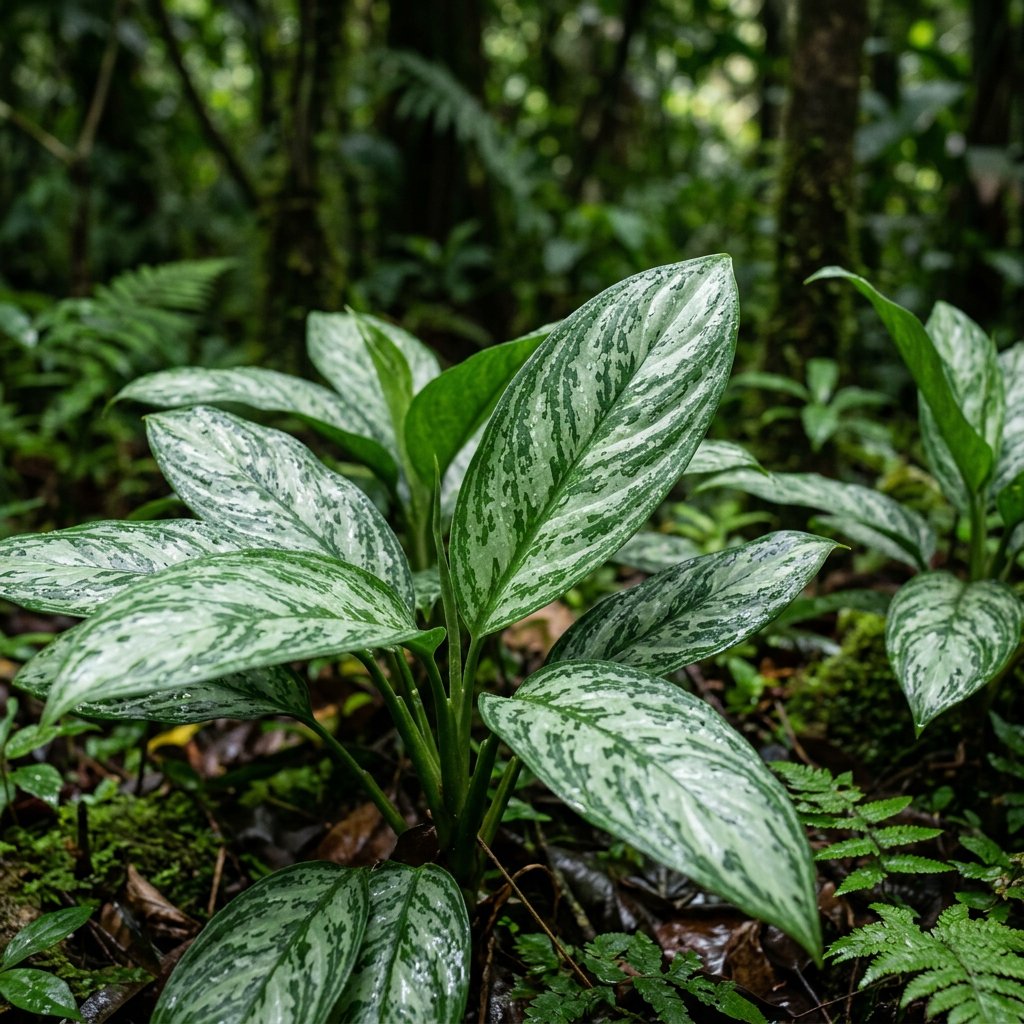
Plant Overview
Commonly called the Chinese Evergreen, the Aglaonema is the unsung hero of the interior design world. Hailing from the tropical rainforests of Southeast Asia, it has earned a reputation as one of the most resilient and versatile houseplants in existence. In many cultures, it is considered a symbol of luck and longevity, making it a popular gift for new beginnings.
🔍 How to Identify
- 🍃 Leaf Pattern: Broad, elliptical leaves that are often "painted" with intricate patterns of silver, cream, or even vibrant splashes of pink and red.
- 🪴 Growth Habit: It grows in dense, lush clumps, rarely exceeding three feet in height, which makes it perfect for tabletops or cozy floor corners.
- 🌸 Hidden Blooms: While rare indoors, mature plants may produce a "spathe and spadix" flower similar to a Peace Lily, often tucked quietly beneath the foliage.
🏡 In Your Garden
- ☁️ Light Adaptability: This plant is a low-light champion. While darker green varieties can survive in dim corners, the more colorful, variegated types need bright, indirect light to keep their "painted" patterns from fading.
- 💧 The "Goldilocks" Water: It prefers to stay slightly moist but never soggy. Because it has relatively thick, fleshy roots, it can handle a missed watering, but it will protest with yellowing leaves if left in standing water for too long.
- 🌡️ Warmth Seeker: Keep it away from AC vents or drafty winter windows; this plant is a true tropical and prefers temperatures to stay consistently above 60°F (15°C).
⚠️ Safety & Toxicity
- 🚫 Status: Toxic to pets and humans.
- 🐾 Details: The plant contains calcium oxalate crystals. If chewed or swallowed, it can cause immediate mouth irritation, swelling of the tongue, and digestive upset in cats, dogs, and curious toddlers. It is best kept on a high shelf out of reach.
✨ Fun Fact
🚀 Space Plant: The Aglaonema was a top performer in NASA's famous Clean Air Study! It was proven to effectively filter out indoor toxins like formaldehyde and benzene, making your home's air cleaner with every breath.

Detailed Care Instructions
Here are some steps to help you grow an Aglaonema plant:
- Start with a healthy plant: Purchase a healthy Aglaonema plant from a reputable nursery or garden center. Look for plants with vibrant leaves and no signs of pests or diseases.
- Choose the right location: Aglaonema plants prefer bright but indirect light. Place them in a spot where they can receive filtered or diffused sunlight, away from direct sunlight. They can also tolerate low light conditions, making them suitable for indoor spaces.
- Provide the right temperature and humidity: Aglaonema plants thrive in warm temperatures between 65°F to 80°F (18°C to 27°C). They also prefer high humidity, so mist the leaves regularly or place a tray of water near the plant to increase the humidity level. Avoid placing the plant near drafts or air conditioning vents.
- Watering: Aglaonema plants prefer consistently moist soil but can't tolerate excessive moisture. Water the plant when the top inch of soil feels dry. Ensure proper drainage by using a well-draining potting mix and a container with drainage holes.
- Fertilization: Feed the Aglaonema plant with a balanced houseplant fertilizer once a month during the growing season (spring and summer) to provide essential nutrients. Follow the instructions on the fertilizer packaging for proper dosage.
- Pruning: Regularly prune your Aglaonema plant to maintain its shape and remove any yellowing or damaged leaves. Use clean and sharp pruning shears to avoid damaging the plant.
- Repotting: Aglaonema plants prefer slightly crowded roots, but they may need repotting every 2-3 years as they grow. Choose a pot that is slightly larger than the current one, and use a well-draining potting mix when repotting.
- Pest control: Aglaonema plants are generally resistant to pests, but occasionally, they may face issues with spider mites, mealybugs, or aphids. Inspect the plant regularly, and if you notice any pests, treat them with insecticidal soap or neem oil.
By following these steps, you can successfully grow and care for an Aglaonema plant.

Place in a window with dappled sun or a spot in the middle of a room. Or directly in a window facing west or east.

To water this type of plant, you should first check the soil's moisture level by sticking your finger about an inch deep into the soil. If the soil feels dry to the touch, it's time to water. Use room temperature water and pour slowly onto the soil around the base of the plant until you see water start to drain out of the bottom of the pot. Avoid getting water on the leaves as this can lead to spotting or disease. Wait until the top inch of soil is dry before watering again, as overwatering can cause root rot. Additionally, it's important to avoid letting the plant sit in standing water as this can lead to waterlogged roots and fungal issues.
To fertilize this tropical plant, use a water-soluble fertilizer with equal parts nitrogen, phosphorus, and potassium. Dilute the fertilizer to half the recommended strength and apply monthly during the growing season. Avoid fertilizing during the winter months when the plant is dormant. Be sure to water the plant thoroughly before and after fertilizing.
When choosing soil for an Aglaonema plant, it is important to consider its requirements for nutrients, drainage, and moisture retention. A good soil mix for this plant should be well-draining, yet able to hold moisture for extended periods of time. A mixture of organic materials, such as compost, peat moss, and bark, combined with perlite or vermiculite for drainage, can help achieve these conditions. It is also important to ensure the soil mix is not too heavy, as Aglaonema plants prefer slightly acidic to neutral soil pH. A pH between 6 and 7 is ideal for these plants. In addition to these soil requirements, it is important to choose a suitable container that allows for proper drainage and adequate space for the plant's growth.
Aglaonema plant can be propagated through a process called stem cuttings. The stem is cut carefully just below a node, ensuring that there are two to three leaves on it. The cutting is then planted in soil mixed with sand to promote drainage.
The cutting is then covered with a plastic bag, creating a mini greenhouse. It should be watered regularly, but not too much as it can lead to root rot. After a few weeks, roots should start to form and new growth should emerge.
Once the new growth is established, the plant can be transplanted to a larger pot with well-draining soil. It is important to keep the plant in a warm and humid environment while it is growing to ensure its successful establishment.
Overall, propagating the Aglaonema plant through stem cuttings is a simple process that can be done by gardeners of any level. It's a great way to expand your collection and share plants with others.
Common pests of the chinese evergreens include Mealybugs, spider mites, fungus gnats, thrips. Make a habit of checking your chinese evergreens frequently for pests so that any infestations can be caught and managed early.







