Plant Overview
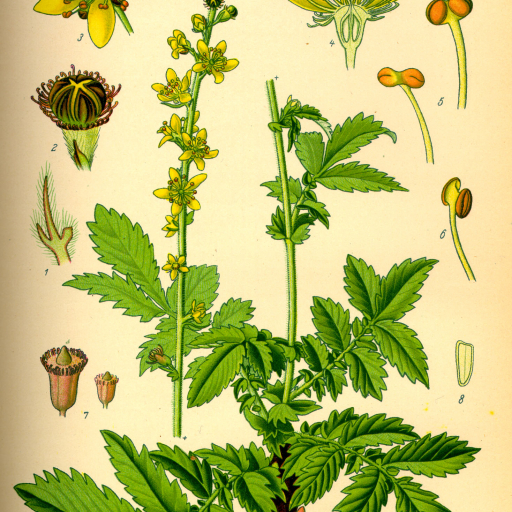
Known affectionately as "Church Steeples" for its tall, pointed flower spikes, Agrimony has been a staple in European meadows and cottage gardens for centuries. It was once a part of folklore, believed to induce deep sleep if placed under a traveler's pillow, and was famously used to treat wounds on ancient battlefields. Today, it is cherished for its delicate apricot-like fragrance and its ability to beckon a parade of pollinators to the garden.
🔍 How to Identify
- 🌼 The Flowers: Small, bright yellow, five-petaled blossoms that grow densely along a tall, slender spike, blooming from the bottom upward.
- 🍃 The Foliage: Feathery, dark green leaves with deeply serrated (toothed) edges and a soft, downy underside that feels slightly hairy to the touch.
- 🧶 The Seed Burrs: As the flowers fade, they turn into small, woody fruits covered in hooked bristles that act like "velcro," hitching a ride on passing animals or hikers' socks.
🏡 In Your Garden
- 🌱 Low Maintenance: Agrimony is a "tough love" plant that thrives in well-drained, even poor-quality soil. It possesses a deep taproot, meaning once it is settled, it hates being moved—so pick its forever home carefully.
- 🐝 Pollinator Magnet: Because it produces a generous amount of pollen rather than just nectar, it is a favorite pit stop for honeybees and various species of hoverflies seeking a protein-rich snack.
⚠️ Safety & Toxicity
- ✅ Status: Generally non-toxic and historically used in herbal teas.
- 🐾 Details: While safe for most, the high tannin content in the plant can cause mild stomach upset in curious pets if consumed in large quantities. Additionally, the hairy stems may cause slight skin irritation (contact dermatitis) for those with very sensitive skin.
✨ Fun Fact
The yellow flowers of Agrimony were historically used as a natural dye. Depending on when the plant is harvested—early summer versus autumn—the resulting color ranges from a pale primrose yellow to a deep, rich golden tan.

Detailed Care Instructions
To grow Agrimonia eupatoria, also known as common agrimony or church steeples, you can follow these steps:
- Choose the right location: Agrimonia eupatoria prefers full sun but can tolerate partial shade. It thrives in well-draining soil with a pH level ranging from slightly acidic to slightly alkaline.
- Prepare the soil: Work the soil and remove any weeds or debris. You can add organic matter like compost or well-rotted manure to improve the soil's quality and drainage.
- Sow the seeds: You can start by sowing seeds directly in the ground in early spring or late fall. Lightly cover the seeds with soil and water gently. Maintain moisture to aid germination.
- Transplant seedlings (optional): If you prefer to start with seedlings, you can sow seeds indoors 6-8 weeks before the average last-frost date. Transplant the seedlings outside when they are large enough to handle, spacing them 12-18 inches apart.
- Watering and maintenance: Once the plants are established, they are somewhat drought tolerant. However, providing regular watering during dry periods will promote healthier growth and flowering. Water the plants at the base to avoid wetting the foliage, which can lead to diseases. Remove weeds regularly to prevent competition for resources.
- Pruning: Agrimonia eupatoria does not require extensive pruning. However, you can trim back any dead or damaged branches in early spring to maintain a tidy appearance.
- Fertilization: While Agrimonia eupatoria does not typically require additional fertilization, you can incorporate a balanced, slow-release fertilizer once a year in early spring to provide nutrients for optimal growth.
- Harvesting: You can harvest the leaves and flowering tops for medicinal use after the plant has reached maturity. Wait for the flowers to bloom before harvesting for the best results.
By following these guidelines and providing suitable growing conditions, you can successfully grow Agrimonia eupatoria in your garden.

Place in a bright room that is sun drenched almost all day. Or directly in a south-facing window.

To water this plant, ensure that the soil is dry to the touch before watering. Use a watering can or hose with a gentle stream to water around the base of the plant. Avoid wetting the leaves as this can encourage fungal growth. Water deeply, allowing the water to reach the roots, but do not overwater as this can lead to root rot. Watering once a week is usually sufficient, but adjust based on the moisture level of the soil.
To fertilize this plant, apply a balanced, slow-release fertilizer in early spring before new growth begins. Follow the manufacturer's instructions for proper application rates. Avoid over-fertilizing, as this can lead to weak and spindly growth. Additionally, mulching around the base of the plant with organic matter can help to provide additional nutrients and retain moisture in the soil.
The recommended soil for the plant known as Agrimonia Eupatoria is a well-draining, nutrient-rich soil that is slightly acidic with a pH range between 5.5 and 6.5. It should also have good water retention properties to prevent the soil from drying out too quickly. The plant prefers loamy soil with a high organic matter content and is tolerant of sandy or clay soils as long as they are not compacted. It is important to avoid using soil that is too heavy or waterlogged as this can lead to root rot. Adding compost or aged manure to the soil before planting can help improve its nutrient content and overall quality.
Agrimonia Eupatoria is a perennial herbaceous plant that can be easily propagated by seeds or cuttings.
To propagate this plant from seeds, start by collecting the seeds in the fall after they have ripened and dried on the plant. Store the seeds in a cool, dry place until the following spring, then plant them in a well-draining soil mixture. Cover the seeds with a thin layer of soil and keep the soil moist until the seeds germinate.
To propagate this plant from cuttings, take stem cuttings in the spring or early summer. Cut a 3- to 5-inch stem from the plant with a sharp, clean knife or scissors. Remove the leaves from the bottom half of the stem, and dip the cut end into rooting hormone powder. Plant the cutting in a well-draining soil mix and keep the soil moist until roots form, usually within a couple of weeks.
Once the new plants have grown and matured, they can be transplanted into the garden or in containers where they can grow and bloom. Cultivate Agrimonia Eupatoria plant in full sun to partial shade and in moist, well-drained soil. The plant can tolerate drought and is generally pest and disease-free.
Common pests of the agrimony include Aphids, thrips, larvae. Make a habit of checking your agrimony frequently for pests so that any infestations can be caught and managed early.








