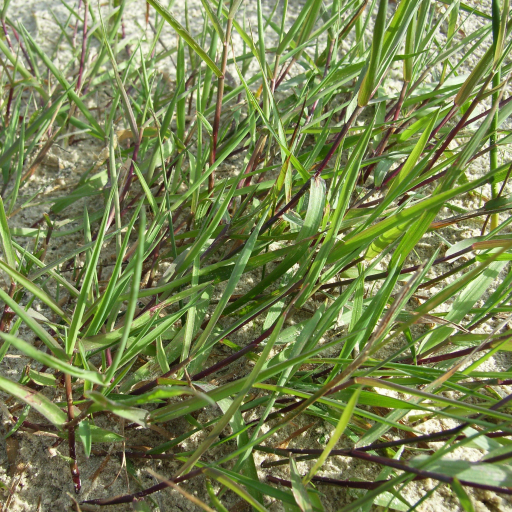
Plant Overview
Often called the "Carpet Grass" or the "Greenskeeper's Darling," Agrostis stolonifera is the secret behind the velvet-smooth putting greens of the world’s most famous golf courses. Native to Eurasia, this grass is prized for its ability to form an incredibly dense, fine-textured mat that feels like a living rug underfoot. However, while it looks like a dream, it is famously high-maintenance and acts more like a "diva" than your average backyard lawn.
🔍 How to Identify
- 🌱 Creeping Stolons: Its most distinct feature is the "stolons"—long, horizontal runners that creep along the surface and root at every node to create a seamless carpet.
- 🍃 Fine Leaf Texture: The leaves are remarkably narrow and flat, usually displaying a soft bluish-green or pale green hue with fine ridges running along the top.
- 🌾 Prominent Ligule: If you pull a blade back, you’ll see a long, thin, silvery membrane (the ligule) where the leaf meets the stem, which helps distinguish it from other lawn grasses.
🏡 In Your Garden
- 💧 High Hydration Needs: Because it has a relatively shallow root system, Creeping Bentgrass has very little drought tolerance; it requires frequent, light watering to keep its lush appearance.
- ✂️ Thatch Management: Due to its aggressive horizontal growth, it quickly builds up "thatch"—a thick layer of organic debris. Without regular thinning or "verticutting," this layer can become spongy and harbor fungal diseases.
- 🌿 Competitive Nature: In a standard home lawn, it is often viewed as a weed because it grows in circular, distinct patches that can eventually overtake less aggressive grass varieties like Fescue.
⚠️ Safety & Toxicity
- ✅ Safe for Pets: This plant is non-toxic to dogs, cats, and horses, making it a safe choice for areas where pets might nibble on the grass.
- 🤧 Pollen Sensitivity: While the grass blades are safe, Agrostis stolonifera is a heavy pollen producer if allowed to grow tall and flower, which can be a major trigger for seasonal hay fever sufferers.
✨ Fun Fact
⛳ The Extreme Haircut: Creeping Bentgrass is one of the few plants on Earth that can survive being mowed to a height of just 1/10th of an inch (about 2.5mm). This "ultra-low" tolerance is exactly why it is the gold standard for professional sports surfaces!

Detailed Care Instructions
To grow Agrostis Stolonifera, also known as creeping bentgrass, follow these steps:
- Choose a suitable location: Agrostis Stolonifera prefers full sun to partial shade and moist, well-draining soil.
- Prepare the soil: Clear the area of any weeds, debris, or large rocks. Loosen the soil with a garden fork or tiller to improve drainage and aeration.
- Sow the seeds: Agrostis Stolonifera is typically grown from seeds. Broadcast the seeds evenly over the prepared soil. Lightly rake them into the soil, ensuring good seed-to-soil contact.
- Water the area: Moisten the soil thoroughly after sowing the seeds. Keep the soil consistently moist but not waterlogged throughout the germination period.
- Germination and growth: Agrostis Stolonifera typically germinates within 10-14 days. Once the seedlings reach a height of about 1 inch, thin them out to allow proper spacing, as overcrowding can lead to disease and other issues.
- Fertilize: Apply a balanced, slow-release fertilizer to the established seedlings as per the manufacturer's instructions. This will provide essential nutrients for healthy growth.
- Mowing and maintenance: Once the grass reaches a height of about 2 inches, you can start mowing to maintain it at a desirable height. For Agrostis Stolonifera, a height of about 0.5-1 inch is recommended. Regular mowing, watering, and occasional fertilization will help keep the grass healthy and dense.
- Weed control: Keep the area free from weeds by manually removing them or using appropriate weed control methods.
- Disease and pest management: Agrostis Stolonifera can be prone to certain diseases and pests. Monitor the grass regularly for any signs of issues, such as brown patches, fungal infections, or insect infestations. Consult a local horticulturist or extension office for guidance on how to tackle these problems effectively.
With proper care and maintenance, your Agrostis Stolonifera plant should grow into a lush and dense grassy area.

Place in a window with dappled sun or a spot in the middle of a room. Or directly in a window facing west or east.

Agrostis Stolonifera plants require regular watering to keep them healthy. As a general rule, you should water them deeply and infrequently, allowing the soil to dry out partly between waterings. Over-watering can cause root rot, which can lead to the death of the plant.
When watering, use a watering can or a hose with a gentle spray nozzle to avoid damaging the delicate foliage. The best time to water is early in the morning or late in the evening when the temperatures are cooler. This will help prevent water evaporation and allow the plant to absorb the moisture more efficiently.
When watering, make sure that the soil is evenly moist throughout the root zone. If you're not sure how deeply you need to water, poke your finger into the soil and feel for moisture. If the soil is dry to the touch, it's time to water.
Another thing to keep in mind when watering Agrostis Stolonifera plants is to avoid getting water on the leaves. This can cause fungal diseases and make the plant more susceptible to pests.
In addition to regular watering, Agrostis Stolonifera plants also benefit from occasional feeding. You can use a balanced liquid fertilizer every 4-6 weeks during the growing season to provide the plant with essential nutrients. Be sure to follow the manufacturer's instructions on the label.
To successfully fertilize the Agrostis Stolonifera plant, follow these instructions:
- Choose a balanced, slow-release fertilizer with equal amounts of nitrogen (N), phosphorus (P), and potassium (K), commonly referred to as an NPK fertilizer.
- Read the label instructions carefully for the specific fertilizer you have selected, ensuring compatibility with Agrostis Stolonifera.
- Begin fertilizing in early spring, when the plant starts showing signs of growth.
- Calculate the correct application rate based on the size and condition of your Agrostis Stolonifera plant. Ideally, a general guideline is to apply 1 pound of fertilizer per 1,000 square feet (0.45 kilograms per 93 square meters) of plant area.
- Apply the fertilizer evenly over the soil surface, avoiding direct contact with the plant foliage to prevent burning.
- Gently work the fertilizer into the top layer of soil using a garden rake or fork, ensuring it is well-distributed throughout the root zone.
- Water the plant thoroughly after fertilizing to help dissolve and distribute the nutrients into the soil.
- Monitor the plant's response to the fertilizer application. If necessary, repeat the fertilization process during the growing season according to the label instructions and recommended frequency (usually every 6-8 weeks).
- Maintain a regular watering schedule and provide adequate sunlight to support healthy growth along with the fertilizer.
- Regularly inspect the plant for any signs of nutrient deficiencies or excesses, such as yellowing or browning leaves or stunted growth. Adjust the fertilizer application accordingly or seek professional advice if necessary.
Remember, it is always recommended to conduct a soil test before fertilizing to understand the specific nutrient requirements of your Agrostis Stolonifera plant. Additionally, following any additional guidelines or recommendations provided by the fertilizer manufacturer can help ensure optimal results.
Agrostis stolonifera is a type of perennial grass that grows best in well-drained soil. It thrives in soil that is fertile, loamy, and slightly acidic, with a pH between 5.5 and 7.0. The soil should be moderately moist but not waterlogged, as this can lead to root rot. It is important to avoid soil that is compacted, as this can prevent proper root growth and limit the plant's ability to absorb nutrients. The addition of organic matter, such as compost or well-rotted manure, can help improve soil structure and fertility. It is also recommended to add a slow-release fertilizer for optimum growth and health.
Agrostis stolonifera is a plant that can be propagated using various methods such as division, seeding, and vegetative propagation. This allows for the growth of new plants from existing ones. Here's a detailed guide on how to propagate Agrostis stolonifera:
- Division:
- Start by digging up an established Agrostis stolonifera plant during its dormant season, which is usually in early spring or late fall.
- Gently lift the plant out of the ground, taking care not to damage the roots or rhizomes.
- Use a sharp knife or garden shears to divide the plant into smaller sections. Each section should have several shoots and a healthy root system.
- Replant the divided sections into prepared soil, spacing them adequately to allow for growth and expansion.
- Start by digging up an established Agrostis stolonifera plant during its dormant season, which is usually in early spring or late fall.
- Seeding:
- Collect mature seeds from an existing Agrostis stolonifera plant.
- Prepare a seed-starting tray or small pots with a well-draining potting mix.
- Scatter the seeds evenly over the surface of the soil, lightly pressing them in.
- Mist the soil gently to moisten it, and cover the tray or pots with a clear plastic dome or plastic wrap to create a mini greenhouse effect.
- Place the tray or pots in a warm and well-lit area, ensuring they receive indirect sunlight.
- Keep the soil consistently moist but not waterlogged, watering when needed.
- The seeds should germinate within 2-3 weeks. Once the seedlings have grown a couple of inches tall, they can be transplanted into individual containers or the garden.
- Collect mature seeds from an existing Agrostis stolonifera plant.
- Vegetative Propagation:
- Locate a healthy Agrostis stolonifera plant with vigorous runners or stolons.
- Choose a runner that has sufficient length and healthy roots.
- Using clean and sharp garden shears, make a clean cut near the base of the runner.
- Prepare a container with a well-draining potting mix or prepare the planting area in the garden.
- Ensure that the soil is moist and the roots of the runner are healthy.
- Place the runner in the soil, with the roots covered and the foliage above the soil line.
- Press down gently to establish good soil contact.
- Water thoroughly and ensure the plant receives adequate light and moisture as it establishes itself.
By following these propagation techniques, you can successfully propagate Agrostis stolonifera plants and expand your plant collection or establish new areas in your garden with this particular species.
- Locate a healthy Agrostis stolonifera plant with vigorous runners or stolons.
Common pests of the creeping bent include Thrips. Make a habit of checking your creeping bent frequently for pests so that any infestations can be caught and managed early.








