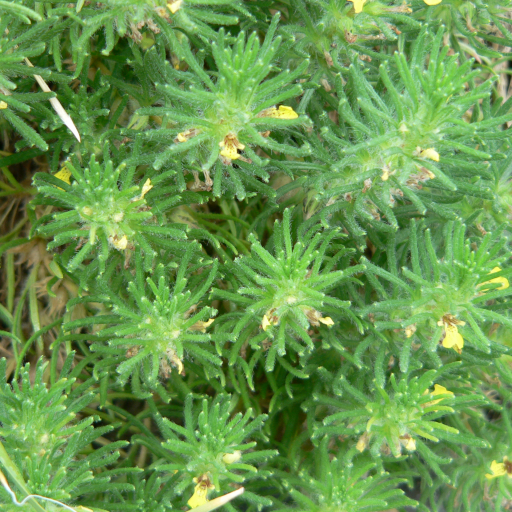
Plant Overview
Often mistaken for a tiny conifer seedling, Ajuga chamaepitys is famously known as the "Ground Pine" due to its resinous scent and needle-like foliage. Unlike its more common purple-flowered cousins, this hardy little wildflower blooms in shades of bright lemon yellow. Historically, it was a staple in ancient herbals, frequently tucked into pouches for its supposed ability to ward off bad luck and "joint-aches."
🔍 How to Identify
- 🌿 The Foliage: The leaves are hairy and deeply divided into three narrow, linear segments, making the plant look remarkably like a miniature pine branch at a distance.
- 🌼 The Flowers: Small, bright yellow blossoms emerge from the leaf axils; if you look closely, you’ll see the lower lip is often decorated with tiny reddish or purple dots.
- 👃 The Scent: One of the easiest ways to confirm its identity is to gently crush a leaf; it releases a distinct, refreshing pine-like or turpentine aroma.
🏡 In Your Garden
- ☀️ Disturbed Ground Specialist: This plant is a pioneer of "thin" environments. It thrives in open, chalky, or sandy soils where other plants struggle, making it perfect for rock gardens or stony borders.
- 🌱 The "Loner" Habit: Unlike the common Bugleweed, this species does not produce creeping runners. It stays in a tidy clump and relies on its seeds to pop up in new spots, so avoid heavy mulching which can prevent its seeds from reaching the soil.
⚠️ Safety & Toxicity
- 🟢 General Safety: Ajuga chamaepitys is generally considered non-toxic to humans and common household pets.
- 👅 Not for Consumption: While it has a history in folk medicine, it is not a culinary herb. Ingesting large amounts of any wild Ajuga can cause stomach upset, so it should be kept as a visual and aromatic treat only.
✨ Fun Fact
Despite its name and appearance, Ground Pine is actually a member of the Mint family (Lamiaceae). You can tell by its square-ish stems, though they are often hidden under its dense, "piney" leaves!

Detailed Care Instructions
To grow Ajuga Chamaepitys, also known as Yellow Bugle or Ground Pine Ajuga, follow these steps:
- Climate and soil: Ajuga Chamaepitys prefers a sunny or partially shaded spot with well-drained, sandy or loamy soil. The plant can tolerate dry conditions but benefits from regular watering during hot and dry periods.
- Propagation: Ajuga Chamaepitys can be propagated from seeds, division, or cuttings. If starting from seeds, sow them indoors about 8-10 weeks before the last frost date, or directly into the garden after the frost danger has passed. Gently press the seeds into the soil without covering them, as they require light to germinate.
- Planting: Choose a location with full sun to partial shade. Prepare the soil by loosening it with a garden fork, removing any weeds, rocks, or other debris. Dig a hole slightly larger than the root ball of the plant and place it in the hole. Fill the hole with soil, gently firming it around the plant. Water thoroughly after planting.
- Watering: Keep the soil evenly moist but not overly wet. Ajuga Chamaepitys is drought-tolerant, but it performs best with regular watering.
- Mulching: Apply a layer of organic mulch, such as wood chips or bark, around the base of the plant to help retain moisture and suppress weed growth. Leave a small space around the stem to prevent rot.
- Fertilization: Ajuga Chamaepitys doesn't require heavy fertilization. However, applying a balanced slow-release fertilizer once in spring or adding compost to the soil can enhance its growth.
- Pruning: Ajuga Chamaepitys doesn't require extensive pruning. However, you can trim back any dead or damaged foliage in early spring to promote new growth.
- Pest and disease control: Ajuga Chamaepitys is generally resistant to pests and diseases. However, it may occasionally face issues with aphids or slugs. Regularly inspect the plant for any signs of infestation and take appropriate measures if needed.
By following these guidelines, you can successfully grow Ajuga Chamaepitys in your garden or landscape.

Place in a bright room that is sun drenched almost all day. Or directly in a south-facing window.

Ajuga Chamaepitys, also known as Yellow Bugle, is a small flowering plant that requires specific watering habits for optimal growth. Here's a detailed explanation on how to water this plant:
1. Observe the soil: Before watering, it is essential to check the moisture level of the soil. You can do this by sticking your finger about 2 inches deep into the soil. If it feels dry, it indicates that watering is needed.
2. Water quality: Ajuga Chamaepitys prefers well-draining soil, so ensure that the water you use is not too hard or too alkaline. If the water quality is poor, consider using rainwater or filtered water instead.
3. Watering frequency: Since this plant prefers slightly moist soil, it is important to avoid overwatering. Water the plant deeply, but infrequently, allowing the soil to dry out slightly between waterings. On average, Ajuga Chamaepitys may require watering once every 7-10 days, but this can vary depending on factors such as climate and the type of pot or soil it is planted in.
4. Watering technique: When watering, aim to moisten the soil evenly without saturating it excessively. Apply water at the base of the plant, avoiding overhead watering which can lead to fungal diseases. Water until you see it draining out of the drainage holes at the bottom of the pot or until the surrounding soil is adequately moist.
5. Time of day: Watering in the morning is generally recommended, as it allows the plant to absorb moisture and dry properly before evening. Avoid watering during the hottest part of the day to prevent water loss due to evaporation.
6. Seasonal adjustments: During winter or colder months, Ajuga Chamaepitys goes into a dormancy period, requiring less water. Reduce the frequency of watering to accommodate the plant's needs during this time.
By following these guidelines and adapting them to the specific conditions of your Ajuga Chamaepitys, you can provide optimal moisture levels and help ensure the plant's healthy growth.
- Choose a well-draining soil: Ajuga Chamaepitys prefers sandy or loamy soil that allows excess water to drain away. Avoid heavy clay or compacted soils.
- Select a sunny spot: Place the plant in an area that receives full sun to promote healthy growth. However, it can tolerate partial shade as well.
- Prepare the soil: Prior to planting Ajuga Chamaepitys, loosen the soil and remove any weeds or debris. It is helpful to incorporate organic matter such as compost or well-rotted manure to improve soil fertility.
- Fertilize during spring: Apply a balanced slow-release fertilizer in early spring, following the manufacturer's instructions for dosage. This will provide the necessary nutrients for robust growth throughout the growing season.
- Avoid excessive fertilization: Ajuga Chamaepitys does not require excessive amounts of fertilizer. Applying too much can result in weak growth or damage to the plant. Follow the recommended dosages on the fertilizer packaging or consult a local horticulturist for guidance.
- Water after fertilizing: After applying the fertilizer, water the plant thoroughly to allow the nutrients to penetrate the soil and reach the plant's roots. Adequate watering is important for fertilizer absorption and overall plant health.
- Monitor for signs of nutrient deficiency: Keep an eye on the plant for any signs of nutrient deficiencies, such as yellowing leaves or stunted growth. If observed, consider adjusting the fertilizer application or seeking professional advice.
Note: It is always advisable to consult local gardening resources or professionals for specific fertilizer recommendations based on your region's soil conditions and climate.
The ideal soil for Ajuga chamaepitys, a specific plant species, should have specific characteristics to ensure optimal growth. Ajuga chamaepitys requires a well-draining soil medium that is rich in organic matter. The soil should have a balanced texture, meaning it is neither excessively sandy nor clayey, as this can affect its ability to drain water properly.
Ajuga chamaepitys prefers a slightly acidic to neutral pH range, ideally between 6.0 and 7.0. It is important to ensure that the soil is not too alkaline, as this can affect nutrient availability and hinder the plant's growth.
In terms of fertility, the soil should be moderate to highly fertile to support the plant's nutritional requirements. This can be achieved by adding organic matter such as compost or well-rotted manure to the soil before planting. Regular applications of balanced organic fertilizers can also help ensure an adequate nutrient supply to support the plant's growth.
Furthermore, Ajuga chamaepitys benefits from a soil that retains moisture without becoming waterlogged. Adequate moisture is essential for the plant's health, but excessive waterlogging can lead to root rot and other issues. Therefore, a loamy or well-draining soil that retains some moisture while allowing excess water to drain away is ideal.
It is recommended to mulch the planted area around Ajuga chamaepitys to help retain soil moisture, control weed growth, and maintain a more stable soil temperature.
Overall, providing Ajuga chamaepitys with a well-draining, slightly acidic to neutral soil that is rich in organic matter and adequately fertile will contribute to its successful growth and development.
Propagation of Ajuga Chamaepitys plant can be done through several methods, including seed propagation, division, and stem cuttings.
Seed propagation:
- Collect the seeds from the plant when they are ripe and have turned brown.
- Prepare a well-draining seed-starting mix by mixing equal parts of peat moss and perlite.
- Sow the seeds on the surface of the mix and gently press them down. Do not cover them with soil as they require light to germinate.
- Mist the seeds with water to ensure they are evenly moist.
- Place the container in a warm and bright location with indirect sunlight.
- Keep the soil moist but not waterlogged. Germination can take several weeks.
- Once the seedlings have grown a few inches tall, transplant them into individual pots or a garden bed.
Division: - Choose a mature Ajuga Chamaepitys plant that has developed multiple clumps.
- Carefully dig up the plant, taking care not to damage the roots.
- Gently separate the clumps by dividing them at the base with a sharp, clean knife or garden fork.
- Each divided clump should have a healthy root system and a few leaves attached.
- Plant the divided clumps immediately in a prepared garden bed or pots filled with well-draining soil.
- Water them thoroughly after planting and keep the soil consistently moist until they establish new roots.
Stem cuttings: - Select a healthy stem from the plant that is about 4-6 inches long.
- Using a clean, sharp knife or garden shears, cut the stem just below a node (the point where the leaf meets the stem).
- Remove any leaves from the lower two-thirds of the stem, leaving a small cluster of leaves at the tip.
- Dip the cut end of the stem in a rooting hormone powder to hasten root development (optional).
- Fill a small pot with a mixture of equal parts peat moss and perlite or well-draining potting mix.
- Make a planting hole in the soil using a pencil or your finger and insert the stem.
- Firm the soil around the stem to ensure good contact.
- Mist the cutting with water to provide moisture and place a clear plastic bag or dome over the pot to create a humid environment.
- Place the pot in a warm, brightly lit area but avoid direct sunlight.
- Check the cutting regularly for signs of rooting, which can take several weeks. Once roots have formed, remove the plastic cover and gradually acclimate the new plant to normal growing conditions.








