Plant Overview
Known as Laxmann's Bugle, this hardy perennial is the rugged, sun-loving cousin of the common blue bugleweed. While most members of the Ajuga family prefer damp, shady corners, Ajuga laxmannii hails from the dry, rocky slopes of Southeast Europe and Western Asia. It is often described as a "woolly" plant because it looks like it has been dusted in silver frost, a natural defense mechanism against the harsh sun of its native mountains.
🔍 How to Identify
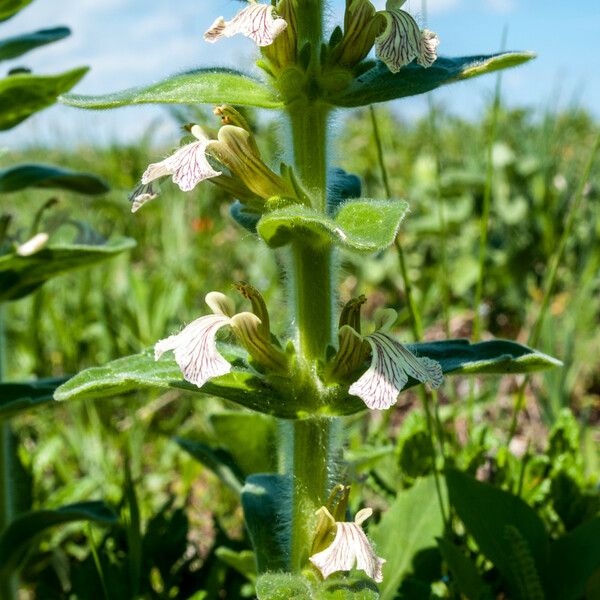
- ☁️ Woolly Foliage: The leaves and stems are densely covered in long, soft, silvery-white hairs, giving the plant a distinct grayish-green or fuzzy appearance.
- 🍦 Creamy Blooms: Unlike the typical electric blue of other bugles, this species produces pale yellow to creamy-white flowers that are often tucked snugly into the leaf axils.
- 🦒 Upright Habit: While many bugleweeds act as creeping groundcovers, Laxmann’s Bugle grows in upright, leafy spires that can reach about 10–12 inches in height.
🏡 In Your Garden
- ☀️ Sun Seeker: This plant is a specialist for rock gardens and sunny borders. Its thick, hairy coat allows it to thrive in full sun and tolerate periods of drought that would wither its moisture-loving relatives.
- 🏜️ Drainage is Key: Because it is adapted to rocky slopes, it hates "wet feet." Plant it in gritty, well-draining soil to prevent root rot, especially during humid summers or wet winters.
- 🐝 Pollinator Magnet: Despite its subtle color, the hooded flowers are a favorite for bees, providing a reliable nectar source in early to mid-summer.
⚠️ Safety & Toxicity
- 🟢 Non-Toxic: Ajuga laxmannii is generally considered non-toxic to humans and common household pets like dogs and cats.
- 👅 Bitter Taste: While not poisonous, the plant is not palatable. Its fuzzy texture and bitter compounds usually discourage curious pets or deer from taking more than a single nibble.
✨ Fun Fact
This plant was named in honor of Erik Laxmann, a Finnish clergyman and naturalist who spent much of his life exploring the vast wilderness of Siberia and Central Asia in the 18th century, documenting rare species that had never been seen by Western science.

Detailed Care Instructions

Place in a bright room that is sun drenched almost all day. Or directly in a south-facing window.

Some plants require more regular watering than others, which should be done every few days. It's critical to maintain the soil moist all of the time. The water requirements of the same plant placed in pots with varying sizes will differ. Because the water in the smaller pot evaporates faster than the water in the larger pot, it will require more watering. Regardless of pot size, the surface should constantly be maintained moist.








