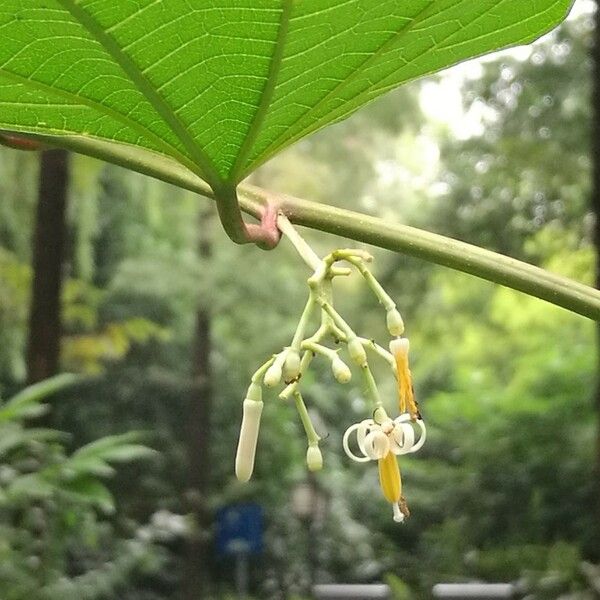
Plant Overview
Often called the Sycamore-leaf Alangium, this elegant shrub from East Asia is a hidden gem for woodland gardens. With leaves that mimic the classic maple shape and delicate, dangling white flowers, it adds a touch of architectural grace to any shaded corner. It is beloved by plant collectors for its "understated" beauty and its ability to thrive where other flowering shrubs might struggle.
🔍 How to Identify
- 🍃 Leaf Shape: Features large, deciduous leaves that are deeply lobed with 3 to 7 points, closely resembling a sycamore or maple leaf. They often have a soft, slightly velvety texture on the underside.
- 🌸 Ribbon Flowers: Produces clusters of slender, creamy-white flowers. The most distinct feature is the petals, which dramatically curl backward into tight spirals, leaving long, elegant stamens exposed.
- 🌳 Growth Habit: This is a multi-stemmed shrub or small tree that grows in a graceful, airy fashion. It tends to spread horizontally, creating a beautiful layered effect in the landscape.
🏡 In Your Garden
- 🌦️ Microclimate Needs: It thrives best in "dappled light." Because its leaves are broad and relatively thin, they can scorch or wilt quickly if exposed to intense, direct afternoon sun. It is the perfect companion for larger canopy trees.
- 🌱 Soil Preference: It prefers a "forest floor" environment. This means it wants soil that is rich in organic matter (leaf mold or compost) and stays consistently moist but never soggy. It hates "wet feet," which can lead to root decline.
⚠️ Safety & Toxicity
- 🟢 Status: Generally considered non-toxic to humans and common household pets.
- 👶 Details: While not known to be poisonous, it is strictly an ornamental plant. Ingesting any part of the foliage or the small dark fruits may cause mild stomach upset in curious toddlers or pets, so it’s best kept as a "look but don't touch" addition to the garden.
✨ Fun Fact
The specific name platanifolium literally translates to "leaves like a Plane tree" (Sycamore). Despite its very "European" look, it is actually a member of the Cornaceae family, making it a distant, exotic cousin to the common Dogwood!

Detailed Care Instructions
To grow Alangium platanifolium (also known as Alangium platanifolium), follow these steps:
- Climate: Ensure that you live in a suitable climate for growing Alangium platanifolium. It is native to subtropical and tropical regions, so it thrives in warm and humid conditions.
- Soil: Use well-draining soil that is rich in organic matter. A mix of sandy loam and garden compost works well.
- Propagation: Alangium platanifolium can be propagated through seeds or semi-hardwood cuttings. Collect seeds from mature fruits and sow them in pots or directly in the ground. For semi-hardwood cuttings, take 6-8 inch long cuttings from a mature plant and dip the bottom end in rooting hormone before planting it in moist soil.
- Planting: Choose a bright location for planting. Dig a hole slightly larger than the root ball of the plant. Place the plant in the hole and backfill with soil, gently firming it around the roots. Provide support if needed.
- Watering: Water the plant regularly, keeping the soil evenly moist but not waterlogged. Alangium platanifolium prefers consistent moisture, especially during the growing season.
- Fertilization: Apply a balanced slow-release fertilizer or organic compost in spring to promote healthy growth. Avoid over-fertilizing, as it may lead to excessive vegetative growth and reduced flowering.
- Pruning: Prune Alangium platanifolium in early spring, before new growth begins. Remove any dead, damaged, or crossing branches to maintain a balanced and healthy shape.
- Pests and diseases: Alangium platanifolium is generally not prone to major pest or disease problems. However, keep an eye out for aphids, scale insects, or fungal diseases. If any issues arise, treat them with appropriate organic or chemical controls.
- Mulching: Apply a layer of organic mulch around the base of the plant to retain moisture, suppress weed growth, and protect the roots during extreme temperatures.
- Ongoing care: Regularly monitor the plant for any signs of stress, such as wilting or yellowing leaves. Ensure proper sunlight, water, and nutrients are provided as needed.
By following these steps, you can successfully grow and care for Alangium platanifolium.

Place in a bright room that is sun drenched almost all day. Or directly in a south-facing window.

Alangium platanifolium plant requires regular watering to maintain its health and growth. The watering frequency should be based on the soil moisture level, weather conditions, and plant's growth stage.
To water the plant, you should first check the soil moisture by inserting your finger about an inch deep into the soil. If the soil feels dry, water the plant thoroughly until the water runs off from the drainage holes. However, avoid overwatering, as it can lead to root rot and other fungal diseases.
You can also water the plant by using a watering can or a hose with a gentle spray nozzle. Water the soil around the plant's base and avoid wetting the leaves to prevent fungal diseases.
During the summer season, when the temperature is high, you may need to water the plant more frequently. However, in winter, you can reduce the watering frequency as the plant becomes dormant.
In conclusion, the Alangium platanifolium plant needs regular watering to thrive, and you should check the soil moisture level before watering. Avoid overwatering and wetting the leaves to prevent fungal diseases.
To fertilize this plant, use a well-balanced fertilizer with equal parts nitrogen, phosphorus, and potassium. Apply the fertilizer during the growing season, typically in the spring and summer months. Dilute the fertilizer with water according to the manufacturer's instructions, and apply it directly to the soil around the root zone of the plant. Avoid getting the fertilizer on the foliage, as this can lead to burning or damage. Water the plant thoroughly after fertilizing to ensure the nutrients are absorbed by the roots.
The ideal soil for this plant should be well-draining and loamy with a pH range of 6.0-7.0. The soil should be rich in organic matter and have good water-holding capacity. Avoid using soil that is too heavy or clay-like, as this can lead to waterlogging and root rot. Additionally, the plant prefers slightly acidic to neutral soils. Use a soil mixture that is formulated specifically for trees and shrubs, and avoid any soil that contains high levels of sand or gravel. Adding a layer of mulch around the base of the plant can help to retain moisture and regulate soil temperature, which can be particularly beneficial in hot, dry climates.
Alangium platanifolium is propagated using stem cutting method. To do this, you will need a healthy and mature plant from which you can take cuttings. Ensure that the plant is disease and pest-free and that you take the cuttings during the dormant season.
- Prepare your materials: You will need sharp, clean, and sterile scissors or pruners to take the cuttings. Have a rooting hormone on hand as well.
- Take cuttings: Take cuttings of about 6 inches long from healthy, mature branches. Be sure to cut just above a leaf node. Remove bottom leaves so that you leave only two or three leaf pairs on top.
- Apply rooting hormone: Dip the cut end of your cutting into a rooting hormone. This hormone will encourage root growth.
- Plant cutting: Now that you have applied the rooting hormone, plant the cuttings in a well-draining potting mix. Keep the soil moist, but not saturated.
- Provide appropriate conditions: Put your pot in a warm, shaded place. It is crucial that you avoid direct sunlight as it can be too intense for the cuttings. Ensure that you keep the soil moist and the humidity high.
- Monitor your cuttings: Check your cuttings every few days to make sure they are not drying out, and that no pests are present. After about 4-6 weeks, you will see new growth indicating the roots have taken hold.
- Transplanting: Once your cuttings develop roots and new growth, you can transplant them into a larger pot or move them outside. Ensure the soil is well-draining, as the plant likes moist soil but doesn't like to be kept soggy.
By following these steps, you should successfully propagate Alangium platanifolium plant from cuttings.








