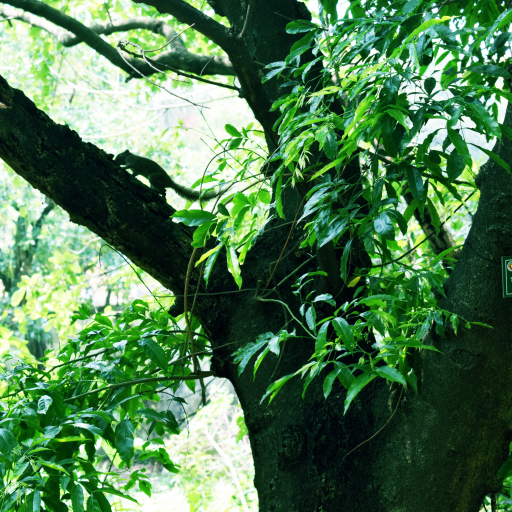
Plant Overview
Known as the Potka Siris or the Glossy-leaved Albizia, this elegant tree is a shimmering gem of South and Southeast Asia. It is often celebrated for its "mirror-like" foliage that reflects sunlight, giving the entire canopy a polished, healthy glow. While it belongs to the same family as the famous Silk Tree, Albizia lucidior offers a more refined, stately appearance that has made it a favorite for providing dappled shade in tropical estates and tea plantations.
🔍 How to Identify
- 🍃 The Foliage: Unlike the tiny, feathery leaflets of its cousins, the leaves of this species are larger, lance-shaped, and remarkably shiny. They are deep green and arranged in a bipinnate pattern that looks like a sophisticated green ladder.
- ☁️ The "Puffball" Blooms: In the spring, the tree erupts in clusters of creamy-white or pale yellow flowers. These aren't traditional petaled flowers; they look like delicate, fuzzy pom-poms made of hundreds of tiny threads (stamens).
- 🫛 The Seed Pods: After the flowers fade, long, flat, papery pods appear. They turn a rich reddish-brown as they mature and can often be heard rattling softly in the wind during the dry season.
🏡 In Your Garden
- 🌱 The Soil Improver: This tree is a natural "fertilizer factory." As a member of the legume family, it has a symbiotic relationship with soil bacteria that fix nitrogen. This means it actually improves the quality of the earth it grows in, making it a great companion for nutrient-hungry neighbors.
- 🧱 Root Awareness: While it is a beautiful shade provider, it has a strong, spreading root system. It is best to plant it at least 15–20 feet away from house foundations, pipes, or paved walkways to prevent the powerful roots from "remodeling" your landscaping.
⚠️ Safety & Toxicity
- 🟢 General Safety: Albizia lucidior is generally considered non-toxic to touch and safe to have in a landscape where people are present.
- 🐶 Pet Caution: Like many trees in the Mimosa family, the fallen seed pods and seeds contain saponins. While not usually deadly, if a curious dog or cat ingests a large amount of the pods, it can lead to digestive upset, vomiting, or lethargy.
✨ Fun Fact
In its native regions, the bark of the Potka Siris is historically significant; it is so rich in natural tannins that it was traditionally used as a primary ingredient for tanning leather and creating dark dyes!

Detailed Care Instructions








