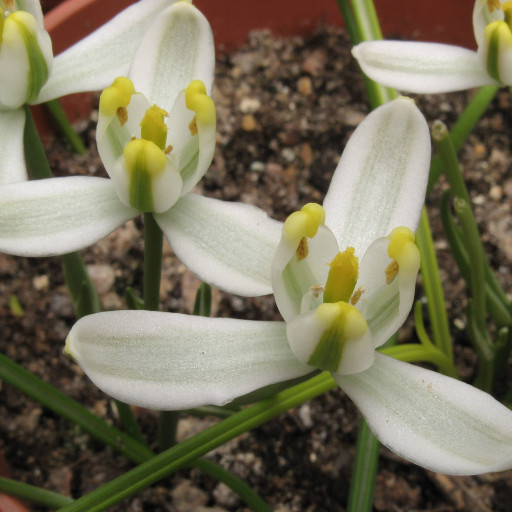
Plant Overview
Often called the Dwarf Albuca, this South African native is a hidden gem for small-space gardeners and succulent enthusiasts. Despite its delicate, grass-like appearance, it is a rugged mountain survivor from the Drakensberg region. It is most loved for its architectural flowers that release a surprising, sweet scent reminiscent of almond and vanilla during the warmth of the day.
🔍 How to Identify
- 🌸 Striped Blooms: The flowers are star-shaped and white, featuring a distinctive, thick green stripe running down the center of each of the six petals.
- 🍃 Slender Foliage: Unlike its curly-leaved cousins, Albuca humilis has straight, needle-like green leaves that form a tidy, grass-like tuft.
- 🧅 Exposed Bulbs: The plant grows from small, greenish-white bulbs that often sit partially above the soil surface, resembling tiny onions.
🏡 In Your Garden
- ⛰️ Alpine Origins: Because it hails from rocky mountain slopes, this plant demands exceptional drainage. It thrives in "gritty" mixes—think more gravel and sand, less heavy potting soil—to prevent the bulb from rotting.
- 😴 Seasonal Sleep: This species follows a specific growth cycle. It puts on a show in the spring and summer but may go dormant and lose its leaves in the winter. If the foliage turns yellow as temperatures drop, simply cut back on water and let the bulb rest in a dry spot.
⚠️ Safety & Toxicity
- 🐾 Mildly Toxic: Like many members of the Asparagus family, the bulbs contain certain compounds that can cause digestive upset (nausea or vomiting) if eaten by pets or curious children.
- 🧤 Skin Sensitivity: The sap within the bulb and leaves may cause minor skin irritation or itchiness for those with sensitive skin. It is a good practice to wash your hands after repotting or dividing the bulbs.
✨ Fun Fact
The name humilis means "lowly" or "small" in Latin, referring to its dwarf stature. However, its fragrance is anything but small—a single cluster of these tiny flowers can fill a small greenhouse or room with the scent of a bakery!

Detailed Care Instructions
Here are some tips on how to grow Albuca Humilis plants:
- Choose a suitable location: Albuca Humilis plants prefer a location with full sun exposure, but they can also tolerate partial shade.
- Soil requirements: Use well-draining soil for planting. You can mix sand or perlite with regular potting soil to improve drainage. Albuca Humilis plants can tolerate a wide range of soil pH levels.
- Watering: Water the plant regularly, keeping the soil evenly moist. Avoid overwatering, as it can lead to root rot. Allow the top inch of soil to dry out before watering again. Reduce watering during the colder winter months.
- Fertilization: Apply a balanced, slow-release fertilizer during the active growing season (spring and summer). Follow the instructions on the fertilizer package for the proper dosage.
- Temperature and humidity: Albuca Humilis plants thrive in warm temperatures between 65-80°F (18-27°C). They can tolerate cooler temperatures but may become dormant during the winter. Average household humidity is usually sufficient, but you can increase humidity by misting the plant occasionally.
- Propagation: Albuca Humilis plants can be propagated by dividing the bulbs or by planting the seeds. Divisions should be done during the dormant period, and seeds should be sown in spring or early summer.
- Pests and diseases: Albuca Humilis plants are generally pest-resistant, but they can be susceptible to common houseplant pests like aphids, mealybugs, and spider mites. Inspect the plant regularly and treat any infestations promptly.
- Repotting: Repot the plant every 1-2 years, preferably during the active growth period in spring. Use a slightly larger pot and fresh soil mix.
Remember to do some research specific to your region and climate, as growing conditions can vary.

Place in a window with dappled sun or a spot in the middle of a room. Or directly in a window facing west or east.

To water this plant, you should thoroughly saturate the soil until water drains out of the bottom of the pot. Wait until the top inch of soil is dry before watering again. Avoid overwatering as this can cause root rot. It is best to water from the base of the pot to prevent water from getting on the leaves. Use room temperature water, and be sure to clean the watering container regularly to prevent any buildup of mineral deposits.
To fertilize this plant, you should use a balanced liquid fertilizer with an N-P-K ratio of 10-10-10. Dilute the fertilizer according to the instructions on the label and apply it to the soil every two weeks during the growing season from spring to fall. It is important not to over-fertilize as this can stress the plant and cause it to produce weak growth. Limit fertilization in winter.
The ideal soil for the Albuca Humilis plant should have good drainage and be well-aerated. It should also contain a mix of organic matter such as compost or peat moss and coarse sand or perlite to provide the necessary nutrients and minerals for the plant to grow. The soil pH should be slightly acidic, around 6.5. Additionally, the soil should not be compacted or heavy, which can limit root growth and cause waterlogging. It is recommended to choose a soil mix specifically designed for succulent plants or cacti to ensure the plant's optimal growth and health.
Albuca Humilis can be propagated through bulb scales or offsets. In order to do this, first separate the bulbs from the parent plant and allow them to air dry for a few days. Once the bulbs have dried, remove any dead or damaged scales or offsets and plant them in well-draining soil with a mixture of sand and peat moss. Keep the soil moist but not waterlogged and provide bright, indirect light. The newly planted bulbs should begin to sprout in a few weeks and can be transplanted into individual pots once they have developed sufficient roots.








