Plant Overview
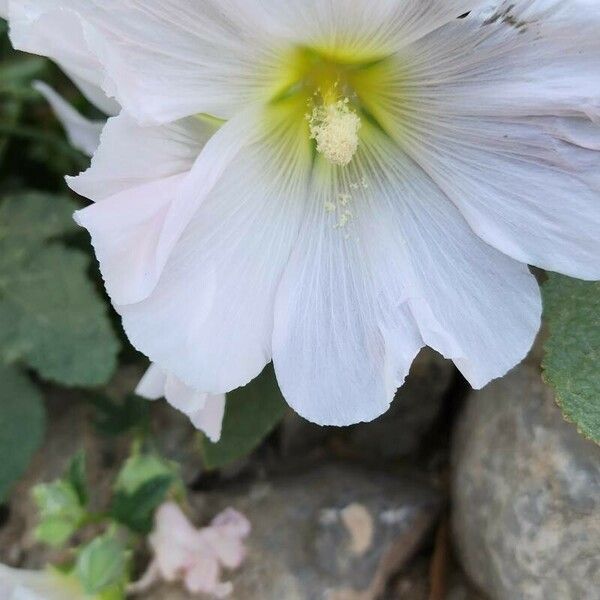
Known as Aucher’s Hollyhock, this stately perennial is the rugged, wild cousin of the common cottage garden favorite. Native to the rocky slopes of Iran and Iraq, it brings a touch of untamed Middle Eastern beauty to high-desert landscapes and dry gardens. With its towering flower spikes and soft, silken blooms, it acts like a natural skyscraper, drawing the eye upward while providing a feast for local pollinators.
🔍 How to Identify
- 🌸 The Blooms: Features large, cup-shaped flowers that typically appear in shades of pale pink, lavender, or creamy white, often with a subtle, buttery-yellow center.
- 🍃 The Foliage: The leaves are broad, roughly heart-shaped, and covered in a fine, "stellate" (star-shaped) fuzz that gives them a grayish-green, velvety appearance.
- 📏 The Stature: A true giant of the garden, it produces thick, hairy stalks that can soar up to 6 or 7 feet high, with flowers blooming sequentially from the bottom to the top.
🏡 In Your Garden
- 🏜️ Drainage is Vital: Unlike some thirstier garden hybrids, Alcea aucheri is adapted to rocky terrains. It despises "wet feet" and requires exceptionally well-draining soil to prevent its deep taproot from rotting during the winter.
- 🌬️ Airflow Matters: Because of its dense, hairy leaves, it can be susceptible to "Hollyhock Rust" (a fungal infection). Planting it in a breezy spot with plenty of space between neighbors keeps the foliage dry and healthy.
- 🦋 Pollinator Magnet: Its deep, open cups are designed perfectly for bumblebees, who can often be found "napping" inside the flowers during the cool morning hours.
⚠️ Safety & Toxicity
- ✅ Status: Generally considered non-toxic to humans and common household pets.
- 🌵 Skin Sensitivity: The tiny, stiff hairs on the stems and leaves can be a mechanical irritant. If you have sensitive skin, you might experience a mild, itchy rash after pruning, so wearing gloves is recommended.
✨ Fun Fact
The genus name Alcea comes from the Greek word alkē, which means "remedy" or "protection." Historically, various species of Hollyhocks were used in ancient herbalism to create soothing salves for skin inflammation, a trait they share with their close relative, the Marshmallow plant!

Detailed Care Instructions








