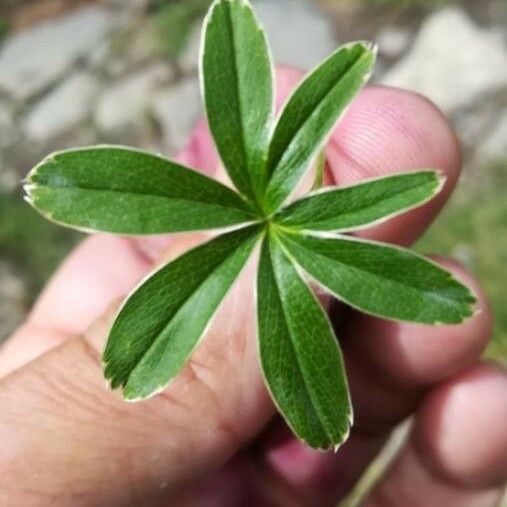
Plant Overview
A silver-cloaked mountaineer, the Alpine Lady's Mantle is a hardy perennial that brings the rugged elegance of the high Alps into the garden. Often called the "Mountain Alchemist," it is famous for the way its velvety leaves catch morning dew, turning simple droplets into shimmering pearls that look like liquid silver. It is a more refined, compact relative of the common garden Lady's Mantle, prized for its metallic sheen.
🔍 How to Identify
- 🍃 The Silver Lining: The leaves are palm-shaped and deeply lobed, but their most striking feature is the dense, silky white hairs on the undersides and edges, giving the entire plant a frosted, silvery glow.
- 🌼 Frothy Blooms: In early summer, it produces airy, delicate clusters of tiny, star-shaped yellow-green (chartreuse) flowers that appear like a light mist over the foliage.
- 🌱 Compact Cushion: Unlike its larger cousins, this species grows in low, tight mounds, rarely exceeding 6 to 8 inches in height, making it an excellent choice for small spaces.
🏡 In Your Garden
- 🏔️ The Rock Garden Specialist: This plant is an "extremophile" at heart. It thrives in well-draining, gritty soil and is perfectly suited for rock gardens, stone walls, or alpine troughs where water can drain away quickly.
- ❄️ Cool and Collected: While it is incredibly cold-hardy, it struggles in sweltering, humid heat. In warmer regions, ensure it has plenty of mulch to keep the roots cool and a spot that receives morning sun but afternoon shade.
⚠️ Safety & Toxicity
- ✅ Safe for All: Alpine Lady's Mantle is generally considered non-toxic to humans, cats, and dogs. It is a "worry-free" addition to a family-friendly landscape.
- 🧤 Texture Sensitivity: While not chemically irritating, the fine, silky hairs on the leaves can occasionally feel "scratchy" to those with very sensitive skin. Wearing gloves during heavy pruning is a simple precaution.
✨ Fun Fact
🧪 The Alchemist's Water: The genus name Alchemilla is derived from the Arabic word for alchemy. Medieval alchemists believed that the dew drops gathered from this plant's water-repellent leaves were the purest form of water on Earth, and they used these "celestial" droplets in their quest to turn lead into gold!

Detailed Care Instructions

Place in a window with dappled sun or a spot in the middle of a room. Or directly in a window facing west or east.

Some plants require more regular watering than others, which should be done every few days. It's critical to maintain the soil moist all of the time. The water requirements of the same plant placed in pots with varying sizes will differ. Because the water in the smaller pot evaporates faster than the water in the larger pot, it will require more watering. Regardless of pot size, the surface should constantly be maintained moist.








