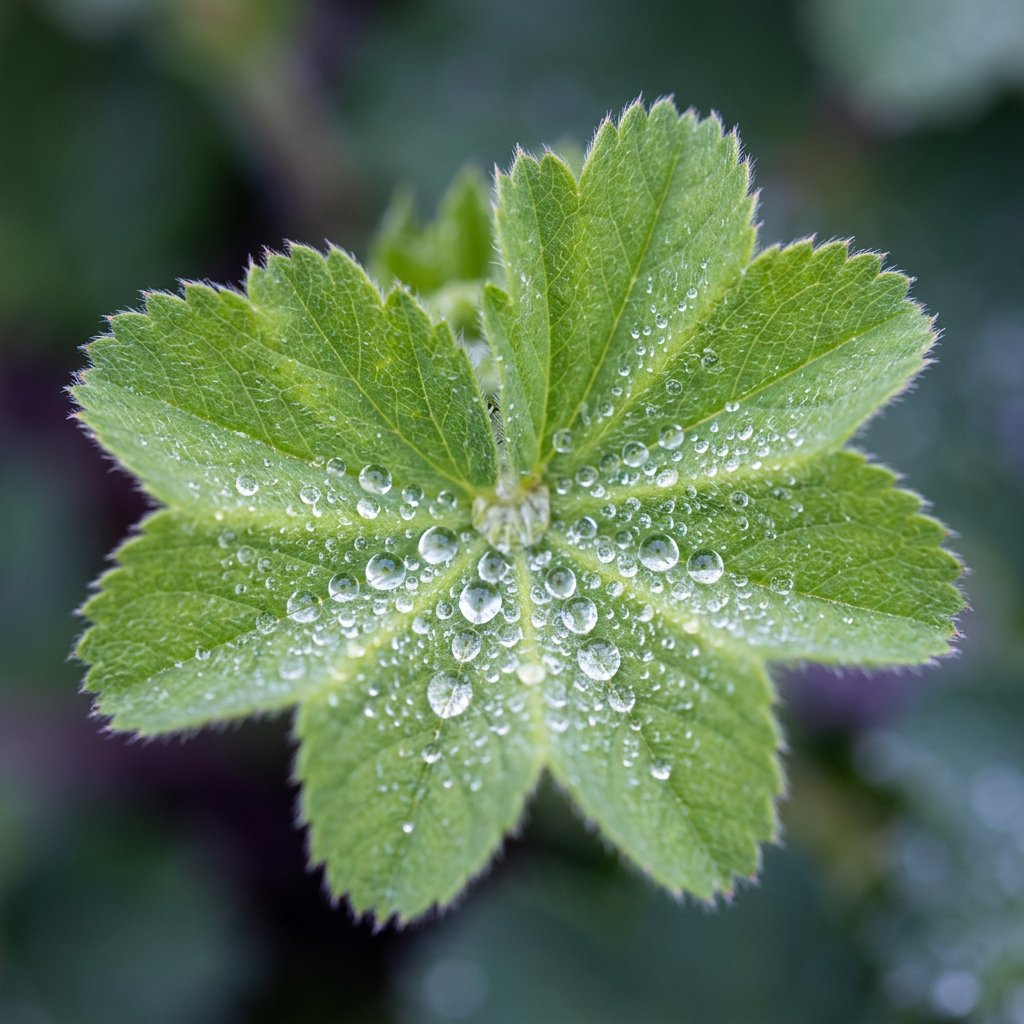
Plant Overview
Often called the "Lady’s Mantle," Alchemilla mollis is a cottage garden darling known for its romantic, pleated foliage and its almost magical ability to hold onto morning dew. In medieval times, it was believed to have mystical healing properties, and its name literally translates to "Little Alchemist." It serves as a soft, frothy groundcover that perfectly bridges the gap between more structural, taller perennials.
🔍 How to Identify
- 🍃 Scalloped Leaves: Large, circular, grey-green leaves with distinctive pleated folds and finely serrated edges that resemble a ruffled cloak.
- ☁️ Frothy Blooms: Airy clusters of tiny, star-shaped, chartreuse (yellow-green) flowers that appear like a light mist above the foliage in early summer.
- 💧 Velvet Texture: The leaves are covered in soft, fine hairs (pubescence) which cause water droplets to bead up and sparkle like diamonds rather than soaking in.
🏡 In Your Garden
- 🌥️ Light & Moisture: While it thrives in partial shade, it can handle full sun if the soil stays consistently moist. In hotter climates, the delicate leaves may "scorch" or turn brown at the edges if the ground dries out completely.
- ✂️ Self-Seeding Savvy: This plant is a prolific self-seeder. If you want to prevent it from spreading throughout your garden beds, be sure to "deadhead" or cut back the flower stalks as soon as the color begins to fade.
- 🌱 The "Filler" Hero: It is incredibly hardy and rarely suffers from pests, making it an excellent choice for stabilizing the edges of paths or softening the look of heavy stone walls.
⚠️ Safety & Toxicity
- ✅ Safe for All: Alchemilla mollis is generally considered non-toxic to dogs, cats, and horses.
- 🍵 Historical Use: It is not known to cause skin irritation and has been used historically in traditional herbalism for its astringent properties, though it is primarily grown for its ornamental beauty today.
✨ Fun Fact
Alchemists once believed that the dew drops found on the leaves of this plant were the purest form of water on Earth. They would collect these "heavenly" droplets, hoping to use them as a key ingredient in their quest to turn lead into gold!

Detailed Care Instructions
| Color | Yellow |
| Soil Ph | 5.5 To 7.5 |
| Lighting | Full Sun |
| Soil Type | Chalk, Clay, Loam, Sand |
| Bloom Time | June To September |
| Plant Type | Heraceous Perennial Plant |
| Mature Size | 1 To 2 Feet Tall And Wide |
| Native Area | Southern Europe |
| Sun Exposure | Full Sun, Partial Shade |
| Hardiness Zones | 3 To 8 |
To grow Alchemilla mollis (or Lady's mantle), follow these steps:
- Choose a planting location: Alchemilla mollis prefers partial shade, so find a spot in your garden that receives morning sun but is partially shaded during the hottest part of the day.
- Prepare the soil: Alchemilla mollis prefers moist, well-draining soil. Amend the soil with organic matter like compost or peat moss to improve drainage and nutrient content.
- Planting: Dig a hole twice as wide and deep as the root ball of the plant. Place the plant in the hole, ensuring that the top of the root ball is level with the soil surface. Backfill the hole with soil and gently press it down around the plant.
- Watering: Water the plant thoroughly after planting to settle the soil and provide moisture for the roots. Afterwards, keep the soil consistently moist but not overly saturated.
- Mulching: Apply a layer of organic mulch around the base of the plant. This will help retain moisture in the soil and suppress weed growth.
- Fertilizing: Alchemilla mollis does not require much fertilization. If necessary, use a balanced, slow-release fertilizer in early spring.
- Pruning: Trim back any dead or damaged foliage in early spring to promote new growth. You can also prune the plant after flowering if it becomes leggy or overgrown.
- Dividing: Alchemilla mollis tends to spread rapidly. Every few years, divide the plant in early spring or fall to rejuvenate it and control its growth.
- Pest and disease management: Alchemilla mollis is generally disease-resistant, but it may occasionally be affected by powdery mildew or leaf spot. Ensure proper air circulation and avoid overhead watering to prevent these issues.
By following these steps, you should be able to successfully grow Alchemilla mollis.

Place in a window with dappled sun or a spot in the middle of a room. Or directly in a window facing west or east.

To water this plant, it is important to first assess the soil moisture level by sticking a finger about an inch deep into the soil. If the soil feels dry, it is time to water.
When watering, it is best to do so early in the morning or late in the evening when the temperatures are cooler. This will allow the water to soak into the soil without quickly evaporating.
Water the plant at the base, being careful not to get the leaves wet. Overwatering can lead to root rot, so ensure the soil is not sitting in water for an extended period.
In general, these plants prefer a consistently moist yet well-draining soil, so it is recommended to water deeply and infrequently rather than giving the plant small amounts of water frequently. During periods of high heat or drought, the plant may require more frequent watering.
To fertilize this plant, you will want to use a balanced fertilizer with an equal ratio of nitrogen, phosphorus, and potassium. Apply the fertilizer at half strength every two to three weeks during the growing season, which typically runs from spring to fall. Be careful not to over-fertilize, as this can cause the leaves to yellow and the plant to become leggy. Water the plant thoroughly after fertilizing to ensure that the nutrients are absorbed by the roots.
The recommended type of soil for the Alchemilla Mollis plant is a well-draining soil that is rich in organic matter. It should be slightly acidic with a pH level of around 6.5. The soil should be moist but not waterlogged, and it should contain a good balance of nutrients to support the strong growth of the plant. It is also important to ensure that the soil is free from any weeds or pests that may harm the Alchemilla Mollis plant. Additionally, the plant prefers full or partial shade, so it is important to take this into consideration when selecting a location to plant it.
Alchemilla Mollis plant can be propagated through root division. The process involves carefully digging up the plant and separating the clumps into individual plants. The ideal time for this is in the spring when new growth appears. The plant should be lifted with a fork or shovel, and root clumps should be separated with a sharp knife or garden shears. Each clump should have several leaf stems and a good root system. Once separated, the new plants should be replanted in a suitable location with well-draining soil, watered and left to establish themselves.








