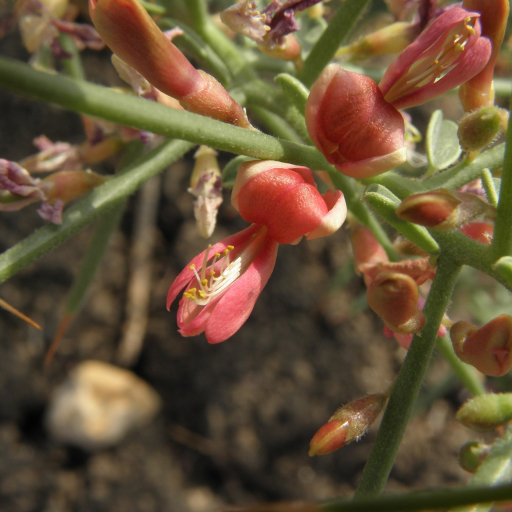
Plant Overview
Often called "Camelthorn" or the "Manna Tree," Alhagi maurorum is a rugged survivor of the desert. Known for its legendary ability to withstand extreme heat and provide sustenance for camels, it has a rich history in Middle Eastern folklore and ancient medicine. While it may look like a simple bramble to the untrained eye, it is a master of deep-ground hydration and soil enrichment.
🔍 How to Identify
- 🌵 The Thorns: The plant is heavily armed with stiff, needle-sharp spines that grow from the leaf axils, often tipped with a slight yellow tint.
- 🌸 Pea-Like Blooms: In the heat of summer, it produces small, delicate flowers ranging from bright pink to deep maroon, revealing its membership in the legume (pea) family.
- 🍃 Small Foliage: The leaves are simple, oval-shaped, and relatively sparse, a clever adaptation designed to minimize water loss in arid environments.
🏡 In Your Garden
- 🏜️ The Taproot King: This plant develops an incredibly deep taproot system that can reach over 15 feet into the earth. Because of this, it is nearly impossible to transplant once it has taken hold.
- 🌱 Tough-Love Ecology: It thrives in poor, salty, or sandy soils where other plants wither. In some regions outside its native range, like the American Southwest, it is considered a noxious weed because its resilience makes it very difficult to eradicate.
⚠️ Safety & Toxicity
- 🛡️ Physical Hazard: Alhagi maurorum is not known to be chemically toxic to humans or pets; however, its thorns are formidable.
- 🧤 Puncture Risk: The spines can easily pierce skin or thin gardening gloves. Keep it away from high-traffic areas where children or pets play to avoid painful scrapes and punctures.
✨ Fun Fact
In extremely hot weather, the stems of this plant secrete a sweet, resinous sap known as "Persian Manna." Historically, this substance was harvested by shaking the bushes over a cloth and was used as a natural sweetener and a traditional treatment for digestive ailments.

Detailed Care Instructions
To grow Alhagi Maurorum, also known as camelthorn, follow these steps:
- Obtain seeds or seedlings: Acquire seeds or young seedlings of Alhagi Maurorum. You can purchase them from local nurseries or online botanical stores.
- Prepare the soil: Alhagi Maurorum prefers well-drained, sandy or loamy soil. Ensure the soil is loose, enabling good water drainage.
- Choose a suitable location: Select a sunny spot for planting, as Alhagi Maurorum requires full sun exposure for optimal growth.
- Plant seeds or seedlings: If using seeds, scatter them on the prepared soil surface and lightly cover them with a thin layer of soil. For seedlings, plant them at a depth and spacing recommended on the seed package or by the nursery.
- Water regularly: Initially, keep the soil lightly moist until the seeds germinate or seedlings establish their roots. Avoid overwatering, as it can lead to root rot.
- Control weeds: Keep the planting area free from weeds, as they can compete for nutrients and water. Regularly remove any unwanted vegetation around the Alhagi Maurorum plants.
- Prune and shape: If desired, prune the plant periodically to control its size and shape. This can help maintain a tidy appearance and promote better air circulation.
- Fertilize: Alhagi Maurorum generally doesn't require additional fertilization if grown in fertile soil. However, if the soil is poor, you can apply a general-purpose fertilizer according to the manufacturer's instructions.
- Protect against pests and diseases: Monitor the plants regularly for signs of pests or diseases such as aphids or powdery mildew. Take necessary measures, such as using organic insecticides or fungicides, if necessary.
- Harvesting: Depending on your purpose for growing Alhagi Maurorum, you can harvest its shoots, leaves, or seeds when they reach maturity. Exercise caution as some parts of the plant may have thorns.
Remember, Alhagi Maurorum is considered an invasive species in some regions, so it's crucial to check with your local agricultural or environmental authorities before growing it.

Place in a bright room that is sun drenched almost all day. Or directly in a south-facing window.

To properly water this plant, it is important to first check the soil to determine its moisture level. If the soil feels dry to the touch, water the plant slowly and deeply until water begins to drain out the bottom of the pot or the surrounding soil is moistened. Avoid watering too frequently as this plant prefers well-draining soil and can easily suffer from root rot if kept too moist. Additionally, it is important to avoid getting water on the leaves as this plant is sensitive to fungal diseases. Consider using a watering can with a long, narrow spout or a drip irrigation system to direct water towards the soil and not the foliage. Finally, ensure that the pot or planting area has sufficient drainage to prevent excess water from accumulating around the roots.
To fertilize this plant, you should use a well-balanced fertilizer with equal amounts of nitrogen, phosphorus, and potassium. Apply the fertilizer during the plant's active growing season, typically in the spring and summer months. Avoid over-fertilizing as this can lead to burned or damaged roots. Instead, follow the instructions on the fertilizer packaging carefully and only apply the recommended amount. Water the plant thoroughly after fertilizing to ensure the nutrients are absorbed into the soil.
Alhagi Maurorum prefers well-drained, sandy soil with a slightly alkaline pH. The soil should be rich in nutrients and have good aeration to support the growth of the plant. The plant can tolerate some drought and is moderately salt-tolerant, but it is best to avoid saline or waterlogged soils. Mulching around the plant can help to retain moisture and suppress weed growth. Additionally, the soil should be regularly monitored for nutrient deficiencies and adjusted accordingly.
To propagate this plant, first obtain a cutting from a healthy parent plant. Choose a stem that is young, green, and has no signs of damage or disease. Cut the stem at a 45-degree angle with a sharp, sterile knife. Remove the lower leaves from the cutting, leaving only a few at the top.
Next, prepare a pot by filling it with a well-draining soil mix. Use a pencil to create a hole in the soil, and insert the cutting into the hole, ensuring that the leaves at the top are above the soil surface. Firmly press the soil around the cutting to prevent air pockets.
Water the cutting gently, and place it in a warm, bright location that receives indirect sunlight. Keep the soil moist but not waterlogged, and mist the cutting with water daily to increase humidity around it.
Over time, the cutting will develop roots and begin to grow. You can then transplant it into a larger pot or into the garden, depending on your needs.








