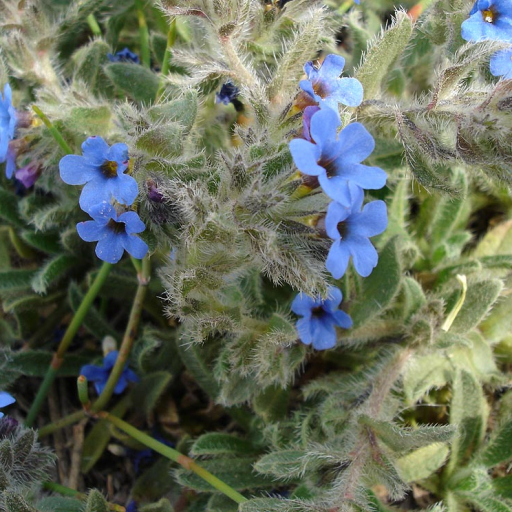
Plant Overview
Often called Dyer's Bugloss or simply Alkanet, this Mediterranean native has been a staple in the beauty industry for centuries. While it produces stunning, electric-blue flowers that look like tiny jewels, its most famous secret lies underground in its dark, "bloody" roots. Historically, the red pigment extracted from its bark was used to tint everything from Roman lipsticks to royal wines and fine violins.
🔍 How to Identify
- 💙 The Flowers: It features clusters of small, trumpet-shaped flowers that transition from a deep violet to a brilliant sky blue as they mature.
- 🌿 The Foliage: The leaves and stems are covered in stiff, bristly white hairs, giving the plant a slightly "fuzzy" or silvery-green appearance.
- 🩸 The Root: If you were to scratch the surface of the root, you’d find a thick, dark purple-red bark that easily stains fingers and clothes.
🏡 In Your Garden
- ⏳ Root Stability: Because this plant develops a deep, sturdy taproot to survive dry climates, it absolutely hates being moved. Choose its "forever home" in your garden carefully, as transplanting often results in the plant wilting or dying.
- ☀️ Mediterranean Vibes: Think rocky and dry. Alkanna thrives in sandy, poor-quality soil where other plants might struggle. It prefers full sun and "wet feet" (overwatering) is its greatest enemy, often leading to root rot.
⚠️ Safety & Toxicity
- 🚫 Status: Not for consumption.
- 🧪 Details: While the dye is used topically in cosmetics, the plant contains pyrrolizidine alkaloids, which are toxic to the liver if ingested by humans, cats, or dogs. Additionally, the bristly hairs on the leaves can cause mild skin irritation for those with sensitive skin—wearing gloves while weeding is a smart move.
✨ Fun Fact
In the 18th century, dishonest wine merchants would use Alkanet root to give cheap, pale white wines a rich, ruby-red color, passing them off as expensive vintages or "Port" to unsuspecting customers!

Detailed Care Instructions
To grow Alkanna Tinctoria, also known as dyer's alkanet plant, you can follow these steps:
- Select a suitable location: Choose a sunny spot in your garden with well-draining soil. Alkanna Tinctoria prefers full sun but can tolerate partial shade.
- Prepare the soil: Dig the soil to loosen it and remove any weeds or rocks. Ensure good drainage by amending the soil with organic matter, such as compost or well-rotted manure.
- Planting: Sow the seeds directly into the prepared soil. You can also start the seeds indoors 4-6 weeks before the last frost date and transplant the seedlings outdoors once the weather has warmed up.
- Seeds depth: Plant the seeds about 1/4 to 1/2 inch deep and space them about 12-18 inches apart. Gently cover the seeds with soil and pat it down lightly.
- Watering: After planting, water the soil thoroughly and maintain evenly moist but not waterlogged conditions. Water regularly, especially during dry periods, and avoid letting the soil completely dry out.
- Fertilization: Apply a balanced organic fertilizer once a month during the growing season to promote healthy growth.
- Mulching: Mulch around the plants to help retain moisture, control weeds, and keep the soil temperature consistent.
- Pruning: Trim back any dead or damaged leaves to encourage healthy growth. Alkanna Tinctoria can grow up to 2-3 feet high, so staking may be necessary to support the plants if they become top-heavy.
- Harvesting: Harvest the leaves and roots of the plant when they are at their peak for dyeing purposes. Typically, this is done in the second or third year of growth when the roots are fully established.
- Overwintering: Alkanna Tinctoria is hardy in USDA zones 5-9. In colder regions, provide a layer of mulch to protect the plant's roots during the winter.
Remember to research any specific requirements or tips specific to your region or climate to ensure successful growth of Alkanna Tinctoria.

Place in a bright room that is sun drenched almost all day. Or directly in a south-facing window.

The plant should be watered regularly and deeply. Avoid letting the soil become completely dry between waterings, but also be careful not to overwater as this can cause root rot. Water at the base of the plant and try to avoid getting water on the leaves. The frequency of watering will depend on the climate and humidity of the plant's environment. During hot, dry weather, the plant may need to be watered more frequently. In cooler weather or humid environments, the plant can go longer between waterings. It is important to note that although the plant likes consistent moisture, it cannot tolerate standing water or waterlogged soil.
For optimal growth and health of this plant, apply a balanced fertilizer with equal amounts of nitrogen, phosphorus and potassium. Use a slow-release granular fertilizer or a liquid fertilizer once a month during the growing season. Be careful not to over-fertilize as this can lead to burn and damage to the plant. It is best to fertilize after watering the plant to avoid stressing the roots.
The optimal soil for the Alkanna Tinctoria plant should be well-draining and rich in nutrients. It should have a pH range between 6.5 to 7.5, which is slightly alkaline. It is recommended to use a mixture of loamy soil, sand, and compost for the best growth results. The soil should be kept moist but not waterlogged, as this can cause root rot. Additionally, the plant prefers full sun to partial shade and a warm climate. The Alkanna Tinctoria plant has a deep taproot, so it is advised to plant it in a deep container or in the ground to accommodate its root system.
Alkanna Tinctoria plant can be propagated through seeds or cuttings. To propagate through seeds, sow them in well-draining soil in the spring. The seeds need to be covered lightly with soil and kept moist until germination occurs.
To propagate through cuttings, select a healthy stem that is at least 3 inches long. Cut it just below a node (where a leaf joins the stem) at a 45-degree angle. Dip the cutting in rooting hormone powder to encourage root growth. Plant the cutting in a pot filled with well-draining soil and keep it moist but not wet. Place the pot in a warm location with indirect sunlight. Roots will begin to grow within a few weeks, after which the plant can be moved to a larger container or transplanted into the ground.








