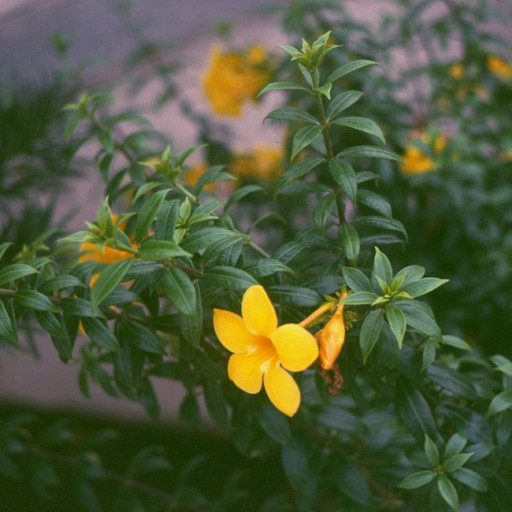
Plant Overview
Known affectionately as the "Golden Trumpet" or "Yellow Bell," Allamanda cathartica is a sun-drenched climber that brings the vibrant energy of its native Brazil to tropical gardens worldwide. Its large, waxy yellow blooms are so bright they almost look hand-painted. While it’s a showstopper on a trellis, this plant is as tough as it is beautiful, thriving in the heat where other flowers might wilt.
🔍 How to Identify
- 🎺 The Flowers: Large, trumpet-shaped blooms that can reach 4 inches across. They feature five overlapping petals of a rich, canary yellow, often with delicate white or reddish markings deep inside the throat.
- 🍃 The Foliage: The leaves are thick, glossy, and grow in "whorls" (groups of three or four) around the stem. They have a pointed, elliptical shape and a leathery texture that helps the plant retain moisture.
- 🌿 The Stem: A vigorous, woody vine that doesn’t have tendrils to climb; instead, it leans and scrambles over supports. If you break a stem, it will leak a thick, milky white sap.
🏡 In Your Garden
- ☀️ Sun Seeker: This plant is a true sun-worshiper. To get those iconic "trumpets," it needs at least 6 hours of direct light. In shady spots, it will grow plenty of leaves but very few flowers.
- ✂️ Pruning Nuance: Because it is a "sprawling" climber, it needs a sturdy trellis or fence for support. Prune it in early spring to encourage "bushier" growth; otherwise, it can become quite leggy and thin at the base.
- 💧 Thirsty but Picky: It loves high humidity and consistent moisture, but it hates "wet feet." Ensure your soil is rich and well-draining to prevent root rot during the rainy season.
⚠️ Safety & Toxicity
- 🚫 Status: Toxic to humans and pets.
- 🧪 The Details: The entire plant contains iridoid glycosides. If ingested, it can cause vomiting and diarrhea (its species name cathartica actually refers to its "purging" effect).
- 🧤 Skin Irritant: The milky white sap contains latex and can cause significant skin irritation or rashes upon contact. It is highly recommended to wear gloves when pruning or handling cuttings.
✨ Fun Fact
The name Allamanda was chosen to honor Dr. Frédéric-Louis Allamand, an 18th-century Swiss botanist who first described the plant to Linnaeus while traveling through Surinam!

Detailed Care Instructions
| Color | Yellow |
| Soil Ph | Acidic |
| Humidity | High |
| Lighting | Full Sun |
| Soil Type | Well-Drained |
| Bloom Time | Summer, Fall |
| Difficulty | Medium |
| Plant Type | Evergreen |
| Mature Size | 10-20 Ft. Tall, 3-6 Ft. Wide |
| Native Area | South America |
| Temperature | 18°C - 25°C |
| Sun Exposure | Full, Partial |
| Hardiness Zones | 10-11 |
To grow Allamanda cathartica, also known as Allamanda, follow these steps:
- Climate: Allamanda thrives in tropical and subtropical climates. Make sure your location has warm temperatures year-round, with minimum temperatures above 60°F (15°C). It should receive full sun or partial shade throughout the day.
- Soil: Use well-draining soil with a pH level between 6.0 and 7.5. Add organic matter, such as compost or peat moss, to improve soil fertility and drainage.
- Planting: Choose a suitable location with enough space for the plant to grow. Dig a hole twice as wide and as deep as the root ball. Place the plant in the hole, ensuring that the top of the root ball is level with the soil surface. Backfill the hole with soil, gently firming it around the plant.
- Watering: Allamanda requires regular watering, especially during the growing season. Water the plant deeply, ensuring the soil remains consistently moist but not waterlogged. Reduce watering during the dormant period.
- Fertilization: Allamanda benefits from regular fertilization to promote healthy growth and abundant blooms. Use a balanced, slow-release fertilizer formulated for blooming plants. Follow the manufacturer's instructions for application rates and frequency.
- Pruning: Prune Allamanda after flowering or during late winter or early spring to maintain its shape and remove any dead or damaged branches. It can be pruned quite heavily if necessary.
- Trellis or support: Allamanda is a vine, so it may benefit from a trellis or support structure to help it climb and grow upright. Install a sturdy trellis, arbor, or fence for the plant to climb.
- Pests and diseases: Monitor your Allamanda regularly for common pests like aphids, spider mites, and whiteflies. Treat infestations promptly with organic or chemical insecticides. Additionally, ensure adequate airflow around the plant to prevent fungal diseases such as powdery mildew.
- Propagation: Allamanda can be propagated through stem cuttings. Take a 6-8 inch cutting from a healthy plant, remove the leaves from the lower half, and dip the cut end in a rooting hormone. Plant the cutting in a pot filled with well-draining soil and keep it in a warm, humid location until roots develop.
With proper care, Allamanda cathartica will grow vigorously, producing beautiful yellow or purple trumpet-shaped flowers.

Place in a bright room that is sun drenched almost all day. Or directly in a south-facing window.

The best way to water this plant is to wait until the top layer of soil is dry to the touch, and then water thoroughly until water drains out of the bottom of the pot. It is important not to let the plant sit in standing water, as this can lead to root rot. During the growing season, the plant may require more frequent watering, while in the winter, it will likely need less. It is also important not to let the plant dry out completely, as this can cause the leaves to drop and the plant to become stressed.
To fertilize this plant, use a slow-release granular fertilizer with a balanced NPK ratio, such as 10-10-10. Apply the fertilizer once every three months during the growing season, which is usually from spring to fall. Be sure to follow the manufacturer's instructions for proper application and dosage. Additionally, you can supplement with liquid fertilizer every two weeks during the growing season, using a diluted solution applied directly to the soil or foliage. Avoid fertilizing during the winter months when the plant is dormant.
The best type of soil to use for Allamanda Cathartica plant is well-draining, fertile soil that is rich in organic matter. It should have a pH ranging from slightly acidic to neutral, between 6.0 to 7.0. In addition, the soil should be loose and moist, but not waterlogged. It is recommended to mix some peat moss, compost, and perlite with the soil to improve its drainage and aeration. Using a high-quality potting mix specifically formulated for acid-loving plants or tropical plants is also an excellent choice. Lastly, the soil should be replenished with fresh nutrients through regular fertilization to promote healthy growth and blooming.
To propagate this species of plant, you will need to take stem cuttings. Select healthy, strong stems and use a sharp, sterilized pruner to cut a section about 4-6 inches in length. Remove any leaves from the bottom 2 inches of the stem to create a clear stripping area.
Next, dip the cut end of the stem into rooting hormone powder. Plant the cutting into a pot with moist sand, perlite, or vermiculite. Make sure to keep the soil consistently moist and provide partial shade to prevent the cutting from drying out.
In about 2-4 weeks, roots should begin to form. Once the new roots are visible, you can transfer the young plant into a larger pot containing soil with compost. Water regularly but avoid overwatering and provide bright, indirect light.
With proper care, the propagated Allamanda Cathartica plant should grow and thrive in its new environment.
Common pests of the golden-trumpet include Scale insect, mealybugs, spider mites, aphids, whiteflies. Make a habit of checking your golden-trumpet frequently for pests so that any infestations can be caught and managed early.








