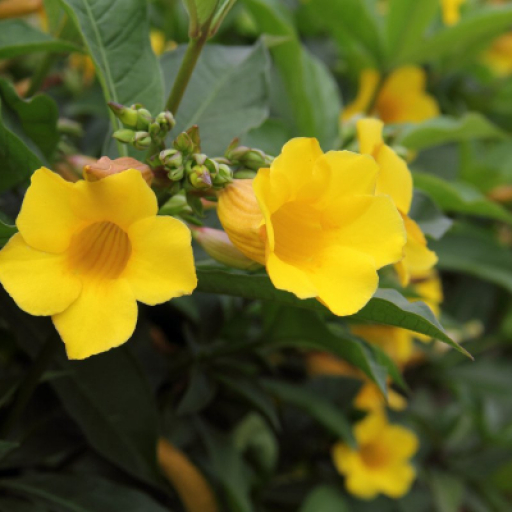
Plant Overview
Often called the Bush Allamanda or Golden Trumpet Bush, this Brazilian beauty is like a captured ray of sunshine for your landscape. Unlike its sprawling, vine-like cousins, Allamanda schottii stays compact and tidy, offering a dense explosion of yellow without taking over the entire garden. It is a favorite in tropical zones for its ability to mimic the look of an Oleander while providing a more vibrant, "trumpet" shaped bloom.
🔍 How to Identify
- 🌼 Trumpet Blooms: Vibrant, golden-yellow flowers shaped like bells, often featuring delicate orange-reddish stripes deep inside the throat.
- 🍃 Whorled Foliage: Glossy, leathery, dark green leaves that grow in distinct "whorls" (circles) of three to five around the woody stems.
- 🪴 Compact Growth: It naturally forms a rounded shrub rather than a climbing vine, usually reaching about 3 to 5 feet in height.
- 🌰 Spiny Seed Pods: After flowering, it produces curious, rounded green seed capsules covered in soft prickles, looking a bit like tiny sea urchins.
🏡 In Your Garden
- ☀️ Sun Worshiper: This plant is fueled by light. To see a constant show of flowers, it needs at least six hours of direct sun; in deep shade, it will produce plenty of leaves but very few "trumpets."
- 💧 Humidity & Hydration: While it loves a humid tropical breeze, it is quite sensitive to "wet feet." It requires well-draining soil to prevent root rot, especially during the rainy season.
- ✂️ Pruning for Fullness: To keep it looking like a lush hedge rather than a leggy shrub, give it a light trim in early spring. This encourages "pinching out" and more flowering tips.
⚠️ Safety & Toxicity
- 🚫 Toxic if Ingested: Like most members of the Apocynaceae family, all parts of this plant contain toxins that can cause stomach upset and vomiting if eaten by pets or curious children.
- 🧪 Irritating Sap: The plant contains a milky white latex (sap) that can cause "contact dermatitis" or itchy skin rashes. It is highly recommended to wear gloves when pruning or taking cuttings.
✨ Fun Fact
The genus name Allamanda honors Dr. Frédéric-Louis Allamand, an 18th-century Swiss botanist who traveled to the Americas and sent seeds of this golden treasure back to the famous scientist Carl Linnaeus.

Detailed Care Instructions
To grow an Allamanda Schottii plant, follow these steps:
- Choose a suitable location: Allamanda Schottii plants thrive in full sun, so select a spot in your garden that receives at least six hours of direct sunlight per day.
- Prepare the soil: Allamanda Schottii plants prefer well-draining soil. You can enhance drainage by adding organic matter like compost or perlite to the soil. Avoid heavy clay soils that hold excessive moisture.
- Plant the cutting or seedling: You can start Allamanda Schottii from seeds or purchase young seedlings from a nursery. Dig a hole in the prepared soil and place the cutting or seedling carefully. Make sure to space multiple plants at least 3-4 feet apart.
- Water regularly: Water the plant deeply after planting and continue to water it regularly, especially during dry spells. Allamanda Schottii plants prefer moist but not waterlogged soil. Ensure the soil remains slightly damp, but not soggy.
- Mulch and fertilize: Apply a layer of organic mulch around the plant to retain moisture and suppress weed growth. Additionally, fertilize the plant every two to three months during the growing season using a balanced, slow-release fertilizer.
- Prune as needed: Allamanda Schottii plants benefit from regular pruning to maintain shape and encourage bushier growth. Prune dead or damaged branches and trim back excessive growth as necessary. Pruning should be done after flowering to ensure next season's blooms.
- Provide support if needed: Allamanda Schottii plants can grow quite large and may require support. You can use a trellis or other types of structural support to train the plant's growth and prevent it from sprawling.
- Protect during winter: Allamanda Schottii is sensitive to frost, so if you live in a region with cold winters, consider growing the plant in a container that can be moved indoors during frosty periods.
- Monitor for pests and diseases: Keep an eye out for common pests like aphids, whiteflies, or mealybugs. Use organic insecticides or soapy water sprays to control infestations. Additionally, watch for signs of fungal diseases like root rot and treat them promptly.
By following these steps, you can successfully grow an Allamanda Schottii plant and enjoy its beautiful flowers in your garden.

Place in a window with dappled sun or a spot in the middle of a room. Or directly in a window facing west or east.

Allamanda Schottii plant prefers to be watered regularly but not over-watered. It is important to let the top inch of soil dry out before watering again. It is best to water the plant deeply, making sure the soil is moist all the way through. However, it is important not to let the plant sit in standing water, as this can cause root rot. The amount of water the plant needs will depend on the humidity, temperature, and amount of sunlight it receives, so it is important to monitor the soil regularly and adjust watering accordingly. Avoid using hard or chlorinated water, as this can damage the plant's leaves. Instead, opt for rainwater or filtered water.
To fertilize this plant, you should use a balanced fertilizer with equal amounts of nitrogen, phosphorus, and potassium. Apply the fertilizer every two weeks during the growing season, and reduce the frequency to once a month during the dormant period. Make sure to dilute the fertilizer according to package instructions and avoid over-fertilizing, as this can damage the plant. Additionally, always water the plant thoroughly before and after applying fertilizer to prevent root burn.
The ideal soil for the plant has a pH range of 5.5 to 7.5. It should be well-draining, yet retain some moisture as this plant prefers evenly moist soil. A mixture of loam, sand, and perlite will provide an optimal growing medium. In addition, the soil should be rich in nutrients, so adding organic matter like compost or well-rotted manure will help provide this. It is important to note that the plant does not tolerate salt buildup, so avoid using soils high in salt.
To propagate this plant, first collect a healthy stem cutting from the parent plant, ensuring that it is approximately 6-8 inches in length and contains a few leaves. Remove any leaves that may be present on the lower half of the stem.
Dip the cut end of the stem into rooting hormone and then plant it in a pot filled with well-draining soil. Water the cutting thoroughly and place it in a bright, warm location where it can receive indirect sunlight.
Keep the soil consistently moist, but not waterlogged, and avoid exposing the cutting to direct sunlight or harsh winds. Within a few weeks, roots should start to develop and the cutting can be transplanted into a larger pot or planted outside in a sunny location.
Common pests of the bush allamanda include Scale insect, mealybugs, spider mites, aphids, whiteflies. Make a habit of checking your bush allamanda frequently for pests so that any infestations can be caught and managed early.








