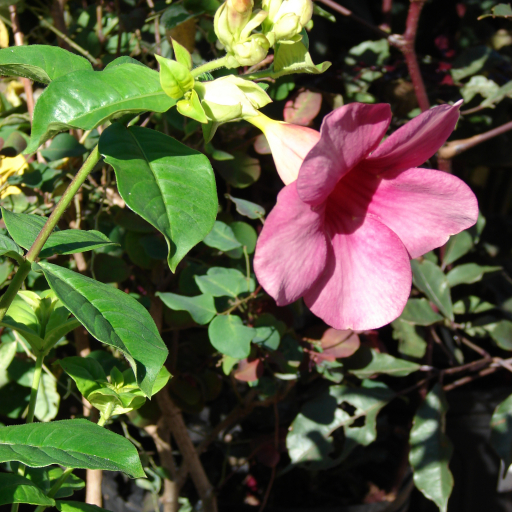
Plant Overview
Known as the "Purple Allamanda" or "Cherry Allamanda," this Brazilian beauty is the sophisticated, moody cousin of the common yellow variety. Unlike its bright gold relatives, it offers deep mauve and wine-colored blooms that feel like velvet to the touch. It is a favorite for tropical landscapes and sun-drenched patios, loved for its ability to bring a royal splash of color to any garden.
🔍 How to Identify
- 🌸 The Blooms: Large, trumpet-shaped blossoms that typically display a rich reddish-purple hue, often fading to a soft lavender-pink as the flower matures.
- 🍃 The Foliage: Glossy, leathery dark green leaves that are slightly hairy on the underside and grow in distinct "whorls" (clusters) of three or four around the stem.
- 🌿 Growth Habit: A sprawling evergreen shrub that behaves like a vine; it doesn't have "grippers" like ivy, but its long, arching branches will happily scramble up a trellis or fence.
🏡 In Your Garden
- ☀️ Sun-Seeker Nuance: While it can survive in partial shade, the "Purple Allamanda" is a sun-worshipper at heart. If it isn't blooming, it’s likely asking for more direct sunlight to fuel its energy-intensive flowers.
- 🚿 Drainage is Key: This plant is prone to root rot if left in standing water. It prefers "rich but rugged" soil—plenty of organic matter to hold nutrients, but enough grit to ensure water moves through quickly.
- ✂️ Training the "Vine": Because it lacks tendrils, you’ll need to manually tie the stems to a support if you want it to climb. Pruning it back in early spring encourages "new wood," which is exactly where the flowers appear.
⚠️ Safety & Toxicity
- 🚫 Skin Irritant: The plant produces a milky white sap (latex) when a leaf or stem is broken. This sap can cause significant skin irritation or "contact dermatitis" for gardeners with sensitive skin.
- 🐾 Pet & Child Safety: All parts of the plant are considered toxic if swallowed. Ingestion can lead to nausea, vomiting, and stomach pain in pets and humans, so it is best kept away from curious nibblers.
✨ Fun Fact
- Despite its name and vine-like appearance, Allamanda violacea is technically a "clambering shrub." It essentially uses its long, stiff branches to "lean" on other plants in the rainforest to reach the sunlight!

Detailed Care Instructions

Place in a window with dappled sun or a spot in the middle of a room. Or directly in a window facing west or east.

The presence of a dry surface layer of soil does not indicate that the plant requires water. Instead, stick your finger 1-2" (3-5 cm) deep in the soil to feel dampness or moisture content. If the soil seems dry, it's time to water your greens. If the soil is still moist, however, it is better not to water your plant and instead wait a day or two. Overwatering or waterlogging raises the risk of root rot. So if the soil takes longer than a week to dry, check the light conditions because it's likely that the plant isn't getting enough light. It's fine if the upper layer of soil is dry between waterings, but the deeper soil layer should always have some moisture.
These plant needs regular fertilizing during growing seasons. Fertilizing your plants in dormant state during the winter, might result in scorching or browning of the leaf tips. If mature plants display signs of nutrient insufficiency, fertilizer administration is necessary to restore the plant to its previous state.
You may use All Purpose Plant Food or Flower Fertilizer for your Purple Allamanda
Common pests of the purple allamanda include Scale insect, mealybugs, spider mites, aphids, whiteflies. Make a habit of checking your purple allamanda frequently for pests so that any infestations can be caught and managed early.








