Plant Overview
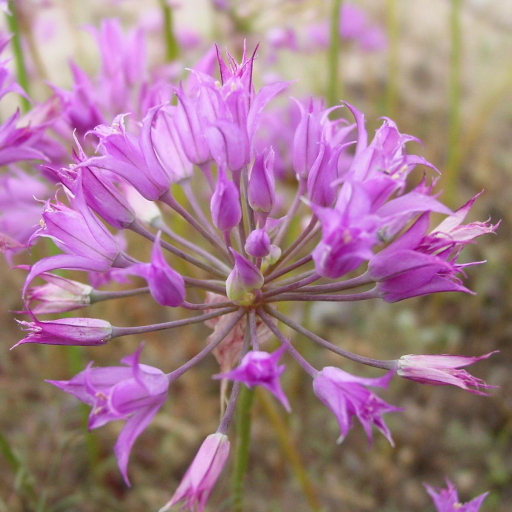
Known commonly as the Tapertip Onion or Hooker's Onion, this vibrant wildflower is a jewel of the Western North American landscape. It earns its scientific name, acuminatum, from the way its delicate petals taper to sharp, pointed tips, creating a star-burst effect in late spring. While it looks like a delicate ornamental, it is a rugged survivor, often found clinging to rocky cliffs and sun-drenched prairies.
🔍 How to Identify
- 🌸 Bloom Structure: It features spherical clusters of 10 to 40 bell-shaped flowers that range in color from soft rose to a striking, electric magenta.
- 📐 Tapered Petals: Look closely at the six "tepals" (petals); they curve outward and end in a distinct, pinched point that gives the flower a crystalline geometry.
- 🍃 Disappearing Leaves: The plant typically has two to three narrow, grass-like leaves. Interestingly, these leaves often begin to wither and turn brown just as the flowers reach their peak beauty.
🏡 In Your Garden
- 🪨 The Rock Star: This plant is the perfect candidate for a "neglected" rock garden. It thrives in poor, gritty soil and actually prefers to be left alone once established, making it a favorite for low-maintenance xeriscaping.
- 💤 Summer Slumber: Because it is a spring ephemeral, the entire plant will disappear underground by mid-summer. Don’t panic and dig it up—it is simply storing energy in its bulb to survive the heat, waiting for the next spring rains.
⚠️ Safety & Toxicity
- 🐾 Toxic to Pets: Like all members of the Allium genus (including garlic and kitchen onions), the Tapertip Onion contains organic sulfur compounds that are toxic to dogs, cats, and horses, potentially causing red blood cell damage.
- 🍽️ The "Death Camas" Lookalike: While the bulbs are historically edible for humans, extreme caution is required. In the wild, it often grows alongside the Death Camas, which looks nearly identical when not in bloom but is Tier-1 deadly. Never forage this unless you are an expert.
✨ Fun Fact
- 📜 Historical Rations: Indigenous peoples of the Pacific Northwest traditionally harvested the bulbs in large quantities, pit-roasting them to create a sweet, molasses-like treat or drying them into "bricks" for winter storage.

Detailed Care Instructions
To grow Allium acuminatum, commonly known as the Tapertip onion, follow these steps:
- Choose the right location: Allium acuminatum thrives in full sun to partial shade. Ensure that the soil is well-drained and rich in organic matter.
- Prepare the soil: Before planting, loosen the soil and remove any weeds or grass. Amend the soil with compost or well-rotted manure to improve its fertility and drainage.
- Planting: Plant the bulbs in the late summer or early fall. Allium acuminatum bulbs should be planted about 2-3 inches (5-7.5 cm) deep and 4-6 inches (10-15 cm) apart. Make sure the pointed end of the bulb faces upwards.
- Watering: Initially, water the bulbs thoroughly after planting. After that, water moderately, keeping the soil slightly moist but not waterlogged. Allium acuminatum prefers drier soil during dormant periods.
- Fertilization: In early spring, apply a balanced slow-release fertilizer around the base of the plants. Follow the package instructions for the correct dosage.
- Mulching: Apply a layer of organic mulch, such as straw or shredded bark, around the plants. Mulch helps retain moisture, suppress weed growth, and insulate the bulbs during winter.
- Pruning and maintenance: Allium acuminatum does not require much maintenance. Remove any yellow or faded leaves, as well as any spent flower heads, to maintain its appearance.
- Pest and disease control: Allium acuminatum is generally resistant to pests and diseases. However, keep an eye out for common onion pests like onion flies or thrips. If necessary, use organic insecticides or pest control methods.
- Propagation: Allium acuminatum can be propagated by dividing the bulbs in the fall. Dig up the clumps, separate the bulbs, and replant them at the desired spacing.
With proper care, Allium acuminatum should grow and bloom each year, providing beautiful, delicate flowers and an attractive addition to your garden.

Place in a bright room that is sun drenched almost all day. Or directly in a south-facing window.

To water this particular plant, place your watering container near the base of the plant and pour water slowly onto the soil. Avoid getting water on the leaves and flowers. Allow the soil to fully absorb the water before watering again. It's important to provide consistent and adequate water, but be careful not to overwater as this can lead to root rot. It's also helpful to mulch around the plant to retain moisture in the soil.
To properly fertilize this plant, begin by selecting a quality, balanced fertilizer that is appropriate for its growing conditions. You will need to apply the fertilizer during the growing season, which generally runs from early spring to late summer. Start with a small amount of the fertilizer and gradually increase the amount over time, until you are applying the recommended dosage. Be sure to water the plant well after applying the fertilizer, in order to help it absorb the nutrients more effectively. Finally, it is important to avoid over-fertilizing this plant, as this can cause damage and hinder its growth.
Allium Acuminatum prefers well-draining soil that is rich in organic matter. A pH level of 6.0 to 7.5 is ideal. The soil should be loose and friable so that the roots can easily penetrate it. It is important to ensure that the soil is not waterlogged, as this can lead to root rot and other diseases. The plant requires a nutrient-rich soil, so adding compost or well-rotted manure can be beneficial. The soil should be moist but not saturated. The plant prefers full sun to partial shade.
To propagate this plant, you must first collect mature seeds once they have ripened and turned brown. You can then plant them in a well-draining soil mixture at a depth of 1/4 inch and cover them lightly with soil. Keep the soil moist but not overly wet, and the seeds should begin to germinate within a few weeks.
Alternatively, you can divide the bulbs in the fall or early spring before new growth emerges. Gently dig up the bulbs and separate them into individual plants, being careful not to damage the roots. Replant each division at the same depth as before, and water thoroughly.
You can also propagate this plant by taking stem cuttings in the spring or summer. Cut a healthy stem from the parent plant and remove the lower leaves, leaving only a few at the top. Dip the cut end in rooting hormone and plant it in a well-draining soil mix. Keep the soil moist and in a warm, bright location until new growth appears.








