Plant Overview
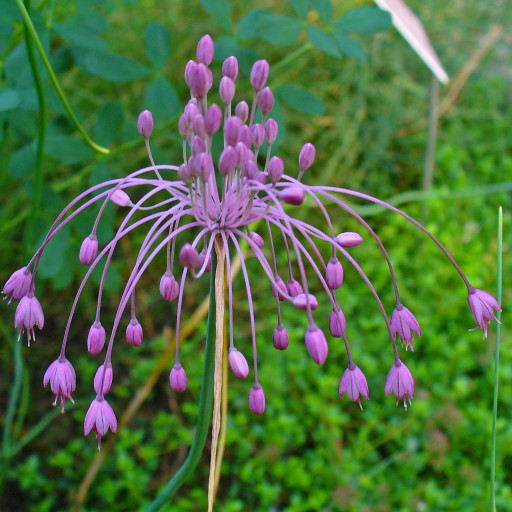
Often called the Keeled Garlic or Keeled Leek, this elegant perennial is a wild and whimsical cousin of your kitchen garlic. Native to Europe and Western Asia, it is beloved by gardeners for its "explosive" flower heads that look like tiny, purple fireworks frozen in mid-air. Unlike its upright relatives, Allium carinatum has a delicate, weeping grace that adds movement to any meadow or border.
🔍 How to Identify
- 🔔 The Flowers: Small, bell-shaped blooms in shades of reddish-pink or lilac. They hang on long, thin stalks (pedicels) of varying lengths, giving the cluster a loose, fountain-like appearance.
- 🖋️ The Spathes: Look for two very long, leaf-like "tails" (bracts) extending from the flower head. These are often much longer than the flowers themselves, looking like long whiskers.
- 🧄 The Scent: If you bruise the narrow, flat leaves, they emit a distinct, pungent onion or garlic aroma.
- 🌱 Bulbils: Often, the flower head will produce small "mini-bulbs" (bulbils) right among the blossoms, which can fall and sprout into new plants.
🏡 In Your Garden
- ☀️ Sun Seeker: While it is incredibly hardy, it performs best in spots where it can bask in full sun. It isn't picky about soil quality, but it demands excellent drainage; sitting in soggy soil during winter will cause the bulbs to rot.
- 🦋 Pollinator Magnet: Despite its wild appearance, it is a high-value plant for bees and butterflies. Its late-summer blooming period provides a vital nectar source when other spring bulbs have already faded.
- 🏃 A Willing Wanderer: Because it produces both seeds and bulbils (clones), it can spread quite easily. If you want to keep it contained, it’s best to deadhead the flowers before the bulbils drop to the ground.
⚠️ Safety & Toxicity
- 🐾 Pet Warning: Like all members of the Allium family (including onions and chives), this plant is toxic to dogs and cats. If ingested, it can cause oxidative damage to red blood cells, leading to anemia.
- 👶 Human Safety: While technically edible and used in some traditional cooking, it is much more pungent than culinary garlic and can cause stomach upset if eaten in large quantities.
- 🧤 Skin Sensitivity: Some gardeners find that the sap can cause mild skin irritation or "garlic breath" just from handling the crushed foliage.
✨ Fun Fact
The name "carinatum" comes from the Latin word carina, meaning "keel" (like the bottom of a boat). This refers to the distinct ridge or keel shape found on the flower petals and leaves, a tiny architectural detail that separates it from other wild leeks!

Detailed Care Instructions
To grow Allium Carinatum plants, also known as keeled garlic or narrow-leaved onion, you can follow these steps:
- Obtain Allium Carinatum bulbs: You can purchase bulbs from local nurseries or online gardening stores. Make sure they are healthy and free from any signs of damage or disease.
- Choose a suitable location: Allium Carinatum prefers full sun but can tolerate a slightly shady area. Ensure that the soil is well-draining and fertile.
- Prepare the soil: Remove any weeds or grass from the planting area. Dig the soil to a depth of about 6-8 inches and amend it with organic matter such as compost or well-rotted manure to improve its fertility.
- Plant the bulbs: Plant the bulbs in autumn, typically around September or October, when the soil is still warm. Dig holes at least 3-4 inches deep and space the bulbs around 4-6 inches apart. Place the bulbs with the pointed end facing upwards.
- Watering: After planting, give the bulbs a good watering to settle them in. Allium Carinatum prefers slightly moist soil, so water regularly but avoid overwatering, which can lead to rotting.
- Fertilize: Fertilize the plants with a balanced fertilizer in early spring and again after they bloom in summer. Follow the package instructions for application rates.
- Mulching: Apply a layer of organic mulch, such as straw or wood chips, around the base of the plants to help retain moisture, suppress weeds, and provide insulation during winter.
- Pruning: After the flowers fade, cut off the flower stalks to redirect the plant's energy towards bulb development. Allow the foliage to die back naturally before removing it.
- Division: Every few years, you can divide the bulbs to promote healthier growth. Dig up the clumps in autumn when the foliage has died back, separate the bulbs, and replant them with adequate spacing.
- Pests and diseases: Allium Carinatum is generally resistant to pests and diseases. However, it may be susceptible to onion flies and fungal diseases like bulb rot. Inspect the plants regularly for signs of infestation and treat accordingly.
Remember to check your local climate and growing zone to ensure Allium Carinatum is suitable for your region.

Place in a bright room that is sun drenched almost all day. Or directly in a south-facing window.

Allium Carinatum is a plant that requires moderate watering. It is important to ensure that the soil is well-drained and doesn't become waterlogged, as this can cause root rot. Water the plant deeply once or twice a week, allowing the water to soak into the soil. Avoid getting water on the leaves or flowers, as this can cause fungal diseases. During periods of rainfall, you may not need to water the plant as frequently. It is important to monitor the soil moisture level regularly, as overwatering can be harmful to the plant's growth and health.
- Choose a well-drained planting location for your Allium Carinatum plant.
- Prepare the soil by removing weeds and loosening it with a garden fork or tiller.
- Use a balanced fertilizer with equal parts nitrogen, phosphorus, and potassium. Follow the manufacturer's instructions for application rates.
- Apply the fertilizer evenly over the soil surface around the base of the plant, avoiding direct contact with the leaves or stems.
- Gently work the fertilizer into the top layer of soil using a garden rake or hoe.
- Water the plant thoroughly after fertilizing to help the nutrients penetrate the soil.
- Repeat the fertilizer application every 4-6 weeks throughout the growing season, starting in spring and ending in late summer or early fall.
- Monitor the plant's growth and adjust the fertilization schedule if necessary. Over-fertilizing can lead to excessive foliage growth but limited flower production.
- In the winter months, cease fertilization as the plant goes dormant.
- Remember to always follow the instructions on the fertilizer packaging and adjust the application rates based on the specific needs of your Allium Carinatum plant.
The ideal soil for growing this plant should be well-draining and nutrient-rich, with a neutral to slightly alkaline pH level. It should be moist but not waterlogged, and have good aeration. A mix of loam and sandy soil with some organic matter added is recommended. Avoid using heavy clay soils or soils with high acidity. Regular fertilization with a balanced fertilizer will help promote healthy growth and flowering.
Allium carinatum can be propagated through several methods, such as division, bulb offsets, and seed sowing. Here are the detailed steps for each propagation method:
- Division:
- Wait for the plant to reach maturity, usually after 3-4 years. You can identify a mature plant by the presence of multiple bulbs clumped together.
- Dig up the plant carefully, ensuring you don't damage the bulbs or roots.
- Gently separate the bulbs, making sure each division has its own set of roots.
- Replant the divisions immediately at the same depth as before, spacing them apart according to the plant's size requirements.
- Water the newly divided plants thoroughly and provide regular care and maintenance.
- Wait for the plant to reach maturity, usually after 3-4 years. You can identify a mature plant by the presence of multiple bulbs clumped together.
- Bulb Offsets:
- As the plant matures, it produces smaller bulbs around the main bulb, known as offsets. These can be separated and propagated into new plants.
- Wait for the offsets to grow to a reasonable size, typically around 1/2 to 1 inch in diameter.
- Dig up the plant and carefully remove the offsets from the main bulb, ensuring you don't damage their roots.
- Plant the offsets immediately at the same depth as the parent plant, giving them adequate spacing.
- Water the offsets well and provide proper care as they establish themselves.
- As the plant matures, it produces smaller bulbs around the main bulb, known as offsets. These can be separated and propagated into new plants.
- Seed Sowing:
- Collect mature seeds from the plant. These usually develop after the flower blooms and dries out.
- Prepare a well-draining seed-starting mix, or use a combination of peat moss and perlite.
- Sow the seeds on the soil surface, lightly pressing them in, and cover them with a thin layer of soil.
- Water the soil gently, ensuring it stays consistently moist but not waterlogged.
- Place the container or tray in a well-lit area, but away from direct sunlight.
- Maintain a consistent temperature of around 60-70°F (15-21°C) to promote germination.
- As the seedlings emerge, thin them out to provide adequate spacing for each plant.
- Continue to care for the seedlings by providing regular watering, adequate light, and appropriate fertilization.
- Transplant the young plants outdoors into well-prepared soil once they have grown to a suitable size, usually after a year or two.
Remember to label your propagated plants to keep track of their species, and provide proper care and maintenance throughout their growth stages.
- Collect mature seeds from the plant. These usually develop after the flower blooms and dries out.








