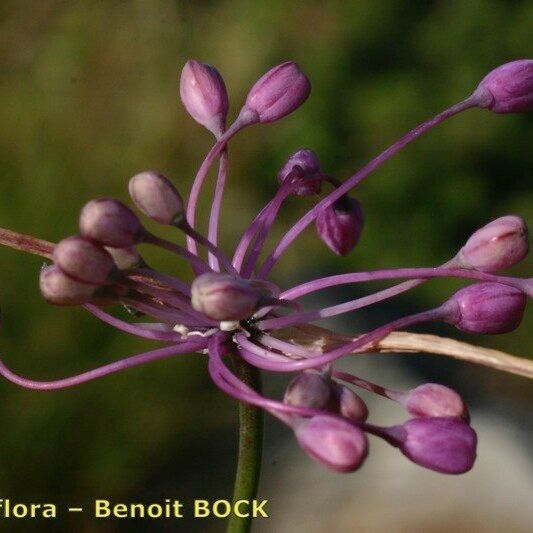
Plant Overview
Known affectionately as the "Keeled Garlic" or "Ornamental Onion," Allium coloratum is like a tiny, frozen firework display for your garden. Native to the sun-drenched slopes of the Mediterranean and Southern Europe, it brings a wild, architectural elegance that defies the stiff, perfectly round look of more common ornamental onions. It is a favorite for those looking to add a touch of "organized chaos" to their borders.
🔍 How to Identify
- 🌸 The "Nodding" Blooms: Unlike the dense, pom-pom shapes of other Alliums, these flower heads consist of loose, pendulous clusters. The individual pink or lilac bells hang on long, thin stalks (pedicels) of varying lengths.
- 🎋 Extended Spathes: Before the flowers open, they are protected by two very long, pointed "beaks" or bracts. These remain on the plant even after blooming, looking like long, decorative ribbons trailing from the flower head.
- 🍃 Grassy Foliage: The leaves are narrow, semi-cylindrical, and channeled. They typically begin to wither just as the flowers reach their peak, a common trait in many bulbous plants.
🏡 In Your Garden
- ☀️ The Sun-Drenched Slope: This plant is a true child of the sun. It requires bright, direct light to keep its flower stems sturdy; in partial shade, the "nodding" heads may become weak and flop over toward the light.
- 🪨 Excellent Drainage: As a bulbous species, its greatest enemy is "wet feet." It thrives in gritty, poor, or rocky soil. If your garden has heavy clay, planting these in raised beds or rockeries is essential to prevent bulb rot during dormant winter months.
- 🦋 Pollinator Banquet: While the foliage has a faint garlic scent that deters deer and rabbits, the nectar-rich flowers are a massive draw for honeybees and delicate hairstreak butterflies.
⚠️ Safety & Toxicity
- 🐾 Toxic to Pets: Like all members of the Allium genus (including onions and garlic), this plant contains sulfoxides. If ingested by dogs or cats, it can cause damage to red blood cells, leading to anemia.
- 👶 Mild Human Irritant: While not usually fatal to humans, eating the bulbs can cause significant gastrointestinal distress in children. The sap may also cause mild skin irritation or contact dermatitis in sensitive individuals.
✨ Fun Fact
The specific name coloratum translates from Latin to "colored" or "tinctured." It was named this to distinguish it from its closer relatives that often feature much paler, greenish-white flowers, marking it as the "vivid" member of its botanical family tree.

Detailed Care Instructions








