Plant Overview
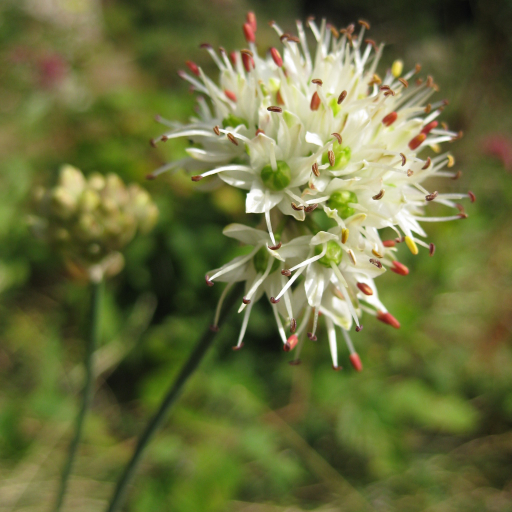
Often referred to as the Heather Onion, Allium ericetorum is a subtle Mediterranean treasure that waits for the heat of late summer to unveil its delicate beauty. Unlike its flashy, oversized garden cousins, this wild onion offers a dainty, airy aesthetic that perfectly complements the fading colors of a late-season landscape. It is a resilient survivor, traditionally found clinging to rocky slopes and sun-drenched heaths.
🔍 How to Identify
- 🌸 Bloom Cluster: It features small, semi-spherical heads (umbels) packed with tiny, bell-shaped flowers that range from creamy white to a soft, sulfur-yellow.
- 📏 Whiskered Look: The stamens protrude significantly past the petals, giving each flower head a charmingly fuzzy or "whiskered" appearance when viewed up close.
- 🌿 Narrow Foliage: The plant produces slender, thread-like green leaves that often begin to wither just as the flowers arrive, as the plant directs all its energy into the bloom.
🏡 In Your Garden
- 🏜️ Rock Garden Specialist: Because it naturally thrives in well-drained, stony soils, this plant is an ideal candidate for rockeries or gravel gardens where other perennials might struggle with drought.
- 🍂 Autumn Bridge: It provides a crucial nectar source for late-season pollinators in August and September, acting as a "bridge" when many other garden flowers have already finished their cycle.
- 🧅 Clumping Habit: It grows from small bulbs that slowly naturalize over time, forming tidy clumps that require very little maintenance once established.
⚠️ Safety & Toxicity
- 🐾 Pet Warning: Like all members of the Allium genus (including garlic and kitchen onions), this plant contains N-propyl disulfide, which is toxic to dogs, cats, and horses if ingested in significant amounts.
- 👃 Pungent Protection: While the flowers have a light scent, crushing the leaves or bulbs releases a strong onion-like odor. This scent acts as a natural deterrent for deer and rabbits, making it a "pest-resistant" choice for your garden.
✨ Fun Fact
The specific name ericetorum is derived from the Latin word for "heath." This is a nod to its favorite wild habitat, where it is often found growing alongside purple heather, creating a beautiful natural contrast in the Mediterranean wild.

Detailed Care Instructions

Place in a bright room that is sun drenched almost all day. Or directly in a south-facing window.

To properly water this plant, it is important to keep the soil consistently moist but not waterlogged. You should aim to water the soil deeply once a week or whenever the top 1-2 inches of soil feels dry to the touch. It is important to avoid getting water on the foliage of the plant as this can promote disease. Instead, water the soil at the base of the plant. Additionally, it is important to provide good drainage to prevent water from pooling around the plant's roots.
The most suitable soil for the Allium Ericetorum plant is a well-draining and fertile soil mix that is slightly acidic, with a pH range of 5.5 to 7.5. The soil should be kept moist, but not waterlogged, to prevent the roots from rotting. It is recommended to use a soil mix that contains organic matter such as peat moss, compost, and vermiculite to provide the necessary nutrients for the plant's growth. Additionally, adding perlite or sand to the soil mix can help with drainage and prevent soil compaction. It is important to avoid using heavy clay soils, as they can retain too much water and harm the roots.








