Plant Overview
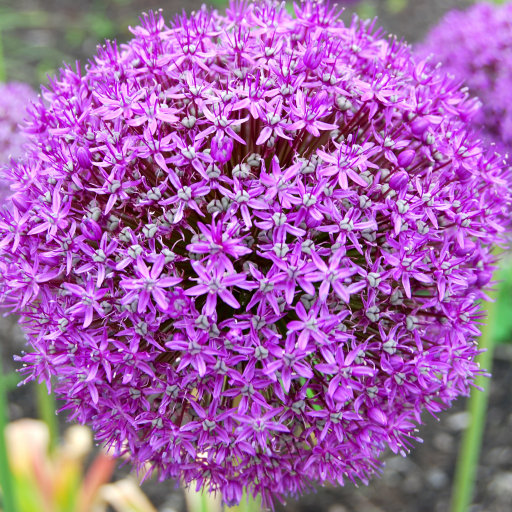
Known as the "Giant Onion," the Allium giganteum is a dramatic architectural wonder that looks like it was plucked straight from a Dr. Seuss illustration. Originating from the mountains of Central and Southwestern Asia, these towering purple globes create a whimsical vertical element in any landscape. They are beloved by gardeners for their ability to bridge the gap between late spring bulbs and summer perennials.
🔍 How to Identify
- 🟣 The Bloom: A perfectly spherical "umbel" that can reach the size of a grapefruit, composed of hundreds of tiny, star-shaped purple florets.
- 📏 The Stalk: A singular, sturdy, and leafless stem (scape) that can grow up to 5 feet tall, standing remarkably straight even in the wind.
- 🍃 The Foliage: Grayish-green, strap-like leaves that form at the base. Note that these leaves typically begin to wither and turn brown just as the flower starts to peak.
🏡 In Your Garden
- 🌱 Strategic Placement: Because the basal leaves die back early to send energy to the flower, it is best to plant these behind medium-height perennials like Hostas or hardy Geraniums to hide the "ugly" yellowing foliage.
- ☀️ Sun & Drainage: These giants crave full sun and require "gritty" or well-draining soil. Their biggest enemy is winter wetness, which can cause the large bulbs to rot before they ever have a chance to sprout.
- 🦋 Pollinator Magnet: Despite being an onion relative, the scent is very faint to humans, but the nectar-rich florets are irresistible to bees and butterflies.
⚠️ Safety & Toxicity
- 🐾 Toxic to Pets: Like all members of the Allium family (onions, garlic, chives), this plant is toxic to dogs and cats.
- 🤢 The Risk: If ingested, it can cause gastrointestinal upset and, more seriously, damage to red blood cells (hemolytic anemia). Keep curious chewers away from both the bulbs and the flowers.
- 🦌 Deer Resistant: On the bright side, the faint onion scent makes them naturally resistant to deer and rabbits, who generally find them unappetizing.
✨ Fun Fact
A single purple globe of Allium giganteum is actually a "city" of flowers; one flower head can contain more than 1,500 individual tiny blossoms, all working together to create that iconic pom-pom shape!

Detailed Care Instructions
| Color | Purple |
| Soil Ph | Acidic, Neutral, Alkaline |
| Humidity | Normal |
| Toxicity | Toxic |
| Soil Type | Loamy, Sandy, Well-Drained |
| Bloom Time | Spring, Summer |
| Difficulty | Medium |
| Plant Type | Perennial |
| Mature Size | 4-5 Ft. Tall, 2 Ft. Wide |
| Native Area | Asia |
| Sun Exposure | Full, Partial |
| Hardiness Zones | 4-9 |
To grow Allium Giganteum plants, follow these steps:
- Choose a suitable location: Allium Giganteum plants prefer full sun, so choose a spot in your garden that receives at least 6 hours of direct sunlight per day. Ensure the soil is well-draining and rich in organic matter.
- Prepare the soil: Allium Giganteum plants thrive in slightly acidic to neutral soil with a pH level of 6 to 7. Amend the soil with compost or well-rotted manure to improve its fertility and drainage.
- Plant the bulbs: Plant the Allium Giganteum bulbs in the fall, around 4-6 weeks before the ground freezes. Dig a hole that is 2-3 times as deep as the bulb's height. Place the bulb with the pointed side up and cover it with soil, making sure it is planted at a depth of 4-6 inches.
- Spacing: Space the bulbs at least 12 inches apart to allow sufficient room for growth.
- Watering: Allium Giganteum plants require regular watering during their growing season, especially when they are establishing roots. Water them deeply but infrequently, allowing the soil to dry out between waterings.
- Fertilization: Apply a balanced slow-release fertilizer in the spring as new growth emerges. Follow the product instructions for dosage and application.
- Mulching: Mulch the plant with a layer of organic mulch, such as shredded leaves or straw, to help retain moisture and control weeds.
- Care and maintenance: Remove any weeds that may compete with the plant for nutrients and water. Additionally, remove spent blooms to prevent seed formation and conserve the plant's energy for bulb development.
- Protection from pests and diseases: Allium Giganteum plants are generally resistant to pests and diseases. However, if aphids or other pests become a problem, you can use insecticidal soaps or other environmentally-friendly insecticides.
- Winter care: Allium Giganteum plants are hardy and can withstand cold temperatures. However, adding a layer of straw or shredded leaves around the plants' base before the first freeze can provide additional insulation.
By following these steps and providing proper care, you can successfully grow Allium Giganteum plants and enjoy their striking and showy flower blooms in your garden.

Place in a window with dappled sun or a spot in the middle of a room. Or directly in a window facing west or east.

Allium Giganteum plant prefers moist soil. It is important to water the plant deeply and regularly, especially during the growing season. The frequency of watering will depend on the weather and soil conditions. It is recommended to avoid overwatering, which can lead to root rot. To check the moisture level of the soil, simply stick your finger into the soil up to the first knuckle. If it feels dry, it is time to water. If the soil feels moist, wait a few more days before watering. It is recommended to water in the morning or late afternoon to avoid evaporation. When watering, make sure to water the soil around the base of the plant, rather than the leaves or flowers.
To promote healthy growth and maximum flowering, it is recommended to fertilize this plant with a balanced fertilizer in the early spring before new growth begins. During the growing season, smaller amounts of fertilizer can be applied monthly. Avoid over-fertilization, as this can lead to weak stems and smaller blooms. Additionally, it is important to water the plant thoroughly after fertilizing to prevent nutrient burn.
For optimal growth, it is recommended to use a well-draining soil mix with a neutral pH level between 6.0-7.0. The soil should also be rich in nutrients, containing organic matter such as compost or aged manure. It is important to ensure that the soil is not excessively compact, as this can prevent proper root growth and drainage. Additionally, it is suggested to add a layer of mulch around the base of the plant to help retain moisture and suppress weed growth.
Allium Giganteum plant can be propagated through its bulbs. To do this, dig up the bulbs in the fall after the foliage has died back. Separate the small bulbs from the parent bulb and replant them in a new location. Make sure to leave the foliage on the parent bulb as it will continue to nourish the new bulbs. Plant the bulbs in well-draining soil and water regularly until they are established. Allium Giganteum can also be propagated through seed. Collect the seeds when the flower heads have turned brown and the capsules have begun to dry out. Sow the seeds in a well-draining soil mix and keep them moist until they germinate. It may take a few years for the plants to reach maturity, but they will eventually produce flowers and bulbs for propagation.








