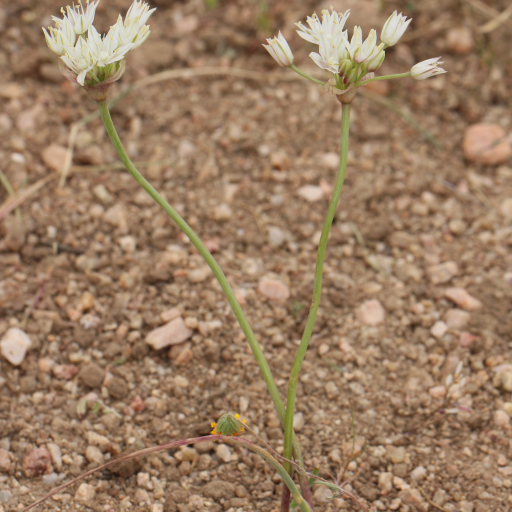
Plant Overview
Commonly known as the Red-skinned Onion, this California native is a hidden gem of the West Coast’s dry slopes. While it belongs to the same family as your kitchen onions, it is cherished more for its delicate, papery beauty than its flavor. Its scientific name, haematochiton, literally translates to "blood-tunic," a nod to the striking, deep reddish-purple skins that protect its underground bulbs.
🔍 How to Identify
- 🧅 The "Blood" Tunic: The most distinctive feature is the bulb’s outer layer—a vibrant, papery, wine-red or deep purple skin that looks like a tiny treasure buried in the dirt.
- 🌸 Starry Umbrels: It produces small, spherical clusters (umbels) of 10 to 40 star-shaped flowers. These petals are usually white or pale pink with a dark mid-vein running down each one.
- 🌿 Grassy Foliage: Before the flowers appear, you’ll notice a few narrow, grass-like leaves that are slightly channeled or flat, often disappearing by the time the plant reaches full bloom.
🏡 In Your Garden
- ☀️ Drought Survivor: This plant is a master of the "summer nap." It flourishes in the cool, wet winters of the Mediterranean climate and completely disappears underground during the hot, dry summer months to protect itself.
- 🐝 Pollinator Magnet: While it might look dainty, it is a powerhouse for local biodiversity. It serves as a vital nectar source for native bees and small butterflies during the mid-spring season.
- 🏜️ Drainage is Key: In a garden setting, it hates "wet feet." It thrives in rocky or sandy soil and is perfect for rock gardens or containers where water can drain away quickly.
⚠️ Safety & Toxicity
- 🐾 Toxic to Pets: Like all members of the Allium genus (including garlic and chives), this plant contains sulfoxides. If ingested by dogs or cats, it can cause oxidative damage to red blood cells, leading to anemia.
- 👶 Mildly Irritating: While not typically "poisonous" to humans in small amounts, it can cause stomach upset if eaten raw in quantity, and the juice from the bulb may irritate sensitive skin.
✨ Fun Fact
The Red-skinned Onion is a "geophyte," a type of plant that stores its entire life cycle in an underground organ. This allows it to survive extreme wildfires; while the surface vegetation burns, the "blood-tunic" bulb remains safe deep in the soil, ready to sprout as soon as the rains return.

Detailed Care Instructions
To grow Allium Haematochiton (commonly known as red dormant onion or blood-red onion), follow these steps:
- Climate: Allium Haematochiton is native to California and prefers a Mediterranean climate. It thrives in areas with mild winters and dry summers. Ensure that the temperature does not drop below freezing.
- Selecting bulbs: Purchase Allium Haematochiton bulbs from a reputable nursery or online supplier. Look for healthy bulbs that are firm, plump, and free from any signs of rot or damage.
- Planting time: Plant the bulbs in fall, typically between September and November. This allows the bulbs to establish roots during the cooler months before producing foliage and flowers in spring.
- Soil preparation: Choose a well-draining soil that is slightly acidic to neutral (pH 6.0-7.0). Improve the soil by incorporating organic matter such as compost or well-rotted manure, as this will help with drainage and provide nutrients.
- Planting depth and spacing: Dig a hole that is about 2-3 times deeper than the bulb's height. Place the bulb in the hole with the pointed end facing upwards. Space the bulbs 4-6 inches apart to allow for proper growth and airflow.
- Watering: Water the bulbs immediately after planting to help settle the soil. Allium Haematochiton prefers moderate watering, so water the plants when the top 2-3 inches of soil feels dry. Avoid overwatering, as it can cause bulb rot.
- Sunlight: Allium Haematochiton requires full sun to light shade for optimal growth. Ensure that the plant receives at least 6 hours of direct sunlight each day.
- Mulching: Apply a layer of organic mulch, such as straw or bark chips, around the plants. Mulching helps retain soil moisture, suppresses weed growth, and regulates soil temperature.
- Fertilization: Allium Haematochiton does not typically require excessive fertilization. However, you can apply a balanced fertilizer in early spring to promote healthy growth. Follow the instructions on the fertilizer packaging for application rates.
- Maintenance: Remove any weeds that compete with the plants for nutrients and water. Deadhead the flower heads once they fade to divert the plant's energy toward bulb development. After the foliage turns yellow or dies back in summer, avoid watering as the bulbs enter their dormancy period.
By following these steps and providing sufficient care, you can successfully grow Allium Haematochiton plants and enjoy their vibrant red flowers in spring.

Place in a bright room that is sun drenched almost all day. Or directly in a south-facing window.

To properly water this plant, you should first check the soil moisture level. Stick your finger about an inch into the soil to determine if it is dry or moist. If the soil is dry to the touch, it is time to water the plant. When watering, make sure to pour the water directly onto the soil around the base of the plant rather than onto the leaves or flowers. This will prevent water from getting trapped in the foliage and causing rot or disease. Water until the soil is evenly saturated, but not waterlogged. You can also provide occasional deep watering to encourage deep root growth. Finally, avoid overwatering as this can lead to root rot and other issues.
To fertilize this plant, apply a slow-release, balanced fertilizer in the early spring before new growth appears. Use a fertilizer with a nitrogen-phosphorus-potassium (NPK) ratio of 10-10-10 or 12-12-12. Follow the instructions on the fertilizer package for the amount to use per square foot of planting area. Do not over-fertilize, as this can result in excessive foliage growth at the expense of flower production. Water the plant well after applying fertilizer to help it absorb the nutrients.
Allium Haematochiton plant prefers to grow in well-drained soil with a neutral to slightly acidic pH level. The soil should be rich in organic matter and porous to allow for proper air circulation. Avoid using heavy clay soils or those with poor drainage as they can lead to root rot. It is recommended to mix compost or aged manure into the soil prior to planting to improve soil structure and fertility. Adequate soil moisture is also important, but be sure not to water excessively as this can lead to fungal diseases.
To propagate this plant, you can start by removing the bulb from the soil. Then, gently separate any offspring bulbs that have formed around the parent bulb. You can plant these offspring bulbs in a new location with well-draining soil and full sun to encourage growth. Be sure to keep the soil moist but not waterlogged. You can also propagate this plant from seed, which can be sown directly into the soil in early spring or fall. It's important to note that this plant may take several years to mature and produce flowers from seed propagation.








