Plant Overview
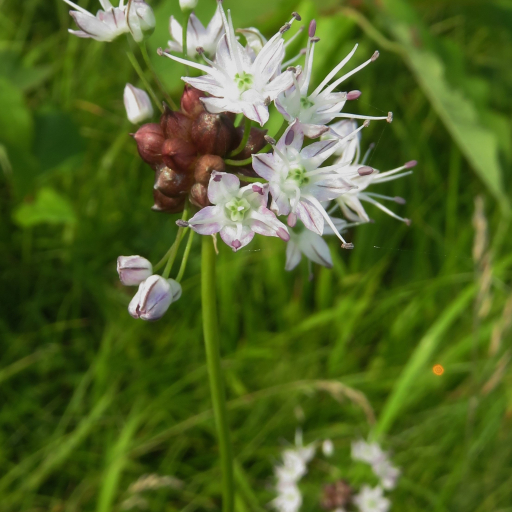
Often called the Long-stamen Chive or Chinese Garlic, this hardy perennial is a wild relative of the common onion and garlic found in your kitchen. Native to East Asia, it has been prized for centuries not just as a savory food source, but as a staple in traditional herbal medicine. Its whimsical flower heads, often filled with tiny "baby bulbs," make it a fascinating find for foragers and gardeners alike.
🔍 How to Identify
- 🌸 The "Whiskered" Flowers: It produces a round cluster (umbel) of pale purple or white bell-shaped flowers. The stamens are significantly longer than the petals, giving the bloom a fuzzy, whiskered appearance.
- 🌱 Hollow Leaves: The leaves are long, slender, and tubular—much like standard chives—growing directly from a small, egg-shaped underground bulb.
- 🧅 The "Bulbil" Clusters: One of its most distinct traits is the presence of "bulbils"—tiny, teardrop-shaped clones that grow directly among the flowers on the stalk.
🏡 In Your Garden
- ☀️ Sun Seeker: This plant thrives in sunny spots with well-drained soil. It is particularly fond of sandy loams and can often be found growing wild on sunny slopes or along forest edges.
- 🚜 Hardy Spreader: Because it produces both seeds and bulbils (which drop to the ground and sprout), it is an enthusiastic grower. It’s perfect for a "wild" corner of the garden but might need a bit of boundary-setting to keep it from taking over.
⚠️ Safety & Toxicity
- 🐾 Toxic to Pets: Like all members of the Allium genus (including onions and garlic), this plant is toxic to dogs, cats, and horses. Ingesting it can cause damage to their red blood cells.
- 🍽️ Edibility: While edible and nutritious for humans, always exercise caution. If you are foraging, ensure you haven't confused it with "Death Camas," a toxic look-alike that lacks the characteristic onion/garlic smell.
✨ Fun Fact
In traditional Chinese medicine, the bulbs are known as Xie Bai. They are historically used to "smooth the flow of Qi" and are a common ingredient in traditional remedies aimed at soothing chest pain and respiratory issues.

Detailed Care Instructions
To grow Allium Macrostemon, follow these steps:
- Select a planting location: Choose a spot that receives full sun to part shade, and has well-draining soil.
- Prepare the soil: Allium Macrostemon prefers soil that is rich in organic matter. Add compost or organic fertilizer to the soil before planting.
- Plant the bulbs: Plant the Allium Macrostemon bulbs in the soil 3-4 inches deep and space them 4-6 inches apart.
- Water regularly: Keep the soil evenly moist, but not waterlogged. Allium Macrostemon plants do not tolerate drought well, so be sure to water them regularly, especially during hot and dry weather.
- Fertilize: Apply a balanced fertilizer to the soil in the spring when the plants are actively growing.
- Mulch: Mulch around the base of the plants to help retain moisture and suppress weeds.
- Control pests and diseases: Keep an eye out for pests and diseases such as onion thrips or fungal infections, and treat as needed.
- Deadhead flowers: Remove spent flower heads to encourage more blooms and prevent the plant from self-seeding.
Following these steps will help you successfully grow Allium Macrostemon plants in your garden.

Place in a bright room that is sun drenched almost all day. Or directly in a south-facing window.

Allium Macrostemon plants are typically watered by thoroughly moistening the soil around the base of the plant. It is important to water the plant regularly, ensuring that the soil remains consistently moist but not waterlogged. Watering frequency will vary depending on factors such as the plant's location, the temperature, and humidity levels. It is recommended to water the plant in the early morning or late afternoon to prevent water loss through evaporation during the hottest part of the day. Additionally, it is important to avoid overhead watering, as this can increase the risk of fungal diseases. Instead, aim to water the plant at the base to ensure the water reaches the roots where it is needed most. Monitoring the plant's moisture levels and adjusting the watering schedule as needed will help promote healthy growth and flowering.
For optimal growth and blooming, it is recommended to fertilize the Allium Macrostemon plant with a balanced fertilizer high in nitrogen, phosphorus, and potassium. Fertilize the plant in early spring before new growth emerges and then again in mid-summer. Follow the instructions on the fertilizer package for the correct application rate and frequency. Avoid over-fertilizing, as this can lead to excessive foliage growth and decreased flowering. Water the plant thoroughly after fertilizing to help distribute the nutrients evenly in the soil.
To grow Allium Macrostemon plants successfully, it is recommended to use well-draining soil that is rich in organic matter. A sandy loam soil with a slightly acidic to neutral pH level is ideal for these plants. Adding compost or aged manure to the soil can help improve its fertility and drainage. It is important to avoid heavy clay soils that may cause waterlogging and root rot. Additionally, a layer of mulch around the base of the plant can help retain moisture and suppress weeds. Overall, providing the right soil conditions is key to ensuring the health and growth of Allium Macrostemon plants.
To propagate the Allium Macrostemon plant, you can start by collecting seeds from the flowers once they have dried out and turned brown. Sow the seeds in well-draining soil in containers or seed trays. Keep the soil consistently moist, but not waterlogged, and place the containers in a bright, indirect light location.
You can also propagate the Allium Macrostemon plant through division. Carefully dig up the plant and separate the bulbs into individual sections, making sure each section has roots attached. Replant the divisions in soil with good drainage and keep them well-watered until they establish themselves.
Another method of propagating the Allium Macrostemon plant is through bulb offsets. These small bulbs develop around the base of the mature bulb and can be carefully separated and planted in soil. Ensure the offsets have roots attached and plant them at the same depth as the parent bulb.
Regardless of the propagation method you choose, it's important to provide the new plants with the right growing conditions, including well-draining soil, adequate sunlight, and regular watering. With proper care, the Allium Macrostemon plant should grow and thrive in its new environment.








