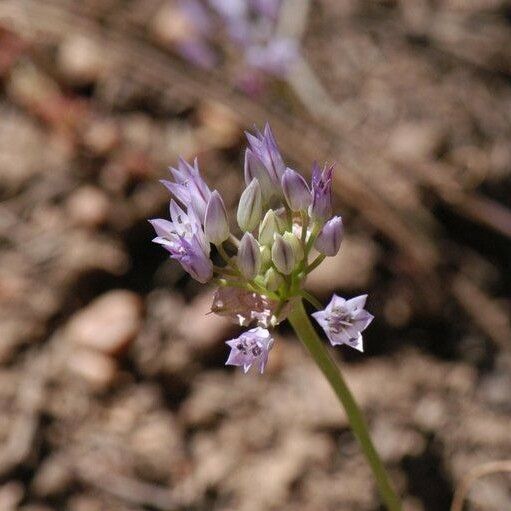
Plant Overview
Known as Parry's Fringed Onion, this petite alpine treasure is the "delicate lace" of the wild onion world. Found tucked away in the high-elevation slopes of the Western United States, it was named in honor of the famed 19th-century botanist Charles Christopher Parry. Unlike its bold garden cousins, this wild onion is prized for its subtle, intricate beauty and its incredible resilience in harsh, rocky terrains.
🔍 How to Identify
- 🌸 Fringed Tepals: The most striking feature is its bell-shaped flowers, which range from creamy white to pale pink. If you look closely, the edges of the petals (tepals) have a distinctly jagged or "fringed" texture.
- 🌱 Solitary Stem: It typically sends up a single, slender green stalk that remains quite low to the ground, rarely exceeding 10 inches in height.
- 🍃 Grass-like Foliage: The leaves are very thin and cylindrical, often appearing as a single, curved blade that can easily be mistaken for mountain grass until the flower blooms.
🏡 In Your Garden
- 🪨 Rocky Preferences: This plant is a specialist of "scree" and gravelly slopes. In a garden setting, it requires a rock garden environment with exceptional drainage. It hates "wet feet" and will quickly succumb to bulb rot if the soil stays damp for too long.
- 🏔️ The Alpine Cycle: Because it is a mountain native, it thrives on a cycle of cold winter dormancy followed by a bright, dry summer. It is best suited for outdoor rockeries rather than indoor pots, as it needs the natural temperature shifts of the seasons to bloom.
⚠️ Safety & Toxicity
- 🐾 Toxic to Pets: Like all members of the Allium family (including garlic and onions), this plant is toxic to dogs and cats. It contains compounds that can damage a pet's red blood cells if chewed or swallowed.
- 👄 Foraging Caution: While some wild onions are edible, many toxic "look-alikes" (like Death Camas) grow in the same regions. Because Parry’s Fringed Onion is rare and delicate, it is best enjoyed visually rather than harvested for the kitchen.
✨ Fun Fact
🎓 The Explorer's Legacy: Its namesake, C.C. Parry, was known as the "King of Colorado Botany." He discovered hundreds of Western plant species during his expeditions, but he reportedly had a soft spot for this tiny onion because of its ability to survive the freezing winds of the high peaks!

Detailed Care Instructions
To grow Allium parryi plants, also known as Parry's onion or pink wild onion, follow these steps:
- Choose a well-draining location: Allium parryi prefers full sun and well-drained soil. It can tolerate sandy or rocky soil but does not do well in heavy clay.
- Sow seeds in late fall or early spring: Allium parryi can be grown from seeds. Sow the seeds directly into the soil, lightly covering them with a thin layer of soil. Alternatively, you can start the seeds indoors 6-8 weeks before the last frost.
- Water regularly: Keep the soil consistently moist, but not waterlogged. Allow the top inch of soil to dry out between waterings.
- Thin the seedlings: If the plants are too crowded, thin them out by removing weaker or overcrowded seedlings. This ensures adequate spacing for healthy growth.
- Mulch around the plants: Apply a layer of organic mulch, such as straw or wood chips, around the base of the plants. Mulching helps retain moisture, suppresses weeds, and keeps the soil temperature stable.
- Fertilize sparingly: Allium parryi does not require heavy feeding. However, you can apply a balanced, slow-release fertilizer once or twice during the growing season to provide some nutrients.
- Prune spent blooms: Allium parryi produces small, pink flowers. Remove the spent flowers to encourage more blooms and prevent the plant from diverting energy into seed production.
- Divide mature plants: After a few years, Allium parryi may become overcrowded. When this happens, dig up the clumps in early fall and separate the bulbs. Replant the divisions in desired locations.
- Protect from pests: Allium parryi is generally resistant to pests and diseases. However, you may want to watch out for snails and slugs, especially during damp conditions. Use organic pest control methods if necessary.
- Enjoy the blooms: Allium parryi typically blooms in late spring or early summer. Admire the beautiful pink flowers and the unique onion-like scent they emit, which can attract pollinators like bees and butterflies.
By following these steps, you can successfully grow Allium parryi plants and enjoy their delicate beauty in your garden.

Place in a bright room that is sun drenched almost all day. Or directly in a south-facing window.

To water this plant, you should provide it with moderate watering that allows the soil to dry out slightly before watering again. It is important not to overwater the plant, as it is susceptible to root rot. Make sure the soil is well-draining and the pot has drainage holes to let excess water escape. Check the moisture level of the soil by sticking your finger about 1 inch into the soil. If it feels dry, it is time to water. During the growing season, which is typically in the spring and summer, the plant may need to be watered more frequently. In the fall and winter, the plant may require less water. Avoid getting the foliage wet when watering to prevent fungal diseases.
To fertilize this plant, you should use a balanced, slow-release fertilizer in early spring, at a rate recommended on the package. Apply the fertilizer evenly around the plant, avoiding contact with the foliage and stem. Water thoroughly after fertilizing.
The ideal type of soil for Allium Parryi plant is well-draining with a slightly alkaline pH level. It should consist of a mixture of sand, loam, and organic matter such as compost or well-rotted manure. The soil should be loose and not compacted to allow for good air circulation and root development. Adding perlite or vermiculite can also improve drainage and prevent waterlogging. It is important to avoid using heavy clay soils or soils that are too acidic as they can inhibit the growth of the plant and lead to root rot. Additionally, regular fertilization with a balanced fertilizer can help promote healthy growth and flowering.
To propagate this species of plant, you can first start by collecting the seeds from the mature flowers. Once you have harvested the seeds, store them in a dry, cool place until you are ready to plant them.
To plant the seeds, prepare a well-draining soil mixture in a pot or tray. Sow the seeds thinly and lightly cover them with soil. Water the soil gently and keep it moist until the seedlings emerge.
Once the seedlings have grown to a height of about 3 inches, they can be transplanted into their final location in the garden or in individual pots. Make sure to space them out properly, as they can grow to be up to 3 feet tall.
Allium Parryi plants can also be propagated through dividing the bulbs. Wait until the plant has finished blooming and the foliage has died back. Carefully dig up the bulb and divide it into smaller sections, making sure that each section has a good amount of roots attached. Replant the smaller bulbs into fresh soil and water well.
To ensure success in propagation, it is important to provide the plant with adequate sunlight, regular watering, and well-draining soil.








