Plant Overview
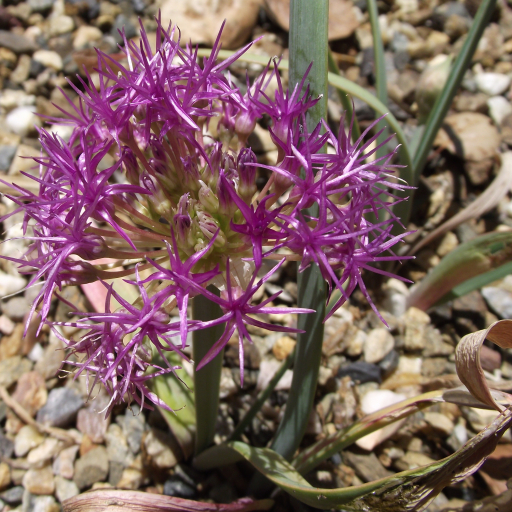
Known affectionately as the Broadstem Onion, this stunning wildflower is a true gem of the high-altitude rocky slopes. Unlike the tall, spindly onions you might see in a grocery store, this species keeps its head low to the ground to withstand mountain winds. Its vibrant pink "pom-pom" blooms look like tiny bursts of fireworks emerging from the grey scree of the Sierra Nevada.
🔍 How to Identify
- 扁 The Broad Stem: Its most unique feature is the "platycaule" (flat stem), which is notably wide and flattened rather than round, often appearing slightly winged.
- 🌸 Star-Shaped Florets: The flower head is a dense, rounded cluster (umbel) of deep pink to bright magenta star-shaped flowers with long, protruding stamens.
- 🍃 Sickle Leaves: It typically features two flat, curved, blue-green leaves that are usually longer than the flower stalk and often lay close to the ground.
🏡 In Your Garden
- ⛰️ Alpine specialist: This plant thrives in "difficult" spots where other plants fail, specifically rocky, gritty, or volcanic soils with perfect drainage.
- 💤 Summer Dormancy: Don’t be alarmed if it disappears! After its spectacular spring show, the plant retreats underground to survive the heat, leaving no trace above ground until the following year.
- ☀️ Sun Seeker: It requires full sun to mimic its native mountain peaks; if planted in too much shade, the stems will lose their characteristic sturdy, flat shape.
⚠️ Safety & Toxicity
- 🐾 Pet Warning: Like all members of the Allium family (including garlic and chives), it contains organic sulfides that are toxic to dogs and cats if ingested, potentially causing red blood cell damage.
- 🍽️ Human Edibility: While the bulbs and leaves are technically edible and have a mild onion flavor, wild foragers must be extremely careful. It can easily be confused with the Death Camas, which grows in similar habitats but is highly lethal.
✨ Fun Fact
The Broadstem Onion is a "lithophyte," meaning it is specially adapted to grow directly in or among rocks. Its flattened stem is likely an evolutionary trick to reduce wind resistance and help the plant stay anchored during fierce mountain storms!

Detailed Care Instructions

Place in a bright room that is sun drenched almost all day. Or directly in a south-facing window.

Some plants require more regular watering than others, which should be done every few days. It's critical to maintain the soil moist all of the time. The water requirements of the same plant placed in pots with varying sizes will differ. Because the water in the smaller pot evaporates faster than the water in the larger pot, it will require more watering. Regardless of pot size, the surface should constantly be maintained moist.








