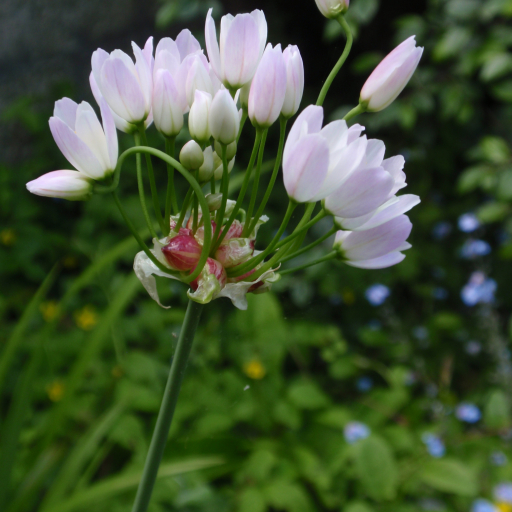
Plant Overview
Often called "Rosy Garlic" or the "Rose-Colored Leek," this Mediterranean beauty bridges the gap between a culinary herb and a delicate wildflower. Known for its soft, starry pink blooms, it has been a staple in southern European landscapes for centuries, often found dancing in the breeze along sunny hillsides and ancient olive groves. It is a favorite for those who want the charm of a wildflower with the rugged reliability of a bulb.
🔍 How to Identify
- 🌸 The Blooms: Features loose, umbrella-shaped clusters (umbels) of bell-shaped flowers that range from a delicate pearly white to a soft, blush pink.
- 🍃 The Foliage: Long, narrow, and grass-like leaves that emerge from the base. They often emit a faint, classic garlic scent when bruised or crushed.
- 📏 The Stature: Slender, upright stems that typically reach 12 to 18 inches in height, standing tall above shorter groundcovers.
🏡 In Your Garden
- 🌱 Naturalizing Habit: This plant is a "naturalizer," meaning it loves to settle in and spread. It produces tiny bulblets among the flowers, which can drop and start new plants, making it excellent for filling gaps in meadow-style gardens.
- ☀️ Sun & Drainage: To keep the stems strong and the colors vibrant, it requires a spot with plenty of direct sunlight. It is particularly sensitive to "wet feet," so ensure your soil is gritty or well-draining to prevent the bulbs from rotting during the winter.
- ✂️ Post-Bloom Care: Like many bulb plants, it’s best to leave the foliage alone until it turns yellow and dies back naturally. This allows the plant to store energy for next year’s show.
⚠️ Safety & Toxicity
- 🐾 Pet Warning: While humans often use Rosy Garlic in cooking, it is toxic to dogs, cats, and horses. Like all members of the Allium family, it contains N-propyl disulfide, which can damage red blood cells in pets.
- 🍽️ Human Consumption: The bulbs and flowers are edible for humans and offer a mild, sweet garlic flavor. However, always ensure the plant hasn't been treated with garden chemicals before tasting.
✨ Fun Fact
In some parts of the Mediterranean, Rosy Garlic was historically tucked into pockets or hung in doorways. Folklore suggested that its scent was powerful enough to ward off the "Evil Eye" and protect the household from bad luck.

Detailed Care Instructions
Allium Roseum, also known as Rosy Garlic, is a hardy perennial plant that can be easily grown in most garden settings. Here are some tips on how to grow Allium Roseum:
- Choose a sunny location: Allium Roseum thrives in full sun to partial shade. Choose a spot in your garden that receives at least 6-8 hours of sunlight per day.
- Prepare the soil: Allium Roseum prefers well-draining soil that is rich in organic matter. Amend the soil with compost or well-rotted manure before planting to improve soil fertility and drainage.
- Plant the bulbs: Allium Roseum is typically grown from bulbs. Plant the bulbs in the fall, before the ground freezes, at a depth of 3-4 inches. Space the bulbs about 4-6 inches apart.
- Water regularly: Allium Roseum prefers evenly moist soil. Water the plants regularly, especially during dry periods, to keep the soil consistently moist but not waterlogged.
- Fertilize occasionally: Allium Roseum is not a heavy feeder, but you can fertilize the plants with a balanced fertilizer in the spring to promote healthy growth and blooming.
- Deadhead spent flowers: To encourage continuous blooming, deadhead the spent flowers of Allium Roseum as soon as they start to fade.
- Divide the bulbs: Allium Roseum can be divided every few years to rejuvenate the plants and prevent overcrowding. Dig up the bulbs in the fall, divide them into smaller clumps, and replant them in a new location.
By following these simple tips, you can successfully grow Allium Roseum in your garden and enjoy its beautiful rosy pink flowers year after year.

Place in a bright room that is sun drenched almost all day. Or directly in a south-facing window.

When watering this plant, you should ensure that the soil is moist but not soggy. It is important to avoid over-watering as this can lead to root rot and other issues. A good way to determine if the plant needs water is to stick your finger into the soil and feel for moisture. If the soil feels dry a few inches down, it's time to water. You should also water deeply but infrequently to encourage deep root growth. It is important to avoid getting the leaves and flowers wet as this can lead to fungal issues. Additionally, you should avoid watering late in the evening or at night to prevent excess moisture on the plant during cooler temperatures.
For best results, fertilize the plant with a balanced slow-release fertilizer in the early spring before new growth appears. Apply the fertilizer evenly around the base of the plant, being careful not to allow it to come into direct contact with the foliage. Water the plant thoroughly after fertilizing to help the nutrients penetrate the soil and reach the roots. Repeat this fertilization process annually to promote healthy growth and blooming.
The ideal soil for this plant should have good drainage and be slightly alkaline with a pH level between 6.0-7.5. It should be rich in organic matter and nutrients, such as nitrogen, potassium, and phosphorus, to support healthy growth and development. A sandy loam or well-draining garden soil mixed with compost or aged manure is recommended. Avoid heavy, compacted soils or those that retain too much moisture, as this can lead to plant stress and disease. Adequate watering and fertilization are also important to maintain optimal soil conditions and promote robust growth of the plant.
To propagate the Allium Roseum plant, you can collect the seeds from the flower heads once they have dried and matured. Simply remove the seeds from the flower head and sow them in well-draining soil. Keep the soil consistently moist until the seeds germinate, which can take several weeks.
Alternatively, you can propagate the Allium Roseum plant through division. This can be done by carefully digging up the plant and separating the bulbs into smaller sections. Replant the divided bulbs in a new location or container with well-draining soil.
It is important to ensure that the newly propagated plants receive adequate sunlight, water, and nutrients to promote healthy growth. Regularly monitor the plants for signs of stress or disease, and provide any necessary care to help them thrive. With proper propagation techniques and care, you can successfully grow new Allium Roseum plants from seeds or bulb divisions.








