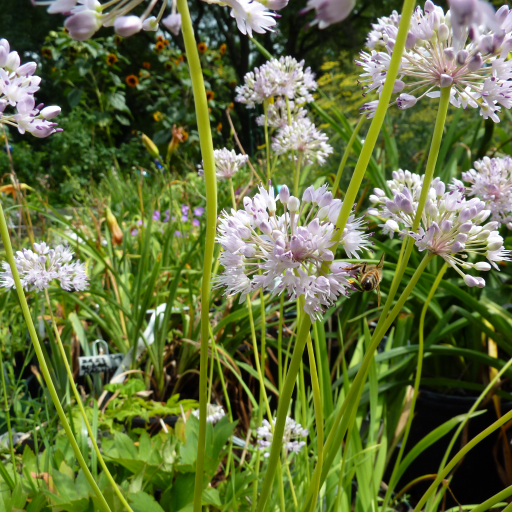
Plant Overview
Often called "German Garlic" or "Mountain Garlic," this resilient perennial is a favorite for those who want the beauty of a flower paired with the grit of a mountain survivor. Hailing from the rocky slopes of Europe and Siberia, it is tough enough to thrive in neglected corners where other plants might falter. Its elegant, twisting foliage gives it a sculptural quality that keeps the garden looking architectural even before the flowers arrive.
🔍 How to Identify
- 🍃 Curvy Foliage: The leaves are flat, strap-like, and notably blue-green, often performing a subtle spiral or "corkscrew" twist as they grow upward.
- 🌸 Lilac Globes: In mid-to-late summer, sturdy stems rise above the leaves to display perfectly round, 1-2 inch pom-poms made of tiny, star-shaped lilac or rosy-pink flowers.
- 🧅 Clumping Habit: Unlike many ornamental onions that grow from a single bulb, this species forms dense, tidy mounds that slowly expand over time, creating a lush groundcover effect.
🏡 In Your Garden
- 🏔️ Rocky Roots: Because its ancestors lived on mountain slopes, this plant demands excellent drainage. It is highly drought-tolerant but will suffer from "wet feet" if left in soggy soil during the winter.
- 🦋 The Late-Summer Hero: It blooms later than many other Alliums, providing a vital nectar source for bees and butterflies during the "summer slump" when other flowers have begun to fade.
- ✂️ Tidy Transitions: You don’t need to worry about the foliage "melting" away and looking messy after blooming, which is a common problem with taller Allium varieties. Its leaves stay attractive well into the autumn.
⚠️ Safety & Toxicity
- 🐾 Toxic to Pets: Like all members of the Allium genus (including onions and chives), this plant contains sulfoxides. If ingested in significant amounts, it can cause red blood cell damage in dogs and cats.
- 🍽️ Edible for Humans: The leaves and bulbs are edible for humans and have a mild, peppery garlic flavor, though they are usually grown for their beauty rather than their taste.
- 🧴 Skin Sensitivity: Some gardeners may experience mild skin irritation when handling crushed bulbs or sap; wearing gloves during division is a good precaution.
✨ Fun Fact
The species name senescens actually means "aging" or "growing old" in Latin. This is a poetic reference to the way the flower heads often gracefully droop or nod just before they fully open, resembling a bowing head.

Detailed Care Instructions
To grow Allium senescens plants, also known as Old World Onion or German Garlic, follow these steps:
- Climate: Allium senescens typically grows best in USDA hardiness zones 4-8. It prefers full sun to part shade and can tolerate a wide range of soil types.
- Soil preparation: Prepare the planting area by loosening the soil and removing any weeds or debris. Allium senescens prefers soil with good drainage.
- Planting: Propagate Allium senescens by planting bulbs or dividing existing clumps. Plant bulbs 2-3 inches deep and space them 4-6 inches apart. Division can be done in spring or fall by carefully digging up clumps and separating the individual bulbs to replant.
- Watering: Allium senescens requires moderate watering. Water the plants deeply once or twice a week, allowing the soil to dry slightly between waterings. Avoid overwatering to prevent rotting.
- Fertilizing: Apply a balanced slow-release fertilizer once in the spring when new growth begins. Follow the package instructions for dosage, as excessive fertilization may lead to foliage growth at the expense of flower production.
- Maintenance: Remove any spent flowers to encourage longer blooming. Allium senescens does not require much maintenance, but occasional deadheading and removing any yellowing or dead foliage can help promote healthy growth.
- Division and propagation: Every few years, Allium senescens may become overcrowded. Dig up the clumps, divide the bulbs, and replant them to ensure healthy growth and prevent overcrowding.
- Pests and diseases: Allium senescens is relatively resistant to pests and diseases. However, keep an eye out for common onion-related issues such as onion thrips, onion maggot, and fungal diseases like Botrytis. Use organic pest control methods or consult local gardening experts for appropriate treatments if necessary.
- Winter care: Allium senescens is generally hardy, but in areas with severe winters, provide a layer of mulch around the plants to protect them from freezing temperatures.
- Enjoy the blooms: Allium senescens produces small, pink to lavender flowers that resemble fireworks. Enjoy the unique blooms and the pleasant scent that attracts pollinators to your garden.
Remember that growing plants can be influenced by various factors such as climate, soil conditions, and care practices. It is always beneficial to consult local gardening resources or experts for specific advice relevant to your location and conditions.

Place in a bright room that is sun drenched almost all day. Or directly in a south-facing window.

To water this plant, it is important to check the soil moisture level regularly by pressing your finger about 2 inches into the soil. If it feels dry, it's time to water. Make sure to water the plant deeply, allowing the water to soak through the soil and reach the roots. Avoid getting water on the leaves as this may lead to fungus growth or damage. Watering frequency will depend on the specific climate and weather conditions in your area, but it's generally recommended to water once a week. In hot and dry weather, you may need to water more frequently. Be careful not to overwater, as this can lead to root rot.
To fertilize the Allium Senescens plant, use a balanced, all-purpose fertilizer with equal parts nitrogen, phosphorus, and potassium. Apply the fertilizer in early spring, just before new growth appears, and again in mid-summer, after the plant has finished flowering. Dilute the fertilizer according to the package instructions and apply it evenly around the base of the plant, taking care not to get any on the leaves or stems. Water the plant thoroughly after fertilizing to ensure the nutrients reach the roots. Avoid over-fertilizing, as this can cause excessive growth and weaken the plant.
Allium Senescens plants thrive in well-draining soil that is sandy or loamy in texture. A pH level of 6.0 to 8.0 is ideal for these plants. It is important to avoid heavy clay soils, as they can retain too much moisture and lead to root rot. Adding organic matter such as compost or peat moss can help improve soil structure and drainage. Additionally, a top dressing of mulch can help retain moisture and regulate soil temperature for optimal growth. Overall, a well-balanced and fertile soil with good drainage is key to successfully growing Allium Senescens plants.
To propagate this plant, you will need to first identify mature healthy plants from which to take cuttings. Using a clean and sharp pair of scissors or pruning shears, take cuttings of healthy stems from the parent plant.
Remove any leaves from the bottom inch or two of the cutting, leaving only a few leaves at the top. Dip the cut end of the stem in rooting hormone powder and insert it into a pot filled with well-draining soil.
Water the cutting lightly and cover it loosely with a plastic bag to create humidity. Place the pot in a warm and bright location but out of direct sunlight.
After a few weeks, the cutting should have developed roots. At this point, you can remove the plastic bag and gradually increase the amount of sunlight it receives. Once the cutting has grown several new leaves, it can be transplanted into a larger pot or directly into the garden.
It's important to keep the soil moist but not overly saturated during the propagation process. With proper care, your new Allium Senescens plants will thrive and produce attractive foliage and flowers.








