Plant Overview
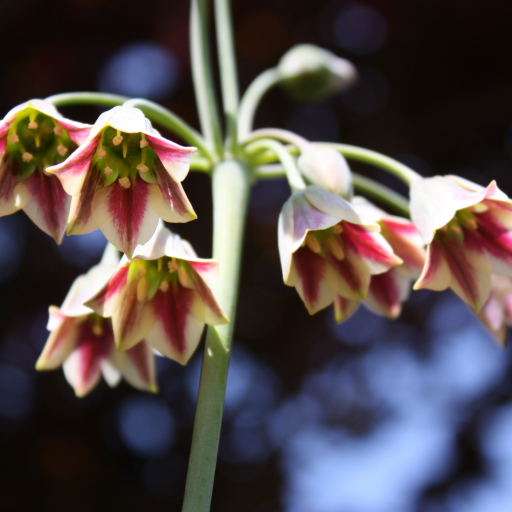
Often called the Sicilian Honey Garlic or Mediterranean Bells, Allium siculum looks less like a grocery store onion and more like a gothic chandelier from a fairy tale garden. Its elegant, nodding bells emerge from a papery sheath in late spring, creating a dramatic architectural silhouette that stands out in any landscape. While it carries the "garlic" name, it is grown almost exclusively for its ghostly, sophisticated beauty and its magnetic pull on local pollinators.
🔍 How to Identify
- 🔔 The Flowers: Dozens of bell-shaped florets hang in a loose, pendulous cluster from a single tall stem. They feature a unique color palette of creamy white, dusty rose, and tea-leaf green.
- 🌀 The Foliage: Long, triangular leaves that twist spirally as they emerge from the base. Be warned: if you bruise them, they release a very potent, sulfurous garlic aroma.
- 🕯️ The Seed Pods: In a fascinating botanical trick, the flower "bells" that once hung downward will pivot 180 degrees after pollination, pointing straight up at the sky as they turn into stiff, decorative seed heads.
🏡 In Your Garden
- 🌱 The "Disappearing" Act: Like many spring bulbs, the foliage of the Sicilian Honey Garlic begins to wither and turn yellow just as the flowers reach their peak. Plant them behind mid-sized perennials like Hostas or hardy Geraniums to hide the "ugly" transition.
- 🏰 Naturalizing Power: This plant is incredibly resilient and will happily "self-seed" and spread over time. It’s a perfect choice for gravel gardens or woodland edges where you want a plant that can look after itself.
- 🐝 Nectar Rich: It is a five-star hotel for bees. Because the flowers hang downward, they protect the nectar from rain, ensuring a dry, sugary meal for bumblebees even after a spring shower.
⚠️ Safety & Toxicity
- 🐱 Toxic to Pets: Like all members of the Allium genus (including onions and leeks), this plant contains sulfides that are toxic to dogs and cats. Ingestion can lead to digestive upset or more serious red blood cell damage.
- 👶 Low Human Risk: While not typically considered "poisonous" to humans in small amounts, the plant is not a culinary variety. Eating large quantities may cause stomach distress, and the intense, skunky smell of the sap can be off-putting to curious children.
✨ Fun Fact
Despite its name and intense garlic scent, Allium siculum isn't actually a true Allium in the eyes of many botanists—it is often classified in its own genus, Nectaroscordum, which literally translates to "Nectar Garlic."

Detailed Care Instructions
To grow Allium siculum (Sicilian honey garlic), follow these steps:
- Select a suitable location: Choose a sunny spot in your garden with well-draining soil. Allium siculum prefers full sun but can tolerate light shade.
- Soil preparation: Prepare the soil by removing any weeds or debris. You can improve drainage by adding organic matter, such as compost or well-rotted manure.
- Planting time: Allium siculum bulbs should be planted in fall, around September to October, when soil temperatures are cooler. This will give the plant time to establish roots before winter.
- Planting depth: Dig a hole that is around 3-4 inches deep. Place the bulbs in the hole with the pointed ends facing up. Space them around 6-8 inches apart to allow for adequate growth.
- Watering: After planting, water the bulbs thoroughly to settle the soil. Keep the soil slightly moist but not waterlogged throughout the growing season. Reduce watering in late summer to encourage dormancy.
- Fertilization: Allium siculum doesn't require heavy fertilization. However, you can incorporate a balanced slow-release fertilizer into the planting hole or use a liquid fertilizer once or twice during the growing season.
- Mulching: Apply a layer of organic mulch, such as straw or wood chips, around the bulbs to conserve soil moisture and suppress weed growth.
- Maintenance: Remove any dead flower stalks after blooming to keep the plant neat. It's also a good idea to divide crowded clumps every few years to maintain optimal growth.
- Protecting from pests: Allium siculum is generally resistant to most pests and diseases. However, you can protect the plant from bulb-feeding rodents, such as moles or voles, by placing a wire mesh or bulb cage around the bulbs before planting.
- Enjoy the blooms: Allium siculum typically flowers in late spring to early summer, producing unique bell-shaped purple or white flowers. Enjoy the beautiful blooms and the pleasant fragrance they emit.
Remember to check your local gardening guidelines and climate conditions to ensure the suitability of growing Allium siculum in your specific area.

Place in a window with dappled sun or a spot in the middle of a room. Or directly in a window facing west or east.

The plant should be watered regularly during the growing season, especially during periods of drought. The soil should be well-draining and moist, but not waterlogged. It is important to avoid over-watering, as this can lead to root rot and other diseases. Watering should be reduced in the dormant season, to allow the bulbs to rest. Additionally, it is important to avoid getting water on the foliage, as this can cause fungal diseases. Watering can be done by hand, or with the use of drip irrigation or a soaker hose.
To fertilize this plant, use a balanced fertilizer with equal amounts of nitrogen, phosphorus, and potassium. Apply the fertilizer in early spring, just before new growth appears. Spread the fertilizer evenly around the base of the plant, and water thoroughly immediately after application. Repeat this process every four to six weeks throughout the growing season until the onset of fall. Avoid over-fertilizing, as this can lead to excessive vegetative growth and reduce the quality of the plant's flowers.
The best type of soil to use with this plant is well-draining soil that is rich in organic matter. The ideal pH range for this plant is between 6.0 and 7.0. It is important to ensure that the soil does not become waterlogged or too dry, as this can cause damage to the roots. Fertilizer can be added to the soil before planting, but should not be overdone as this plant does not require heavy feeding. It is recommended to ensure that the soil is weed-free before planting, as these can compete for nutrients and moisture. Overall, this plant prefers a soil that is moist but well-drained, with a pH level that is slightly acidic to neutral.
To propagate this plant, you need to first select a mature and healthy plant. You can then carefully remove the bulb from the soil and separate any offsets or bulbils that may have formed around the parent bulb.
These offsets or bulbils can be planted individually or in groups in a well-draining, fertile soil, at a depth of approximately twice the height of the bulb. Water the newly-planted bulbs thoroughly and continue to keep the soil moist until new growth appears.
Once the new growth emerges, it is essential to provide the plants with adequate sunlight and water to encourage healthy growth. It may take up to several years for the new plants to mature fully and produce flowers.
Alternatively, you can also propagate Allium Siculum by dividing the parent bulb into smaller sections and replanting them separately. This method typically yields faster results than planting bulbils.








