Plant Overview
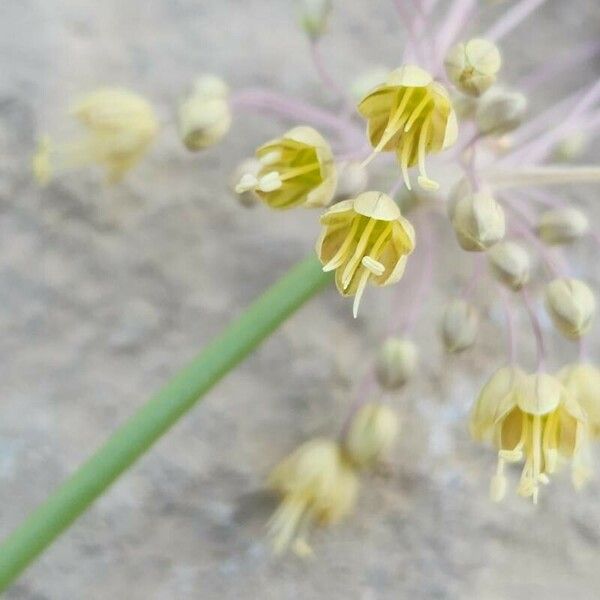
Known as the Stamen Onion, this elegant wild relative of the common garlic and onion hails from the sun-drenched, rocky slopes of the Mediterranean and the Middle East. Unlike the heavy, spherical "pom-poms" of traditional garden Alliums, Allium stamineum offers a more delicate, airy aesthetic. It is a favorite for rock gardens and xeriscaping, where its spindly, "exploding star" blooms provide a touch of wild, architectural grace.
🔍 How to Identify
- 🌸 The "Whiskered" Flowers: The most defining feature is the length of the stamens, which protrude significantly beyond the bell-shaped petals. This gives the flower clusters a "hairy" or "spiny" appearance from a distance.
- 🎨 Subtle Coloration: The small, nodding flowers usually range from a dusty rose or soft pink to a brownish-purple, often with darker mid-veins on each petal.
- 📏 Wiry Stems: The stems are slender and upright, typically reaching 10 to 15 inches in height, topped with a loose, umbrella-like cluster (umbel) of flowers.
- 🍃 Minimal Foliage: The leaves are very thin, almost thread-like, and often begin to wither just as the plant starts to bloom, focusing all its energy on the flowers.
🏡 In Your Garden
- 🪨 The "Lean" Life: This plant hates "rich" living. In heavy, fertilized garden soil, it may grow too fast and flop over. It performs best in poor, gritty, or sandy soil that mimics its native rocky hillsides.
- ☀️ Drought Champion: Once the bulbs are established, they require almost no supplemental water. In fact, keeping the bulbs dry during their summer dormancy is the key to preventing rot and ensuring they return the following spring.
- 🦋 Pollinator Magnet: While humans might find the scent of the crushed leaves "oniony," bees and butterflies find the nectar-rich florets irresistible, making it a great choice for a wildlife-friendly dry garden.
⚠️ Safety & Toxicity
- 🐾 Toxic to Pets: Like all members of the Allium genus (including onions, garlic, and chives), this plant is toxic to dogs, cats, and horses. It contains compounds that can cause oxidative damage to red blood cells if ingested.
- 🚫 Avoid Ingestion: While some wild onions are foraged, Allium stamineum is grown strictly for its ornamental beauty. Consuming large amounts can cause gastrointestinal distress in humans.
✨ Fun Fact
The name stamineum is derived from the Latin word for "thread" or "fiber." It was named specifically to highlight its long, thread-like stamens, which act like tiny landing strips for specialized Mediterranean bees!

Detailed Care Instructions








