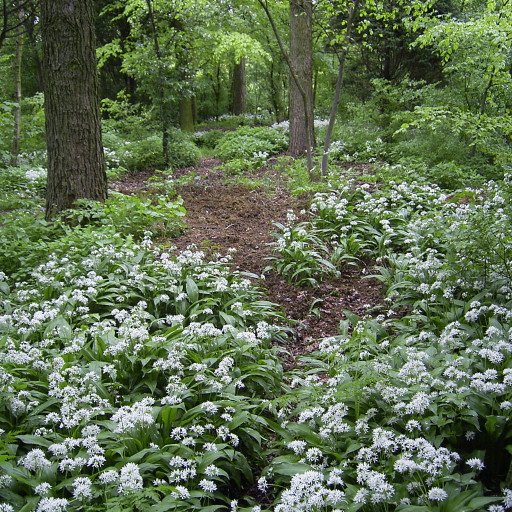
Plant Overview
Known as "Wild Garlic," "Ramsons," or "Bear’s Garlic," Allium ursinum is a celebrated harbinger of spring in European woodlands. According to folklore, brown bears emerging from hibernation would feast on these nutrient-rich greens to "purify" their blood and regain their strength. In the garden, it creates a lush, aromatic groundcover that signals the end of winter with a sea of delicate white starbursts.
🔍 How to Identify
- 🍃 The Leaves: Long, elliptical, and pointed blades that grow directly from the ground. They are a vibrant, matte green and feel soft to the touch, unlike the waxy leaves of some lookalikes.
- 🌸 The Blooms: Tiny, white, six-petaled flowers that form a loose, globe-like cluster (umbel) at the top of a single leafless stem.
- 🧄 The Scent: The most reliable identifier. When any part of the plant is crushed or bruised, it releases a potent, unmistakable aroma of fresh garlic and onion.
🏡 In Your Garden
- 🌳 The Woodland Vibe: Wild Garlic thrives in "dappled shade," mimicking its natural home under deciduous trees. It prefers moist, humus-rich soil and won't tolerate drying out during its active spring growth.
- 🌱 Spreading Joy (and Bulbs): It is a vigorous spreader through both underground bulbs and self-seeding. While beautiful, it can become invasive in small garden beds, so it is best planted in dedicated "wild" corners or contained areas.
⚠️ Safety & Toxicity
- ☠️ The Deadly Lookalikes: Extreme caution is required. Before the flowers bloom, Wild Garlic looks nearly identical to Lily of the Valley and Autumn Crocus, both of which are highly toxic if ingested. Always use the "crush and sniff" test—if it doesn't smell like garlic, do not touch it.
- 🐾 Pet Safety: Like all members of the Allium family (onions, leeks, chives), Wild Garlic is toxic to dogs and cats. Ingestion can lead to gastrointestinal upset or more serious red blood cell damage.
✨ Fun Fact
The specific epithet ursinum comes from the Latin ursus (bear). This name is consistent across many languages, including the German Bärlauch and French ail des ours, cementing the ancient observation that this plant is a favorite snack for hungry, post-hibernation bears!

Detailed Care Instructions
To grow Allium Ursinum, or wild garlic, follow these steps:
- Choose a location: Allium Ursinum prefers partial shade to full shade, with well-draining soil. It can tolerate some sunlight, but too much direct sunlight can cause the leaves to yellow.
- Prepare the soil: Ensure the soil is rich in organic matter by adding compost or well-rotted manure. Loosen the soil to a depth of 6-8 inches to promote root growth.
- Plant the bulbs: Plant the bulbs in the fall or early spring, about 2 inches deep and 4-6 inches apart. If you're planting in the spring, make sure the soil has warmed up a bit before planting.
- Water regularly: While Allium Ursinum prefers moist soil, avoid overwatering as it can lead to root rot. Ensure the soil is consistently moist but not waterlogged. Water deeply once or twice a week, depending on the weather conditions.
- Mulch: Apply a layer of organic mulch, such as straw or wood chips, around the plants after planting. This will help retain moisture, suppress weed growth, and protect the bulbs during winter.
- Fertilize sparingly: Allium Ursinum doesn't require much fertilization. You can apply a balanced, slow-release organic fertilizer once in early spring to provide necessary nutrients.
- Weed control: Regularly remove any weeds surrounding the plants to minimize competition for nutrients and water.
- Harvesting: You can start harvesting the leaves of Allium Ursinum once they reach a mature size, typically around 10-12 inches in length. Trim the leaves from the outside of the plant, allowing the inner leaves to continue growing.
- Dividing: After a few years, the plants may become overcrowded. To promote healthy growth, you can divide the bulbs and replant them in a fresh location or share them with fellow gardeners.
- Pest and disease control: Allium Ursinum is relatively pest and disease-free but can occasionally be affected by slugs or rust. Monitor for any signs of damage or disease, and take appropriate measures if needed.
Remember that Allium Ursinum can spread rapidly, so consider planting it in a contained area or use barriers to prevent it from taking over your garden.

Place in a window with dappled sun or a spot in the middle of a room. Or directly in a window facing west or east.

To water this plant, you should consider the surrounding environment and weather conditions. This plant prefers a moist soil that is well-draining, so you should water it periodically, especially during dry, hot spells or prolonged droughts. Make sure to avoid overwatering as it may lead to root rot and other diseases. Water the plant at its base and avoid getting the leaves and stems wet to prevent waterlogging. Use good quality water that is free from salts and chlorine and allow it to soak in thoroughly before draining off excess water. Finally, monitor the plant's moisture requirements and adjust the watering frequency accordingly to promote healthy growth and development.
The best time to fertilize this plant is in the spring when it is actively growing. Use a balanced fertilizer with equal amounts of nitrogen, phosphorus, and potassium. Follow the recommended dosage on the package, and apply the fertilizer evenly around the base of the plant. Water well after applying the fertilizer to make sure it is absorbed into the soil. Avoid fertilizing too late in the season as it can stimulate new growth that may not harden off before winter.
Allium Ursinum is a herbaceous plant that requires a rich and moist soil with good drainage. The soil should be well-aerated and have a pH level of 6 to 7. It prefers a soil that is organically rich and has a high content of humus. A good quality loam or sandy loam soil with a moderate moisture content is ideal. The plant also requires partial shade or filtered sunlight, and can be grown in a variety of soil types as long as they are nutrient-rich and well-draining. When planting Allium Ursinum, it is important to prepare the soil properly by adding organic matter such as compost, well-rotted manure or leaf mold to improve the soil structure and fertility.
There are several ways to propagate this plant. One way is through seed propagation. Collect mature seeds from the plant, which are usually found in the seed heads. Sow the seeds in well-draining soil in a sunny location. Keep the soil moist and wait for the seedlings to emerge.
Another way to propagate the plant is through bulb division. When the clump of bulbs becomes overcrowded, dig them up and separate them into smaller groups. Replant the smaller clusters at the same depth as the mother plant.
The plant can also be propagated through root cuttings. Cut pieces of the plant's root system and plant them in soil. Keep the soil moist and wait for new growth to appear.
Lastly, the plant can be propagated through stem cuttings. Take cuttings from healthy stems and place them in water until roots form. Then, plant the cuttings in soil. Keep the soil moist and wait for the new growth to appear.








