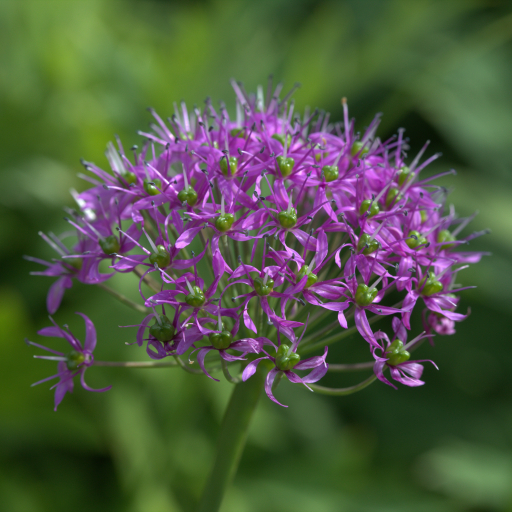
Plant Overview
Known as the "Himalayan Onion" or "Wallich’s Garlic," this hardy perennial is a rugged survivor from the high-altitude meadows of the Himalayas. In its native regions of Nepal, Tibet, and India, it is often referred to as a "mountain treasure" for its potent flavor and medicinal reputation. Whether it is swaying in a cold mountain breeze or tucked into a rock garden, its vibrant purple clusters make it a striking alternative to common garden chives.
🔍 How to Identify
- 🌸 The Flower Head: Unlike the tight globes of common onions, this plant produces loose, spherical clusters (umbels) of star-shaped flowers that range from deep purple to a moody maroon.
- 🍃 Triangular Leaves: A key giveaway is the leaf shape; the long, grassy green leaves are distinctly "keeled" or triangular in cross-section rather than flat or hollow.
- 🧄 The Signature Scent: If you bruise any part of the plant, it releases a powerful, pungent aroma that sits somewhere between fresh garlic and sweet onion.
🏡 In Your Garden
- 🏔️ Mountain Roots: Because it originates from elevations up to 15,000 feet, this plant craves excellent drainage. It hates "wet feet" and will quickly rot if left in soggy, heavy clay soil.
- ❄️ Cold Weather Warrior: It is exceptionally frost-hardy but prefers cooler summers. If you live in a very hot climate, it appreciates a spot that catches the morning sun but stays shaded during the blistering afternoon heat.
⚠️ Safety & Toxicity
- 🐾 Pet Warning: Like all members of the Allium family (onions, garlic, and leeks), this plant contains N-propyl disulfide. While prized by humans, it is toxic to dogs and cats, potentially causing damage to red blood cells if ingested.
- 👶 Child Safety: While the plant is edible and used in Himalayan cooking, its intense flavor usually prevents children from eating large amounts, but it should still be kept out of reach of curious toddlers.
✨ Fun Fact
In Nepal, a dried version of this plant and its relatives is known as Jimbu. It is a vital spice in Himalayan cuisine; when fried in ghee, it releases an earthy, nutty aroma that defines the flavor of traditional black lentil dal.

Detailed Care Instructions

Place in a bright room that is sun drenched almost all day. Or directly in a south-facing window.

Some plants require more regular watering than others, which should be done every few days. It's critical to maintain the soil moist all of the time. The water requirements of the same plant placed in pots with varying sizes will differ. Because the water in the smaller pot evaporates faster than the water in the larger pot, it will require more watering. Regardless of pot size, the surface should constantly be maintained moist.








