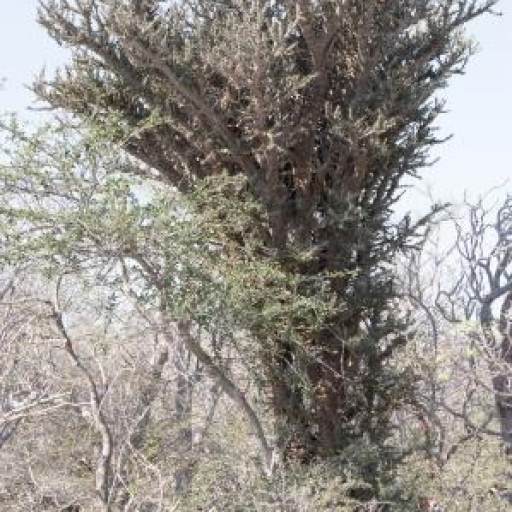
Plant Overview
Known as the "Humble Didierea," Alluaudia comosa looks like it stepped off the set of a sci-fi film. Hailing from the ancient spiny forests of Madagascar, this architectural succulent is a master of survival in one of the harshest environments on Earth. Unlike its taller, skinnier cousins, this species grows into a dense, fortress-like thicket of silver thorns and tiny emerald leaves.
🔍 How to Identify
- 🌵 Branching Pattern: Its name comosa means "tufted" or "crowded." It forms a dense, wide, and often conical mass of intricate, tangled branches rather than growing in a single tall pillar.
- 🍃 Paired Leaves: Look for tiny, succulent, oval leaves that emerge in pairs. They are cleverly positioned just beneath a sharp spine to provide a tiny bit of shade to the stem.
- ⚔️ Defensive Spines: The stems are armed with single, greyish-white spines that can reach over an inch long, giving the entire plant a shimmering, silvery appearance from a distance.
🏡 In Your Garden
- ☀️ Solar Powered: This plant is a light-hungry desert dweller. It requires intense, direct sunlight to maintain its dense branching; in low light, the stems will stretch out and lose their signature "crowded" charm.
- 💧 Dormancy Logic: If the plant suddenly drops all its leaves, don't panic! It is entering its natural dry-season sleep. During this time, you must stop watering almost entirely, as the roots are highly prone to rot when the plant isn't actively growing.
- 🪨 Rocky Foundations: In the wild, it grows on limestone outcrops. In your home, it needs a very gritty, mineral-heavy soil mix. It "hates wet feet" and will thrive best in porous terracotta pots that allow the soil to breathe.
⚠️ Safety & Toxicity
- ⚔️ Physical Hazard: The primary danger is the spines. They are incredibly sharp and positioned at every angle. This is not a plant for high-traffic areas or low shelves.
- 🐾 Pet & Child Safety: While the plant is not considered highly toxic if nibbled, the physical threat of the thorns makes it dangerous for curious pets and toddlers. The sap can also cause mild skin irritation for those with sensitive skin.
✨ Fun Fact
Even when it drops its leaves to survive a drought, Alluaudia comosa doesn't stop working. The greyish bark is thin enough that the green tissue underneath can actually perform photosynthesis, allowing the plant to produce energy through its "skin" while its leaves are away!

Detailed Care Instructions
To grow an Alluaudia comosa plant, follow these steps:
- Climate: Alluaudia comosa is native to Madagascar and thrives in hot, arid climates. It is best suited for USDA hardiness zones 10-12. Ensure you live in a region with a similar climate or have the ability to create the necessary conditions.
- Light: Provide the plant with full sun exposure. Place it in a location where it receives at least 6-8 hours of direct sunlight daily.
- Soil: The plant prefers well-draining soil. Use a cactus or succulent potting mix that contains a blend of sand, perlite, and peat moss. This type of soil helps prevent waterlogging and promotes healthy root growth.
- Pot selection: Choose a pot with good drainage holes to prevent water accumulation. The pot should also be large enough to accommodate the plant's root system.
- Watering: Alluaudia comosa is highly drought-tolerant. Water the plant sparingly, allowing the soil to dry out completely between waterings. Overwatering can lead to root rot.
- Fertilizer: Apply a balanced, slow-release fertilizer during the growing season (spring and summer). Follow the instructions on the fertilizer packaging for the appropriate dosage.
- Pruning: Prune the plant to control its size and shape. Remove any dead or damaged branches. Alluaudia comosa is known to produce sharp spines, so exercise caution while pruning.
- Temperature: Protect the plant from freezing temperatures. If live in a colder region, it's advisable to keep the plant indoors during winter or provide frost protection if planted outdoors.
- Propagation: Alluaudia comosa can be propagated through stem cuttings. Take a 4-6 inch cutting from a healthy plant and allow the cut end to dry for a few days. Then, plant the cutting in a well-draining soil mix and water sparingly until it roots.
- Pests and diseases: Monitor the plant for common succulent pests like mealybugs, scale insects, and aphids. Treat any infestations promptly using organic insecticides or by wiping off the pests with a cotton swab dipped in rubbing alcohol. Ensure good air circulation to prevent fungal issues.
Remember that Alluaudia comosa grows slowly, so patience is crucial. With proper care and attention, you can successfully grow and enjoy this unique succulent.

Place in a bright room that is sun drenched almost all day. Or directly in a south-facing window.

Alluaudia comosa plant should be watered regularly, but not excessively. To ensure proper watering, allow the top 1-2 inches of soil to dry out before watering again. When watering, pour water slowly and evenly over the soil until it drains from the bottom of the container. Avoid getting water on the leaves or stem of the plant as it can cause damage. It is essential to use a well-draining soil mix and a container with drainage holes to prevent waterlogged soil. In winter, reduce watering frequency as the plant goes into dormancy.
To fertilize this plant, use a balanced fertilizer with equal amounts of nitrogen, phosphorus, and potassium. Apply the fertilizer during the growing season, from spring to fall. Follow the dilution instructions on the fertilizer packaging, and apply to the soil around the plant roots, avoiding getting any on the leaves or stem. Water the plant well after fertilizing. Avoid fertilizing during winter or when the plant is dormant.
Alluaudia Comosa plant prefers well-draining soil that is rich in organic matter. The soil should have a slightly acidic to neutral pH level, around 5.5 to 7.0. It is important to avoid using soil that is compact or heavy in clay as this can lead to poor drainage and waterlogged roots. A good soil mix for this plant would consist of a combination of sand, perlite, and peat moss or coconut coir to ensure sufficient drainage. Additionally, adding some slow-release fertilizer to the soil mix can provide necessary nutrients for the plant's growth and overall health.
Alluaudia comosa plant propagation can be done using stem cuttings and seeds. For stem cutting propagation, select a young and healthy stem and cut a 15cm to 20cm section from it. Remove any leaves from the bottom half of the stem and leave at least two or three leaves on the top. Leave the cutting in a shaded area for a few days to allow it to dry out before planting. Once the cutting is dry, plant it in a well-draining soil mixture and water it. Keep the soil moist and in a warm and shaded location until new growth is seen.
To propagate using seeds, collect ripe seeds from the plant after they have dried on the plant for some time. Clean the seeds by removing the pulp and soak them in warm water for a few hours. Sow the seeds in a well-draining soil mix and cover the seeds with a thin layer of the soil mixture. Keep the soil moist and in a shaded area until germination occurs.
Both methods of propagation require care and attention until the new plants have established themselves in their new environment.








