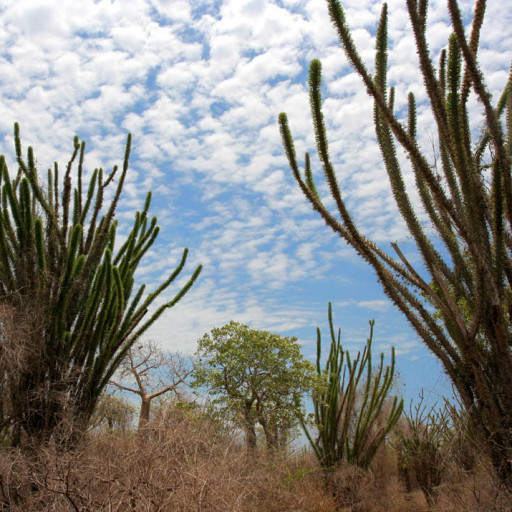
Plant Overview
Often called the Madagascar Ocotillo, the Alluaudia procera looks like a prehistoric relic plucked straight from a Dr. Seuss illustration. Native to the spiny forests of Madagascar, this bizarre succulent grows in tall, thorny columns that reach for the sky. While it resembles the cacti of the American West, it is actually part of the Didiereaceae family, a unique group of plants that evolved specifically to survive in some of the harshest environments on Earth.
🔍 How to Identify
- 🌵 The Stem: A thick, grayish-white columnar trunk that grows vertically. In its youth, it is a single stalk, but it can branch out as it matures.
- 🍃 The Leaves: Small, oval, fleshy green leaves that grow in pairs. Interestingly, they grow vertically along the stem rather than flat, a clever trick to reduce water loss.
- ⚔️ The Thorns: Sharp, conical spines are arranged neatly along the ribs of the plant, emerging from the same spots as the leaves to protect the plant's precious water stores.
🏡 In Your Garden
- ☀️ Light & Orientation: This plant is a sun-worshipper. Its leaves are "heliotropic," meaning they adjust their angle throughout the day to maximize sunlight while minimizing the surface area exposed to the harsh midday heat.
- 🍂 Seasonal Shedding: Don't panic if your Madagascar Ocotillo drops all its leaves! It is a deciduous succulent. In the winter or during periods of extreme drought, it enters dormancy and sheds its foliage to stay hydrated.
- 🏜️ The Taproot Factor: Because it develops a deep anchoring system to withstand desert winds, it dislikes being moved once established. If growing in a container, choose a deep pot with excellent drainage.
⚠️ Safety & Toxicity
- 🛡️ Physical Hazard: The most immediate danger is the thorns. They are incredibly sharp and rigid; the plant should be placed away from narrow walkways or areas where children and pets play.
- 🧴 Mild Irritant: While not considered deadly, the sap inside the stems can cause skin irritation for some people. It is best to wear gloves when pruning or repotting.
- 🐾 Pets: Keep curious chewers away. While not highly toxic, ingesting the fibrous stems or sap can cause gastrointestinal distress in cats and dogs.
✨ Fun Fact
In its native Madagascar, the Alluaudia procera is a favorite playground for Verreaux’s Sifaka lemurs. Despite the terrifyingly sharp spines, these lemurs can leap and cling to the thorny trunks with total ease, using the plant as a safe lookout from predators!

Detailed Care Instructions
| Color | Flowers Are Yellowish White In Crowded Clusters At The End Of The Branches |
| Soil Ph | 7.0-7.5 |
| Humidity | Dry |
| Lighting | Full Sun |
| Toxicity | Non-Toxic |
| Soil Type | Well-Draining Sandy Soil Mix |
| Bloom Time | Late Spring/Early Summer, Mid Summer |
| Difficulty | Easy |
| Plant Type | Succulent |
| Mature Size | 5-10 Feet High Indoors, Up To 60 Feet Tall Outdoors |
| Native Area | Southern And Southwestern Madagascar |
| Temperature | 20°C - 35°C |
| Sun Exposure | Full Sun To Partial Shade |
| Hardiness Zones | 9-11 |
To grow Alluaudia Procera plant, also known as the Madagascar Ocotillo, follow these steps:
- Climate: Alluaudia Procera requires a warm or tropical climate, with average temperatures between 60-85°F (15-29°C). In colder regions, you can grow it indoors or in a greenhouse.
- Sunlight: Provide the plant with at least 6-8 hours of direct sunlight per day. Place it in a sunny location, ideally facing south or west.
- Soil: Use well-draining soil with good fertility. A mix of sandy or loamy soil with organic matter like compost or peat moss is suitable. Avoid heavy clay soil, which retains excessive moisture.
- Planting: Remove the plant from its nursery pot and loosen the root ball gently. Dig a hole in the prepared soil, slightly larger than the root ball. Place the plant in the hole and backfill with soil, ensuring the top of the root ball is level with the soil surface. Pat the soil gently around the plant to secure it.
- Watering: Alluaudia Procera is a drought-tolerant plant. Water it sparingly, allowing the soil to dry out between waterings. Overwatering may lead to root rot or other fungal diseases. During the summer, water once every 7-10 days, reducing frequency in the cooler months.
- Fertilizing: Feed the plant with a balanced or slightly higher phosphorus fertilizer every 4-6 weeks during the growing season (spring to early fall). Dilute the fertilizer according to the package instructions before applying it to the soil.
- Pruning: Prune the plant regularly in late winter or early spring to maintain its desired shape. Remove dead, diseased, or damaged branches and promote airflow within the plant.
- Repotting: Alluaudia Procera can grow quite large over time. If the plant outgrows its container, repot it into a bigger pot during spring, using fresh potting soil.
- Pests and diseases: Monitor the plant for pests like mealybugs, scale insects, or aphids. Treat any infestations with environmentally friendly insecticides. Watch out for signs of root rot and adjust watering if necessary.
- Propagation: You can propagate Alluaudia Procera from cuttings. Take a stem cutting from the plant in spring or summer, ensure it is a healthy, semi-hardwood section, and plant it in a well-draining potting mix. Keep the soil slightly moist until the cutting has rooted.
Remember, growing plants requires patience, proper care, and observation. Monitor the specific needs of your Alluaudia Procera plant and adjust accordingly for the best results.

Place in a bright room that is sun drenched almost all day. Or directly in a south-facing window.

To properly water this plant, you should first check the soil moisture level by inserting your finger about an inch deep into the soil. If the soil feels dry, it is time to water. Use a watering can to slowly and evenly pour water onto the soil, avoiding getting water on the leaves or stems of the plant. Allow the water to fully soak into the soil before stopping. It is important to not overwater this plant as it can lead to root rot. Only water when the soil is dry and only enough to moisten the soil, not saturate it.
To properly fertilize this plant, use a balanced fertilizer with equal amounts of nitrogen, phosphorus, and potassium. Dilute the fertilizer according to the manufacturer's instructions and apply it to the soil during the plant's growing season, which is typically from spring to fall. Avoid applying fertilizer during the winter months when the plant is dormant. Apply fertilizer about once a month, or adjust frequency based on the plant's growth rate and soil quality. Avoid over-fertilizing, as this can damage the plant.
The best type of soil to use with this particular plant is a well-draining soil mix that is rich in nutrients but not too heavy. It should be able to retain moisture but not stay waterlogged as this can lead to root rot. A good soil mix can consist of a combination of peat moss, perlite or vermiculite, and sand or gravel. It is important to avoid using soil that is high in clay content as this can also cause drainage issues. Additionally, incorporating organic matter like compost can provide extra nutrients for healthy growth.
Alluaudia Procera plant can be propagated through stem cuttings. To do this, choose a healthy stem and cut it at a 45-degree angle using a clean and sharp knife. The cutting should be about 3 to 4 inches long with at least one node.
Remove all the leaves from the bottom half of the cutting and allow the cut end to dry for a day or two. Prepare a pot with well-draining soil and plant the cutting about 2 inches deep, pressing the soil firmly around it.
Place the pot in a warm and bright spot, avoiding direct sunlight. Water the cutting sparingly, keeping the soil moist but not soggy. After a few weeks, the cutting should start to root and new growth will emerge.
Once the cutting has established a strong root system, it can be transplanted into a larger pot or into the garden. Remember to continue to water it regularly and provide it with plenty of light and warmth.
Common pests of the madagascan ocotillo include Scale insect, mealybugs, spider mites. Make a habit of checking your madagascan ocotillo frequently for pests so that any infestations can be caught and managed early.








