Plant Overview
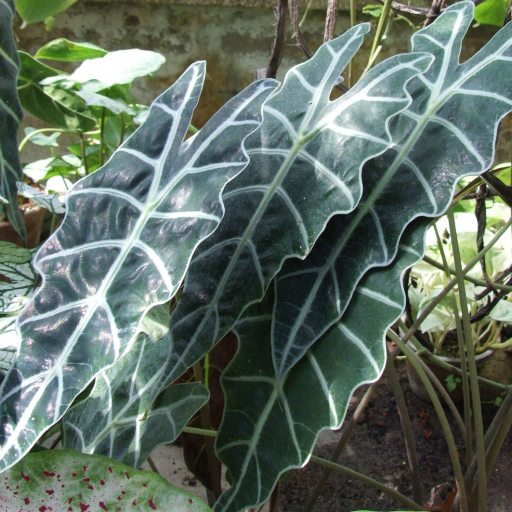
Often called the "African Mask Plant" or "Alocasia Polly," this striking tropical hybrid is the supermodel of the indoor plant world. With its deep, metallic-green foliage and dramatic white veins, it looks almost architectural, as if it were carved from dark stone rather than grown from soil. Despite the "Amazonica" name, this plant never saw the South American rainforest; it was actually a man-made hybrid named after a nursery in Florida!
🔍 How to Identify
- 🍃 Blade Shape: Look for distinctive arrowhead or shield-shaped leaves with deeply scalloped, wavy margins that give it a "jagged" silhouette.
- 🦓 Bold Venation: The leaves feature thick, starkly white or silvery-green veins that contrast sharply against the dark, almost black-green surface.
- 🎨 The Underside: If you flip a leaf over, you’ll find a rich, matte burgundy or deep purple hue, a common trait used by the plant to capture light in low-visibility environments.
🏡 In Your Garden
- ☁️ Humidity is King: This plant thrives in "jungle-like" conditions; if your indoor air is too dry, the edges of those beautiful leaves will turn brown and crispy very quickly.
- 💤 The Winter Nap: Don’t panic if it stops growing or loses a few leaves in the winter! It often enters a natural dormancy period where it pulls energy back into its bulb-like rhizome to rest.
- 🚿 Watering Nuance: It prefers to stay consistently moist but hates "wet feet." Using a chunky, well-draining mix (like orchid bark and perlite) is essential to prevent the sensitive rhizome from rotting.
⚠️ Safety & Toxicity
- 🚫 Toxic Status: Highly toxic to both humans and pets.
- 🐱 Details: The plant contains insoluble calcium oxalate crystals. If a leaf is bitten or chewed, these crystals act like tiny needles, causing immediate mouth pain, swelling of the throat, and digestive upset. It is best kept on a high shelf or plant stand.
✨ Fun Fact
The "Amazonica" name is a bit of a historical mystery solved; it was bred in the 1950s by Salvadore Mauro at the "Amazon Nursery" in Miami. Because it is a human-made hybrid of two different species, you will never find an Alocasia Amazonica growing naturally in the wild!

Detailed Care Instructions
| Color | Light Butter Yellow |
| Soil Ph | 5.5 To 6.5 |
| Humidity | High |
| Lighting | Part Sun |
| Toxicity | Toxic |
| Soil Type | Loose, Well-Draining Potting Mix Or Crumbly Loam |
| Bloom Time | Spring And Summer Growth |
| Difficulty | Hard |
| Plant Type | Tropical Plant |
| Hibernation | Cold Period |
| Mature Size | Size Ranges Based On Variety From Two Feet Tall And Two Feet Wide To 15 Feet Tall And Eight Feet Wide |
| Native Area | Asia |
| Temperature | 18°C - 25°C |
| Sun Exposure | Bright Indirect Light |
| Hardiness Zones | 10 And 11 |
To grow an Alocasia Amazonica plant successfully, follow these steps:
- Select a suitable location: Alocasia Amazonica plants prefer bright but indirect light, so find a spot in your home that receives filtered sunlight or partial shade.
- Choose the right soil: Alocasia Amazonica plants thrive in well-draining soil that retains some moisture. Use a mixture of regular potting soil, peat moss, and perlite to create the right balance.
- Planting: Select a pot or container with drainage holes that is large enough to accommodate the root system of the plant. Place some small stones or a layer of gravel at the bottom of the pot for improved drainage before adding the soil. Carefully place the plant in the pot, ensuring the roots are covered and the soil is firmly packed around the stem.
- Watering: Alocasia Amazonica plants require consistent moisture, but be careful not to over-water as it can lead to root rot. Water the plant thoroughly when the top inch of soil feels dry but avoid letting it sit in standing water.
- Humidity: These plants thrive in high humidity. You can increase humidity levels by placing a tray filled with water near the plant or utilizing a humidifier in the room.
- Temperature and environment: Alocasia Amazonica plants prefer temperatures around 60-75°F (15-24°C). Keep the plant away from drafts and sudden temperature fluctuations.
- Fertilizer: Feed the plant with a balanced, water-soluble fertilizer once a month during the growing season (spring and summer). Follow the instructions on the fertilizer packaging for accurate dosing.
- Pruning: Alocasia Amazonica plants can grow quite large, so remove any yellowing or dead leaves to maintain the plant's health and appearance.
- Repotting: These plants prefer to be slightly root-bound, so only repot when necessary. If the roots are overcrowded or emerging from the drainage holes, it's time to move to a larger pot.
- Pest control: Keep an eye out for common houseplant pests such as aphids, spider mites, or mealybugs. If detected, treat the plant with an appropriate insecticidal soap or neem oil solution.
By following these steps, you can successfully grow and maintain a healthy Alocasia Amazonica plant.

Place in a window with dappled sun or a spot in the middle of a room. Or directly in a window facing west or east.

To water this plant, you should first assess the moisture level of the soil by inserting your finger about one inch into the soil. If it feels dry, it's time to water the plant. Use room temperature water and water slowly around the base of the plant, being careful not to get water on the leaves or stem. Once the soil feels moist, stop watering and allow the excess water to drain away. Avoid letting the soil become waterlogged, as this can lead to root rot. The frequency of watering will depend on factors such as the temperature, humidity, and size of the plant. Generally, it's better to underwater than to overwater, so err on the side of caution and wait until the soil is dry before watering again.
To improve growth and development, feed the plant with a balanced fertilizer once a month during the growing season (spring and summer). Dilute the fertilizer to half of the recommended strength or use a slow-release fertilizer according to instructions. Avoid over-fertilization, which can cause root burn. Additionally, consider supplementing with micronutrients such as iron to promote healthy foliage color.
Alocasia Amazonica plant prefers well-draining soil that is rich in nutrients. It thrives in a soil mix that contains a combination of peat, perlite, and vermiculite, which provides good aeration and drainage. It is important to avoid compacted soils, as this can lead to root rot. A pH range of 5.5-6.5 is ideal for this plant. Adding organic matter or compost to the soil mix can help improve the soil structure and nutrient content. Additionally, it is important to avoid overwatering, as this plant is susceptible to root rot.
The method to propagate this plant is through rhizome division. Choose a mature plant with several stems, and carefully dig it out of the soil. Gently rinse the roots and remove excess soil. Observe the rhizome, which is the thick, fleshy stem that grows underground.
Using a sharp, sterilized knife, carefully cut the rhizome into smaller sections, ensuring each section has at least one stem and some roots. Dust the cut ends with a rooting hormone to encourage growth and prevent disease.
Prepare soil in a new pot with good drainage, and plant each rhizome section in a separate pot. Water the soil thoroughly and place the new plants in a warm, humid area with bright, indirect light until new growth appears.
Remember to keep the soil moist but not waterlogged, and fertilize the plants regularly to encourage healthy growth. With proper care, your newly propagated plants will thrive and grow into beautiful specimens.
Common pests of the elephant's-ears include Mealybugs, spider mites, fungus gnats, aphids, thrips. Make a habit of checking your elephant's-ears frequently for pests so that any infestations can be caught and managed early.







