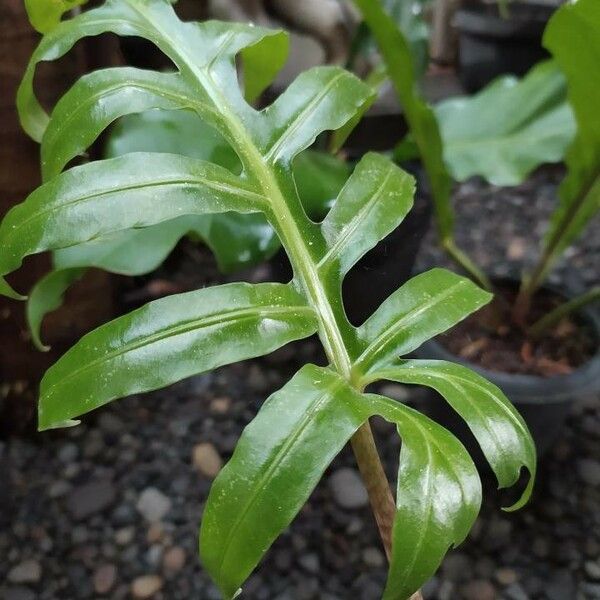
Plant Overview
Known as the "Branched Alocasia," this New Guinean treasure is a showstopper for those who love architectural foliage. Unlike the solid, heart-shaped leaves of its more common cousins, this species breaks the mold with deeply lobed, lace-like greenery that looks like a cluster of green antlers. It is a true jungle aristocrat that adds a prehistoric, "Jurassic Park" vibe to any indoor collection.
🔍 How to Identify
- 🌿 Lacy Foliage: The most striking feature is the leaf shape; the blades are deeply "pinnatifid," meaning they are cut into narrow, finger-like lobes that give the plant a delicate, skeletal appearance.
- 🦓 Mottled Petioles: Look closely at the stems (petioles). They are often adorned with intricate, speckled patterns of brown, cream, or purple, similar to the markings on a Alocasia zebrina.
- 📐 Vase-Like Silhouette: It grows in an elegant, upright fashion. The leaves reach upward and outward from a central clump, creating a structured, airy display rather than a dense bush.
🏡 In Your Garden
- ☁️ Humidity is Essential: Coming from the steamy rainforests of West Papua, this plant will protest with crispy brown edges if your home air is too dry. It thrives best in a room with a humidifier or in a naturally steamy bathroom.
- 🏺 Aversion to "Wet Feet": While it loves moisture, its underground rhizome is very sensitive to standing water. Use a "chunky" soil mix—think orchid bark, perlite, and potting soil—to ensure water flows through quickly while keeping the roots oxygenated.
- ☀️ Filtered Forest Light: In the wild, it lives under the canopy. In your home, it wants "bright indirect light." Avoid the harsh midday sun, which can easily bleach or burn the thin, divided sections of its leaves.
⚠️ Safety & Toxicity
- 🚫 Toxic to Pets & Humans: This plant contains insoluble calcium oxalate crystals, which act like tiny needles if the plant is bitten or chewed.
- 🐱 Keep Out of Reach: If ingested by cats, dogs, or curious children, it will cause immediate mouth pain, swelling of the tongue, and potential vomiting. Always wear gloves when pruning if you have sensitive skin, as the sap can be an irritant.
✨ Fun Fact
The name brancifolia literally translates to "branched leaf." Because of its unique shape, it is often confused with Alocasia nycteris (the Bat Alocasia), but the brancifolia is distinguished by its much deeper, more complex leaf divisions that resemble a stag's antlers.

Detailed Care Instructions
To grow Alocasia Brancifolia plants, also known as the "elephant ear" plant, follow these steps:
- Light: Place the plant in a spot that receives bright, indirect sunlight. Avoid direct sunlight as it can burn the leaves.
- Temperature: These plants thrive in warm temperatures between 65°F to 85°F (18°C to 29°C). Protect them from cold drafts or temperature extremes.
- Humidity: Alocasia Brancifolia plants prefer high humidity levels. You can increase humidity by placing a tray of water near the plant or using a humidifier.
- Watering: Keep the soil moist but not soggy. Water the plant thoroughly when the top inch of soil feels dry. Avoid overwatering to prevent root rot.
- Soil: Use a well-draining potting mix rich in organic matter. Adding peat moss or perlite can enhance drainage.
- Fertilizer: During the growing season (spring and summer), feed the plant every two weeks with a balanced liquid fertilizer. Reduce frequency in winter.
- Repotting: Alocasia Brancifolia plants prefer slightly crowded roots, so repot only when necessary. Use a pot slightly larger than the current one to allow room for growth.
- Pruning: Remove any yellow or damaged leaves to encourage new growth. Trim long stems to maintain a desired shape.
- Pests: Inspect the plant regularly for pests like spider mites or aphids. Treat infestations with an organic insecticide or by gently wiping the leaves with a damp cloth.
- Propagation: Alocasia Brancifolia plants can be propagated through division. Carefully separate the smaller plantlets from the main plant and replant them in separate pots.
Remember that Alocasia Brancifolia plants can be toxic to pets if ingested, so keep them out of their reach.

Place in a bright room that is sun drenched almost all day. Or directly in a south-facing window.

Alocasia Brancifolia plant can be watered thoroughly but sparingly, as it prefers moist but not saturated soil. It is important to avoid letting water pool around the base of the plant, which can lead to root rot. Allow the top inch or so of soil to dry out slightly between waterings, and be sure to use a well-draining soil mixture. It may be best to water this plant from the bottom, using a saucer or similar container to allow the soil to soak up the water. Additionally, misting the leaves of this plant can help to boost humidity levels and keep it healthy.
To fertilize the Alocasia Brancifolia plant, follow these instructions:
- Choose a balanced water-soluble fertilizer with an NPK ratio of 20-20-20 or a similar composition.
- Dilute the fertilizer according to the package instructions. Usually, using 1/4 to 1/2 strength is sufficient.
- Water the plant thoroughly before applying the fertilizer to ensure the soil is moist.
- Pour the diluted fertilizer solution evenly around the base of the plant, avoiding direct contact with leaves or stems.
- Allow the excess fertilizer solution to drain out through the drainage holes of the pot.
- Wait for at least a month before applying fertilizer again, as over-fertilization can damage the plant.
- During the growing season (spring and summer), fertilize the Alocasia Brancifolia every 4-6 weeks. Reduce the frequency to every 6-8 weeks during fall and winter when the plant's growth slows down.
- Monitor the plant for any signs of nutrient deficiencies or excesses, such as yellowing leaves or burned leaf tips. Adjust the fertilization schedule accordingly.
- Always follow the specific fertilizer instructions and guidelines for your specific fertilizer brand to ensure optimal plant health and growth.
- Regularly flush the soil with plain water every few months to prevent salt buildup from excessive fertilizer usage.
Alocasia Brancifolia plant needs a well-draining soil mix that is rich in organic matter. It is recommended to use a mixture of peat moss, perlite, and compost. The soil should be slightly acidic, with a pH level between 5.5 and 6.5. It is important to avoid using heavy soils that retain too much water, as this can lead to root rot and other fungal infections. Additionally, it is recommended to add a slow-release fertilizer to the soil mix before planting to provide the plant with the nutrients it needs for healthy growth.
Alocasia brancifolia can be propagated through several methods to create new plants. Here is a step-by-step guide on how to propagate this plant:
- Select a healthy and mature Alocasia brancifolia plant as the parent plant for propagation. Look for a plant with robust and undamaged leaves.
- Prepare a clean and sharp knife or pruning shears to cut the parent plant. Make sure the cutting tool is sterilized to prevent the transmission of any potential diseases.
- Identify a suitable stem or rhizome from the parent plant to use for propagation. Look for a section that has at least one mature leaf and a visible bud or growth point.
- Carefully cut the selected stem or rhizome just below a node. Nodes are small protrusions on the plant from where leaves emerge or where roots will develop.
- Prepare a suitable pot or container filled with a well-draining potting mix. A mixture of quality potting soil and perlite or vermiculite works well.
- Create a planting hole in the potting mix that is deep enough to accommodate the stem cutting or rhizome. Gently place the cutting into the hole, ensuring that the cut end is slightly buried while the bud or growth point is kept above the soil surface.
- Tamp the potting mix around the cutting to provide stability and encourage root development. Be careful not to damage the delicate plant tissues while doing this.
- Water the newly planted cutting thoroughly but avoid overwatering. Keep the soil consistently moist, but not waterlogged, to promote root growth.
- Place the pot in a warm and bright location, away from direct sunlight which could scorch the delicate leaves. Maintain a relatively high humidity level around the cutting by covering it with a plastic bag or using a propagation dome.
- Monitor the cutting regularly, misting the leaves and checking the soil moisture levels. Within a few weeks or months, depending on the conditions, the cutting should develop new roots and begin to grow new leaves.
- Once the new plant has established a strong root system and has several well-developed leaves, it can be gradually acclimated to normal growing conditions.
It's important to note that Alocasia brancifolia propagation can also be done by dividing the rhizome or by using offsets produced by the parent plant. These methods involve separating and replanting the smaller plant sections to develop new individual plants.
Common pests of the alocasia brancifolia include Mealybugs, spider mites, fungus gnats, aphids, thrips. Make a habit of checking your alocasia brancifolia frequently for pests so that any infestations can be caught and managed early.








