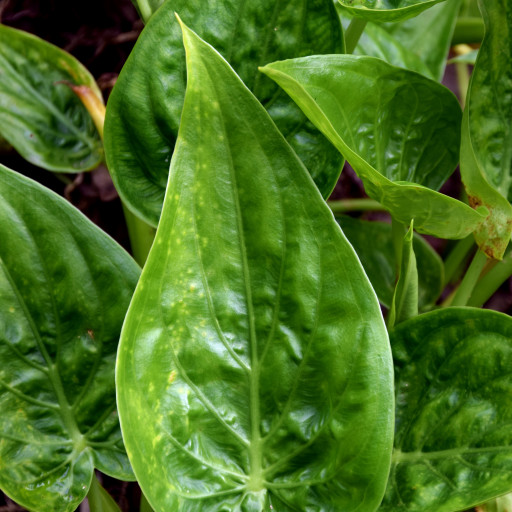
Plant Overview
Often called the "Buddha’s Hand" or "Hooded Dwarf Elephant Ear," this elegant Alocasia is more than just a houseplant; it’s a symbol of good fortune. Unlike its giant cousins that can take over a room, this variety stays relatively compact and tidy, making it a favorite for those wanting a tropical feel in a smaller space. In its native Southeast Asia, it is frequently planted near Buddhist temples to bring luck and protection to the grounds.
🔍 How to Identify
- 🍃 Leaf Shape: Distinctive heart-shaped (cordate) leaves that taper into a slender, "hooded" pointed tip.
- ✨ Glossy Texture: The foliage has a rich, waxy sheen that reflects light, making the deep green color pop against other plants.
- 📐 Growth Habit: Unlike "floppy" Alocasia varieties, the leaves stand upright on thick, sturdy stems, giving the plant a sculptural, architectural silhouette.
🏡 In Your Garden
- 💧 Water Management: The "Hooded" part of its name refers to the way the leaves are shaped to shed water away from the crown. While it loves high humidity, be careful not to let it sit in soggy soil, as its thick rhizomes are very prone to rot if the drainage is poor.
- 🌤️ Light Nuance: This species is remarkably more tolerant of lower light than most other Elephant Ears. However, to keep it from getting "leggy" (stretched out), bright, filtered sunlight is the key to maintaining that dense, bushy look.
- 🪴 Winter Rest: Don't panic if it stops growing in the winter! This plant often enters a semi-dormancy when temperatures drop or light levels decrease, requiring much less water during the colder months.
⚠️ Safety & Toxicity
- 🚫 Toxic Status: Like all members of the Araceae family, it contains insoluble calcium oxalate crystals.
- 🐾 Pets & Kids: It is considered toxic to cats, dogs, and humans. If leaves are chewed or swallowed, the crystals cause immediate intense burning of the mouth, swelling of the throat, and digestive distress. Always wash your hands after pruning to avoid skin or eye irritation from the sap.
✨ Fun Fact
🍀 The Lucky Charm: In Thailand and Laos, it is a long-standing tradition to plant Alocasia cucullata at the entrance of a home. The leaves are said to resemble a waving hand, beckoning good fortune and "waving away" negative energy from the household.

Detailed Care Instructions
| Soil Ph | 5.5-6.5 |
| Humidity | High |
| Lighting | Part Sun |
| Toxicity | Poisonous |
| Soil Type | Loose, Well-Draining Potting Mix Or Crumbly Loam |
| Bloom Time | Spring And Summer |
| Difficulty | Medium |
| Plant Type | Tropical Plant Grown As A Houseplant In Non-Tropical Climates |
| Temperature | 18°C - 25°C |
| Sun Exposure | Bright Indirect Light Indoors; Part Shade Outdoors |
| Hardiness Zones | 10-11 |
To grow Alocasia Cucullata plants, you can follow these steps:
- Choose a suitable location: Alocasia Cucullata plants prefer bright indirect light. They can tolerate some direct sunlight, but too much sun can scorch their leaves. Place your plant near a window with filtered light or in a shaded area of your garden.
- Planting medium and pot selection: Alocasia Cucullata plants prefer loose, well-draining soil. Use a pot with drainage holes to prevent waterlogging. You can use a mixture of potting soil, peat moss, and perlite to create an ideal growing medium.
- Planting process: Gently remove the plant from its nursery pot, being careful not to damage the roots. Place it in the new pot, ensuring that the roots are covered with soil. Press the soil gently around the plant to secure it.
- Watering and humidity: Alocasia Cucullata plants prefer consistently moist soil but do not like to sit in waterlogged conditions. Water the plant when the top inch of soil feels dry to the touch. Maintain a moderate level of humidity around the plant by misting its leaves or placing it on a tray filled with pebbles and water. Avoid overwatering, as it can lead to root rot.
- Temperature and environment: Alocasia Cucullata plants thrive in warm temperatures between 60-85°F (15-29°C). Protect them from cold drafts and sudden temperature fluctuations. They also enjoy a humid environment, so consider placing a humidifier nearby or grouping plants together.
- Fertilization: Feed your Alocasia Cucullata plant with a balanced, water-soluble fertilizer every 2-4 weeks during the growing season (spring and summer). Follow the instructions on the fertilizer packaging for proper dilution.
- Pruning: Trim off any yellowing or damaged leaves to maintain the plant's appearance and health. You can use sharp, sterilized pruning shears to remove the leaves.
- Propagation: Alocasia Cucullata plants can be propagated through division or by rooting stem cuttings. Divide the plant during repotting, ensuring that each division has roots and several healthy leaves. For stem cuttings, take a section of stem with several nodes and place it in a jar of water until roots develop. Then, transplant it into a pot with soil.
By following these steps and providing proper care, your Alocasia Cucullata plant should grow into a beautiful and healthy specimen.

Place in a window with dappled sun or a spot in the middle of a room. Or directly in a window facing west or east.

To water this particular plant, one should first check to ensure that the top layer of soil is dry before watering it. If the soil is still damp, it is advisable to wait for a few days before watering it again. When watering, it is important to water the soil directly and avoid getting water on the leaves as this can cause damage to the foliage. One should use room temperature water and water till it comes out of the bottom drainage holes. It is important to avoid leaving the plant in standing water, as this can lead to root rot. The plant should be watered consistently, but not excessively, as it prefers a moderately moist soil environment. In drier months, especially during winter, the plant should be watered less frequently.
To fertilize this plant, use a balanced, water-soluble fertilizer once a month during the growing season, which is spring and summer. Dilute the fertilizer to half strength and apply it to the soil, taking care not to get any on the plant's leaves or stems. During the winter months, reduce fertilization or stop entirely as the plant enters a state of dormancy. Always follow the manufacturer's instructions and do not over-fertilize the plant, as this can cause damage to its roots.
The recommended soil for Alocasia Cucullata plant is a mix of well-draining potting soil and organic matter such as coconut coir or peat moss. This type of soil allows for good drainage while retaining moisture and nutrients for the plant. It is important to avoid using heavy, clayey soil which can cause waterlogging and root rot. The pH level of the soil should be slightly acidic, between 5.5 and 6.5, and a slow-release fertilizer can be added to promote healthy growth. It is also recommended to repot the plant every one to two years to ensure it has enough room to grow and thrive.
To propagate this plant, you will need to take a stem cutting with at least two nodes. Make sure the cutting is taken from a healthy mother plant.
Next, remove the lower leaves of the cutting, leaving only two to three at the top. This will help the cutting focus its energy on growing roots instead of maintaining foliage.
Dip the cut end of the stem into rooting hormone powder, which will help encourage root growth.
Plant the cutting into a well-draining soil mix, making sure to keep the soil moist but not waterlogged.
Cover the plant with a plastic bag to increase humidity and place it in a bright, indirect light location.
After a few weeks, check the cutting for root development by gently tugging on it. If you feel resistance, roots have formed and you can remove the plastic bag and treat the cutting as a normal plant.
Common pests of the buddha's hand include Mealybugs, spider mites, fungus gnats, aphids, thrips. Make a habit of checking your buddha's hand frequently for pests so that any infestations can be caught and managed early.








