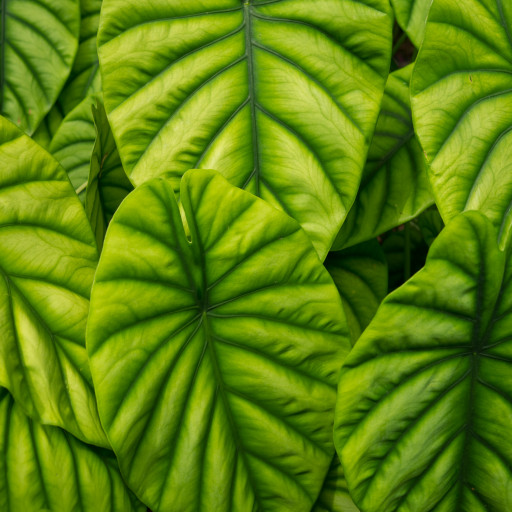
Plant Overview
Often called the "Mirror Plant" or "Jewel Alocasia," this Borneo native looks like it was forged in a blacksmith's shop rather than grown in a forest. Its leaves possess a mesmerizing metallic sheen that reflects light in shifting shades of deep copper, bronze, and burgundy. It is considered a "must-have" for collectors, prized for its futuristic, almost alien appearance that feels more like a sculpture than a living organism.
🔍 How to Identify
- 🌿 Leaf Texture: The foliage is remarkably stiff and thick, with a waxy, lustrous surface that feels like molded plastic or polished metal to the touch.
- ✨ Metallic Sheen: A distinctive coppery-green top surface that creates a striking contrast against the deep, moody maroon or royal purple of the leaf's underside.
- 🕸️ Sunken Veining: Deeply recessed, dark veins give the leaves a "quilted" or 3D appearance, making each leaf look like an embossed metallic shield.
🏡 In Your Garden
- 🌫️ Humidity Over Water: This Alocasia is a "Jewel" variety, meaning it is more prone to root rot than its larger cousins; it prefers a chunky, airy soil mix and high atmospheric humidity rather than frequent watering.
- 🌡️ Warmth is Non-Negotiable: Coming from the tropical undergrowth of Borneo, it will quickly go dormant or drop leaves if exposed to cold drafts or temperatures below 60°F (15°C).
⚠️ Safety & Toxicity
- 🚫 Highly Toxic: Like all members of the Arum family, the plant contains insoluble calcium oxalate crystals which act like tiny shards of glass when chewed.
- 💊 Symptoms: Ingestion causes immediate swelling of the mouth and throat, drooling, and digestive distress; it should be kept on high shelves far out of reach of curious pets and small children.
✨ Fun Fact
The Alocasia cuprea evolved its incredible metallic sheen as a survival strategy; the reflective surface helps the plant bounce light back into its cells, allowing it to photosynthesize effectively in the extremely dim, shadowy floor of the Southeast Asian rainforest.

Detailed Care Instructions
| Humidity | High |
| Lighting | Part Sun |
| Toxicity | Poisonous |
| Difficulty | Medium |
| Temperature | 18°C - 29°C |
| Hardiness Zones | 10 - 11 |
To grow an Alocasia Cuprea plant, follow these steps:
- Choose the right location: Alocasia Cuprea thrives in bright, indirect light. It should be placed near a window or a well-lit area of your home or office. Avoid direct sunlight, as it can scorch the leaves.
- Select a suitable pot: Use a well-draining pot with drainage holes. The pot should be slightly larger than the current root ball to allow for future growth.
- Use well-draining soil: Alocasia Cuprea prefers a well-aerated and nutrient-rich soil mix. You can use a combination of peat moss, perlite, and a good quality potting mix.
- Watering: Keep the soil evenly moist. Water the plant thoroughly, allowing excess water to drain out through the drainage holes. Ensure that the top few inches of soil remain slightly damp between waterings, but avoid waterlogging.
- Humidity: Alocasia Cuprea requires high humidity levels. Mist the plant regularly or place a humidifier nearby. Alternatively, you can create a humidity tray by placing the pot on a tray filled with water and pebbles.
- Fertilization: Feed your Alocasia Cuprea plant once a month during the growing season (spring and summer) with a balanced houseplant fertilizer. Follow the instructions on the packaging for proper dilution.
- Pruning: Remove any dead or damaged leaves regularly to maintain the plant's health and appearance. Use clean, sharp pruning shears to make cuts at the base of the leaf.
- Propagation: Alocasia Cuprea can be propagated through division. When the plant matures, carefully remove it from the pot and separate the rhizomes with a clean knife. Each division should have a few healthy leaves and roots. Plant them in separate pots with fresh soil mix.
- Temperature: Alocasia Cuprea prefers warm temperatures between 65°F to 80°F (18°C to 27°C). Protect it from cold drafts or sudden temperature drops.
- Pests and diseases: Keep an eye out for common houseplant pests such as spider mites, aphids, or mealybugs. Treat them immediately with appropriate insecticides or natural remedies like neem oil.
Remember to handle Alocasia Cuprea with care as its leaves are delicate and can be easily damaged. With proper care, you can enjoy the beautiful metallic foliage of this stunning plant.

Place in a window with dappled sun or a spot in the middle of a room. Or directly in a window facing west or east.

To properly water this particular plant, you should first ensure that the soil has completely dried out before watering it again. When you do water it, make sure to water it thoroughly so that the water reaches the bottom of the pot. You may want to consider using lukewarm water to avoid shocking the plant with cold water. Avoid getting water on the leaves, as this can lead to fungal issues. Additionally, you may want to consider using a well-draining soil mix to prevent water from pooling at the roots.
To fertilize this plant, use a balanced water-soluble fertilizer with equal amounts of nitrogen, phosphorus, and potassium. Dilute the fertilizer as per the instructions on the packaging and apply it to the soil once a month during the growing season (spring and summer). Make sure to water the plant thoroughly before and after fertilizing. Avoid fertilizing during the dormancy period (fall and winter).
Alocasia Cuprea plant requires well-draining soil that is rich in organic matter. A mixture of peat moss, perlite, and coco coir can provide the ideal growing medium for this plant. The soil should be slightly acidic with a pH level between 5.5 to 6.5. It is important to ensure that the soil does not become waterlogged, as Alocasia Cuprea plants are susceptible to root rot. Adding sand or gravel to the soil mixture can improve drainage. Additionally, it is recommended to fertilize the plant regularly with a balanced fertilizer to promote healthy growth.
- Choose a healthy parent plant: To propagate alocasia cuprea, you need a healthy parent plant. Make sure the parent plant has good foliage so that the new plant can also develop healthy leaves.
- Division method: Using a sharp and clean pair of shears, remove the parent plant and divide it into small plants. Ensure that each section has some roots attached to it. Be careful not to damage the roots or the leaves.
- Planting: Plant each new plant in well-draining soil in a pot that has drainage holes. You can use a mix of perlite and potting soil for this. Water the soil until it is moist but not waterlogged.
- Humidity: The alocasia cuprea requires high humidity to thrive. You can keep the newly propagated plants in a terrarium or cover them with a plastic bag to create a humid environment. Be sure to remove the plastic bag after a few days to prevent mold growth.
- Temperature: The alocasia cuprea prefers warm temperatures. Keep the new plants in a warm and bright location but avoid direct sunlight.
- Watering: The new plants require regular watering to keep the soil moist. You can use a spray bottle to mist the leaves and provide hydration.
- Fertilizing: You can start fertilizing the new plants after a few weeks of planting. Use a balanced fertilizer and follow instructions for application.
- Transplanting: After a few months, you can transplant the new plants to a larger pot and continue caring for them as you would for the parent plant.
Common pests of the giant caladium include Mealybugs, spider mites, fungus gnats, aphids, thrips. Make a habit of checking your giant caladium frequently for pests so that any infestations can be caught and managed early.








