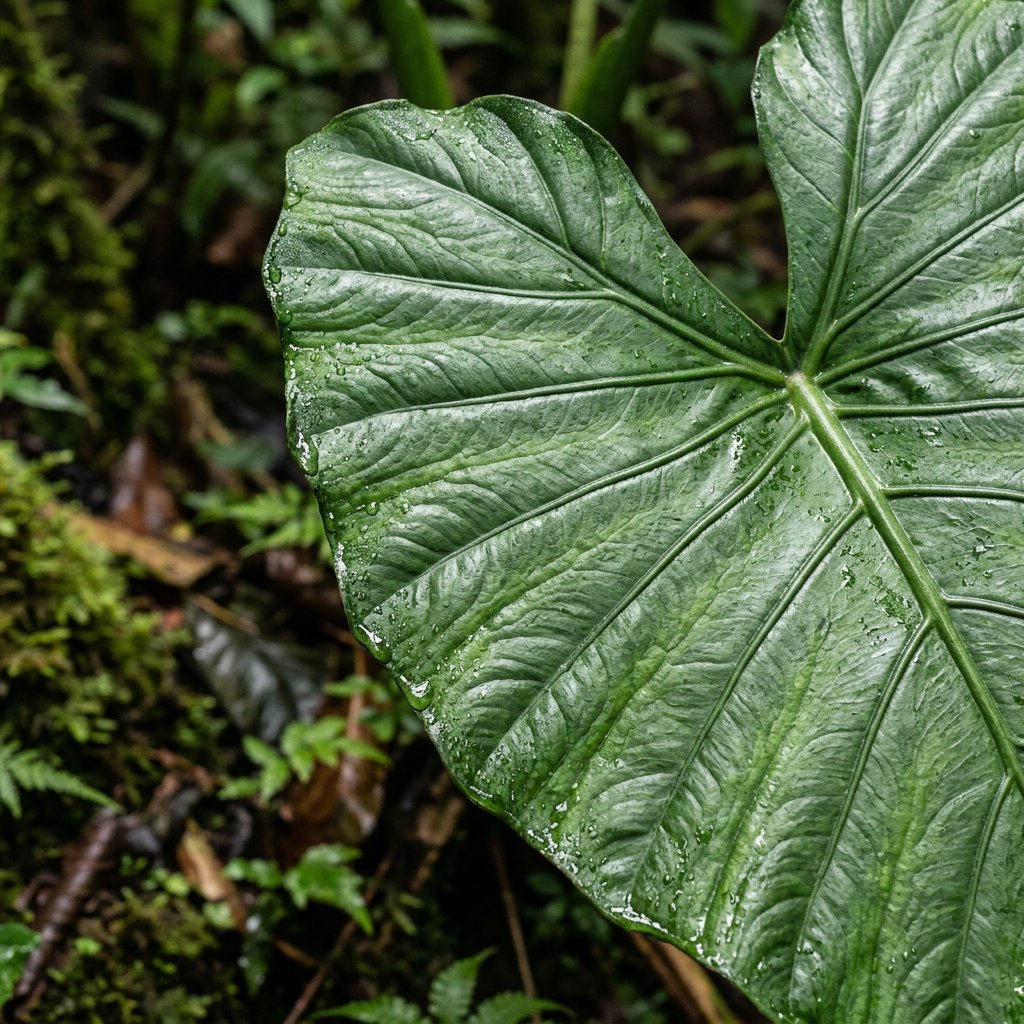
Plant Overview
Known as the Giant Taro or Upright Elephant Ear, this botanical titan is the undisputed king of the tropical garden. Native to the rainforests of Southeast Asia and Australia, it’s famous for its massive, architectural leaves that can easily reach the size of a human torso. In many cultures, these leaves are so large they have historically been used as makeshift umbrellas during sudden tropical downpours.
🔍 How to Identify
- 🍃 The Leaves: Massive, heart-shaped (sagittate) leaves that point skyward rather than drooping. They feature wavy edges and a glossy, vibrant green finish.
- 🦴 Prominent Veining: The underside and surface boast thick, pale green veins that look like a structural skeleton supporting the heavy foliage.
- 🪴 The Stem: Unlike many smaller houseplants, older specimens develop a thick, trunk-like woody rhizome at the base that stores water and nutrients.
🏡 In Your Garden
- ☁️ Humidity is Vital: This plant breathes through its leaves; if the air is too dry, the edges will turn brown and crispy. It thrives best in "steamy" environments or near a dedicated humidifier.
- 💧 Thirsty but Picky: Because it grows so fast, it drinks heavily during the summer, but it hates "wet feet." Using a chunky, well-draining aroid mix is essential to prevent the thick rhizome from rotting.
- ☀️ Light Sensitivity: While it looks tough, its leaves are prone to sunburn. It prefers "dappled" sunlight, mimicking the way light filters through a jungle canopy.
⚠️ Safety & Toxicity
- 🚫 Toxic Status: Contains insoluble calcium oxalate crystals. It is considered toxic to humans, cats, and dogs.
- 👅 The Danger: If any part of the plant is chewed or swallowed, it causes immediate intense pain, swelling of the mouth and throat, and digestive distress.
- 🧤 Skin Irritation: The milky sap can cause "Elephant Ear Itch" or dermatitis on sensitive skin, so it’s best to wear gloves when pruning or repotting.
✨ Fun Fact
In its native habitats, the Alocasia Macrorrhizos is considered a "famine food." While raw parts are toxic, the massive starchy stems can be eaten, but only after incredibly complex, multi-day processing and boiling to neutralize the chemical irritants!

Detailed Care Instructions
| Color | Light Butter Yellow |
| Soil Ph | 5.5 To 6.5 |
| Lighting | Full Sun |
| Toxicity | Toxic |
| Soil Type | Loose, Well-Draining Potting Mix Or Crumbly Loam |
| Bloom Time | Spring And Summer Growth |
| Plant Type | Tropical Plant |
| Mature Size | Size Ranges Based On Variety From Two Feet Tall And Two Feet Wide To 15 Feet Tall And Eight Feet Wide |
| Native Area | Asia |
| Sun Exposure | Bright Indirect Light |
| Hardiness Zones | 10 And 11 For Outdoor Plants |
To grow Alocasia Macrorrhizos (also known as Elephant Ear plant), follow these steps:
- Choose the right location: Alocasia Macrorrhizos prefers bright indirect light. It can tolerate some direct morning or evening sun, but avoid placing it in intense or prolonged sunlight as it can burn the leaves.
- Select the right container: Use a well-draining pot that has drainage holes to prevent waterlogging. Choose a pot with enough room to accommodate the plant's rhizome and allow for root growth.
- Soil mixture: Use a well-draining potting mix rich in organic matter. You can mix equal parts of peat moss, perlite, and compost.
- Watering: Keep the soil evenly moist but not waterlogged. Water the plant thoroughly when the top inch of soil feels dry. Avoid allowing the soil to completely dry out or become too soggy, as both can harm the plant.
- Humidity: Alocasia Macrorrhizos prefers high humidity. You can increase humidity by placing a tray filled with water near the plant or by misting the leaves regularly.
- Fertilizer: Feed the plant with a balanced liquid fertilizer during the growing season (spring and summer) every 2-4 weeks. Follow the instructions on the fertilizer packaging for proper dilution and application.
- Temperature: Alocasia Macrorrhizos prefers temperatures between 60-85°F (16-29°C). Avoid exposing the plant to temperatures below 55°F (13°C) as it can damage the leaves.
- Pruning: Remove dead or yellowing leaves to maintain a neat appearance and promote new growth. Pruning can be done anytime during the growing season.
- Propagation: Alocasia Macrorrhizos can be propagated by dividing the rhizome during repotting. Ensure that each division has at least one healthy rhizome and several roots. Plant the divisions in separate pots with fresh potting mix.
- Pests and diseases: Watch out for pests such as spider mites and scale insects. Treat infestations with insecticidal soap or neem oil. Additionally, avoid overwatering, as it can lead to root rot.
By following these steps, you can successfully grow Alocasia Macrorrhizos and enjoy its beautiful foliage.

Place in a window with dappled sun or a spot in the middle of a room. Or directly in a window facing west or east.

To water this plant, pour water gently and evenly over the soil until the top few inches feel moist to the touch. Be careful not to overwater, as the plant can be susceptible to root rot. Allow the top few inches of soil to dry out slightly between waterings, but do not let the soil completely dry out. It is important to ensure good drainage, and to avoid getting water on the leaves as this can cause damage. Watering frequency will depend on factors such as the size of the pot, temperature and humidity levels, and the amount of light the plant receives.
For optimal growth, apply a balanced fertilizer once a month during the growing season. Use a water-soluble fertilizer that contains equal amounts of nitrogen, phosphorus, and potassium. Dilute the fertilizer to half strength and apply it to the soil around the base of the plant. Avoid applying fertilizer to the leaves or stems as this can burn them. Water the plant thoroughly after fertilizing to help distribute the nutrients evenly throughout the soil. Do not fertilize in the winter months when the plant is dormant.
The best soil for Alocasia Macrorrhizos plants is a well-draining soil that is rich in organic matter. It should be a loose, airy soil that allows for good root aeration. The soil pH should be slightly acidic to neutral, ideally between 5.5 and 7.0. Avoid using heavy, clay-like soils, as they will not provide adequate drainage and may lead to root rot. Adding perlite or sand to the soil mixture can improve drainage and prevent waterlogging. It is also important to avoid overwatering, as the plant is susceptible to root rot. A balanced fertilizer should be added to the soil periodically, following the instructions on the label.
To propagate this plant, one should first prepare a well-draining potting medium consisting of equal parts of peat moss and perlite. The next step is to identify a healthy, mature leaf with a stem attached, which can be cut with a clean, sharp knife or scissors. The cutting should be approximately 6 inches long and should have a few nodes or small bumps on the stem.
The next step is to dip the cut end of the stem into a rooting hormone powder to promote root growth. The cutting should then be planted in the prepared potting medium and placed in a warm, humid location with bright, filtered light.
It is important to keep the soil moist but not waterlogged, and to mist the plant regularly to maintain humidity. After a few weeks, new growth should start to appear, indicating that the plant has successfully rooted. At this point, the plant can be transferred to a larger pot with fresh potting soil, or it can be kept in its current pot until it outgrows its space.
Common pests of the giant taro include Mealybugs, spider mites, fungus gnats, aphids, thrips. Make a habit of checking your giant taro frequently for pests so that any infestations can be caught and managed early.








