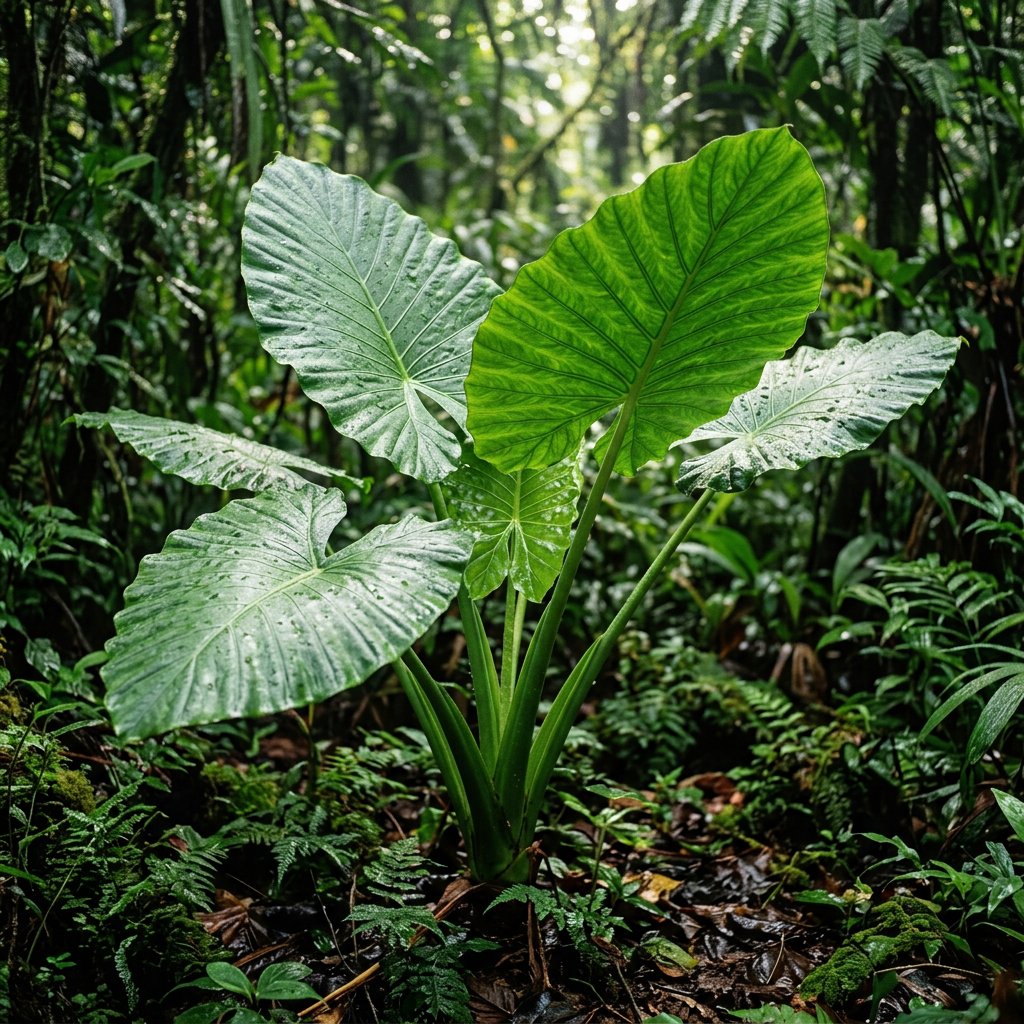
Plant Overview
Often called the "Giant Upright Elephant Ear," this lush tropical powerhouse acts like living architecture for your home or garden. Native to the steaming jungles of Southeast Asia, it is prized for its massive, sky-reaching foliage. Beyond its looks, it hides a secret: its pale flowers release a sweet, lily-like fragrance specifically after the sun goes down, earning it the nickname "Night-scented Lily."
🔍 How to Identify
- 🌿 Leaf Orientation: Unlike many other "Elephant Ears" that droop downward, Alocasia odora leaves point proudly toward the sky, forming a majestic V-shape.
- 📏 The Foliage: The leaves are heart-shaped, thick, and can grow up to 3 feet long. They feature a vibrant, glossy lime-to-emerald green finish with prominent veins.
- 🪵 The Trunk: As the plant matures, it sheds lower leaves to reveal a thick, sturdy, wood-like stem that resembles a prehistoric palm.
🏡 In Your Garden
- ☀️ The "Dappled" Rule: This plant thrives in bright, indirect light. Think of its natural home under the jungle canopy; direct afternoon sun will scorch the leaves, while too much shade will make its stems "leggy" and weak.
- 💧 Humidity over Wet Feet: While it loves moisture, it hates sitting in soggy soil. It prefers a "chunky" soil mix (like orchid bark and perlite) that allows the roots to breathe.
- 🌬️ Wind Protection: Because the leaves act like giant green sails, they can easily tear or tip the pot over in high winds. Place it in a sheltered corner to keep those "ears" pristine.
⚠️ Safety & Toxicity
- 🚫 Toxic Status: High. All parts of the plant contain insoluble calcium oxalate crystals.
- 🐱 Pets & Kids: If chewed, the crystals act like tiny needles, causing immediate intense burning of the mouth, tongue, and throat. This can lead to swelling and difficulty swallowing.
- 🧤 Sap Sensitivity: Some people experience skin irritation or "Alocasia itch" from the sap during pruning. It is best to wear gloves when cutting back old leaves.
✨ Fun Fact
☂️ In many parts of Southeast Asia, these leaves are so large and naturally water-repellent that they are frequently used by locals as makeshift umbrellas during sudden tropical downpours!

Detailed Care Instructions
| Soil Ph | 5.5-6.5 |
| Humidity | Normal |
| Lighting | Full Sun |
| Toxicity | Toxic |
| Soil Type | Loose, Well-Draining Potting Mix Or Crumbly Loam |
| Bloom Time | Spring And Summer |
| Difficulty | Medium |
| Plant Type | Tropical Plant Grown As A Houseplant In Non-Tropical Climates |
| Hibernation | Cold Period |
| Mature Size | Up To 3 Or 4 Feet Tall |
| Native Area | Tropical And Subtropical Regions Of Asia, Eastern Australia |
| Sun Exposure | Bright Indirect Light Indoors; Part Shade Outdoors |
| Hardiness Zones | 10-11 |
To grow Alocasia odora plants, follow these steps:
- Choose the right location: Alocasia odora plants thrive in bright, indirect sunlight. Find a location that offers filtered sunlight or partial shade.
- Select the right soil: Alocasia odora plants prefer well-draining, rich soil. Use a mixture of potting soil, perlite, and peat moss to provide proper drainage.
- Planting: If starting from a young plant, select a pot with drainage holes that allows enough room for the roots to grow. Plant the Alocasia odora in the soil mixture, making sure the top of the rhizome is slightly above the soil surface. If planting outdoors, ensure the soil is well-prepared with enough organic matter.
- Watering: Keep the soil consistently moist but not waterlogged. Alocasia odora plants prefer slightly moist soil, so water them regularly, especially during the growing season. Allow the top few inches of soil to dry between watering.
- Humidity: Alocasia odora plants love high humidity levels. You can increase humidity by misting the leaves regularly with water or placing a tray filled with water and pebbles beneath the plant.
- Fertilizing: Feed your Alocasia odora with a balanced, water-soluble fertilizer during the growing season, typically every 2-4 weeks. Follow the packaging instructions for dosage and frequency.
- Pruning: Remove any damaged or yellowing leaves as they appear. Cut them off close to the main stem to prevent any potential diseases from spreading.
- Propagation: Alocasia odora plants can be propagated through division. When the plant has grown larger, carefully remove it from its pot and divide the rhizome into smaller sections, ensuring each section has healthy roots and leaves. Plant the divisions in their own pots or outdoor locations.
- Pests and diseases: Alocasia odora plants are susceptible to aphids, mealybugs, and spider mites. Regularly inspect the plant for signs of pests and treat them with insecticidal soap if necessary.
Remember to research any specific care requirements for your specific variety of Alocasia odora, as different cultivars may have slightly different needs.

Place in a window with dappled sun or a spot in the middle of a room. Or directly in a window facing west or east.

To water this plant, fill a watering can with room temperature water and gently pour the water into the soil around the base of the plant until the soil is evenly moist. Avoid getting water on the leaves. Water only when the top 1-2 inches of soil feels dry to the touch. If the plant is in a container with drainage holes, make sure to empty any excess water that collects in the saucer underneath. This plant prefers well-draining soil that retains some moisture but does not become waterlogged. Avoid overwatering or allowing the soil to dry out completely.
To fertilize the Alocasia Odora plant, select a balanced fertilizer with equal proportions of nitrogen, phosphorus, and potassium. Use a water-soluble fertilizer and dilute it to half of the recommended strength. Apply the fertilizer to the soil around the base of the plant every two weeks during the growing season, which is from spring to early fall. Avoid fertilizing the plant during the winter months when it is in dormancy. Over-fertilization can cause damage to the plant, so be careful not to exceed the recommended amount.
The best type of soil to use with this plant is a well-draining, nutrient-rich, slightly acidic soil mixture. The soil should be composed of a mix of organic materials such as peat moss, perlite, and compost. This type of soil will ensure that the plant receives adequate moisture and nutrients while preventing root rot. Additionally, it is important to ensure that the soil is not too compacted, as this can lead to poor drainage. It is recommended to repot the plant every 1-2 years to refresh the soil and provide room for root growth.
To propagate this plant, first select a healthy and mature plant. Use sharp pruning shears to cut off an established stem with at least two nodes. Cut just below the lowest node. Dip the cut end in a rooting hormone and plant the stem in a pot filled with a well-draining soil mix. Place the pot in a bright spot but out of direct sunlight. Water the soil enough to keep it consistently moist but not wet. It's essential to keep the soil moist as the plant establishes roots. You can use a plastic bag to create a humid environment around the plant during the rooting process. Once new growth appears, you can remove the plastic bag and treat it like a mature plant.
Common pests of the giant elephant's ear include Mealybugs, spider mites, fungus gnats, aphids, thrips. Make a habit of checking your giant elephant's ear frequently for pests so that any infestations can be caught and managed early.








