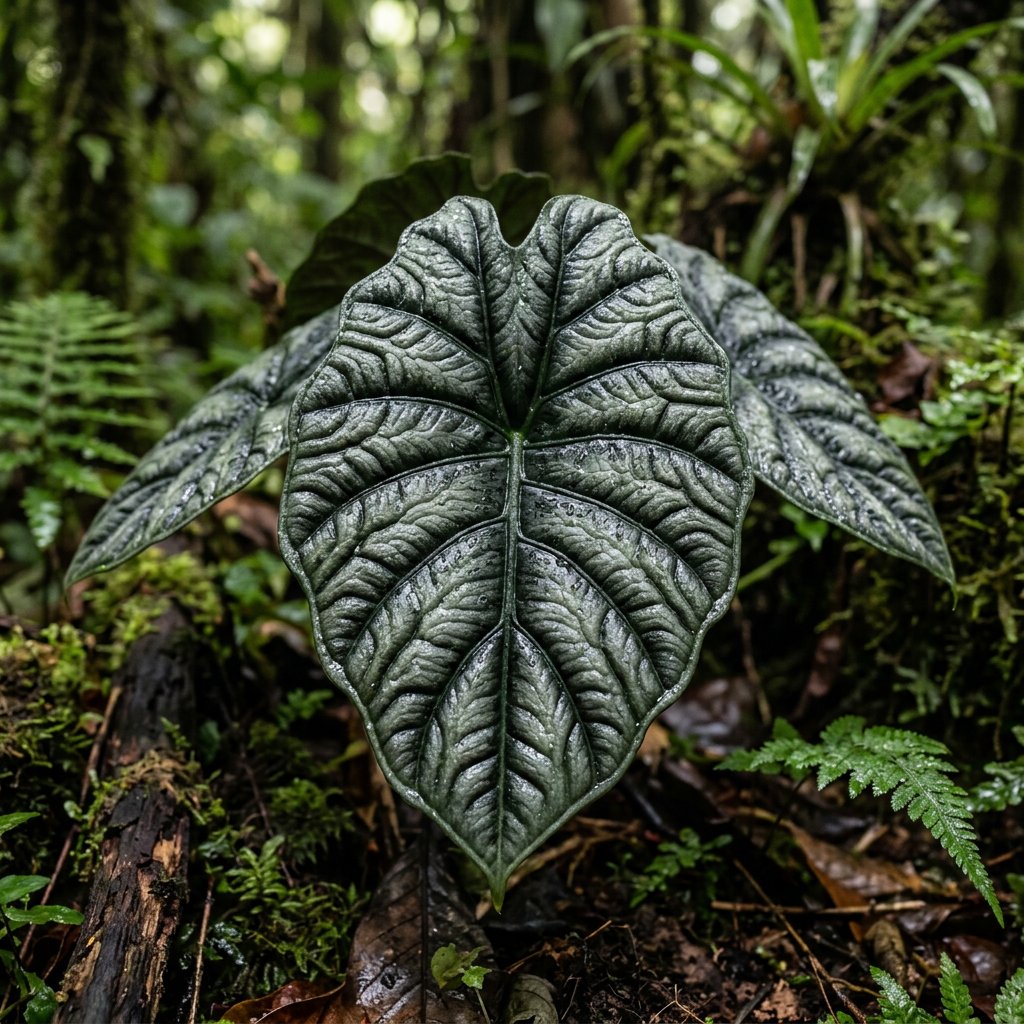
Plant Overview
Commonly known as the Samar Lance, the Alocasia scalprum is a crown jewel for collectors of "jewel" Alocasias. Originating from the island of Samar in the Philippines, this plant is famous for its striking, dagger-shaped foliage that looks more like hammered metal than organic matter. It brings a prehistoric, moody aesthetic to any indoor jungle with its deeply embossed texture and dark, moody hues.
🔍 How to Identify
- 🗡️ The Blade Shape: The leaves are distinctly narrow and elongated, resembling the tip of a spear or a chisel, which gives the plant its name.
- 🦎 Leathery Texture: The foliage is remarkably thick and "bullate" (puckered), feeling more like stiff leather or plastic than a typical soft leaf.
- 🎨 Metallic Coloration: Mature leaves exhibit a deep, dark teal-green color with a subtle metallic sheen, while the underside often displays a pale green or reddish tint.
- 🌿 Compact Growth: Unlike its giant cousins, this is a "jewel" variety, meaning it stays relatively small and manageable, rarely exceeding a foot or two in height.
🏡 In Your Garden
- ☁️ Humidity is Non-Negotiable: Because it originates from the humid lowland forests of the Philippines, it thrives in high-humidity environments (60%+). In dry homes, it may develop crispy brown edges or struggle to unfurl new leaves.
- 🏺 The "Chunky" Secret: This plant is prone to root rot if left in heavy, soggy soil. It performs best in a "soilless" aroid mix containing orchid bark, perlite, and charcoal, which allows the roots to breathe as they would in the wild.
- ☀️ Shadow Play: While it loves bright light to maintain its dark color, direct afternoon sun will scorch the embossed ridges of the leaves. Think of it as a "goldilocks" plant—it wants bright, filtered "jungle" light.
⚠️ Safety & Toxicity
- 🚫 Toxic to All: Like all members of the Araceae family, the Alocasia scalprum contains insoluble calcium oxalate crystals.
- 🐾 Pets & Children: If ingested, it causes immediate oral irritation, swelling of the throat, and digestive distress. Keep this plant on high shelves or in a greenhouse cabinet away from curious cats, dogs, or toddlers.
- 🧤 Skin Sensitivity: The sap can be a mild skin irritant for some people; it’s best to wear gloves when pruning or propagating.
✨ Fun Fact
The specific epithet scalprum is the Latin word for a "chisel" or "knife." Botanists chose this name because the sharp, pointed tips and rigid structure of the leaves look exactly like a craftsman's tool used for carving wood or stone!

Detailed Care Instructions
To grow an Alocasia Scalprum plant, you can follow these steps:
- Choose the right spot: Alocasia Scalprum plants prefer bright, indirect light. Find a location in your home that receives indirect sunlight, such as near a north or east-facing window.
- Select a well-draining pot: Alocasia Scalprum plants like their roots to stay moist but not sitting in water. Choose a pot with drainage holes and use a well-draining potting mix.
- Plant the tuber: Gently place the tuber (the bulb-like structure) in the potting mix, leaving the top portion exposed. Make sure the tuber is secure but not buried too deep.
- Watering: Keep the soil consistently moist, but never allow it to become waterlogged. Alocasia Scalprum plants like high humidity, so misting the leaves regularly or placing a tray of water nearby can help create a humid environment.
- Temperature and humidity: Alocasia Scalprum plants prefer warm temperatures between 60-85°F (15-29°C). They also thrive in high humidity, so consider using a humidifier or placing the pot on a tray filled with water and pebbles to increase humidity around the plant.
- Fertilizing: During the growing season (spring and summer), feed your Alocasia Scalprum plant with a balanced houseplant fertilizer diluted to half-strength once every two to four weeks. Reduce or stop feeding during the winter months when growth slows down.
- Pruning: Regularly remove any yellowing or dead leaves to keep the plant healthy and attractive. You can use clean and sterilized pruning shears to remove any damaged or discolored leaves.
- Propagation: Alocasia Scalprum plants can be propagated through division. When the plant becomes too large for its pot, carefully remove it from the pot and separate the tubers with roots attached. Replant each separated section in its own pot.
Remember, Alocasia Scalprums can be slightly more challenging to grow than some other houseplants, so it's essential to maintain the right conditions, especially regarding humidity and watering. Additionally, ensure you keep an eye out for any pests, such as spider mites or mealybugs, and treat them promptly if detected.

Place in a window with dappled sun or a spot in the middle of a room. Or directly in a window facing west or east.

When watering this plant, it is important to ensure that the soil is moist, but not waterlogged. This can be achieved by watering deeply and slowly, allowing the water to fully penetrate the soil. Ensure that excess water is able to drain away from the roots to prevent the potential for root rot. It is also important not to let the soil completely dry out between watering, as this can cause stress to the plant and affect its growth. Pay attention to the plant's foliage and adjust watering accordingly. In general, Alocasia Scalprum plants prefer high humidity levels and benefit from regular misting of their leaves.
To fertilize this plant, use a balanced and water-soluble fertilizer that contains equal amounts of nitrogen, phosphorus, and potassium every two weeks during the growing season. Dilute the fertilizer in water following the manufacturer's instructions and apply to the soil around the base of the plant. Avoid getting the fertilizer on the leaves or stem as it may cause damage. During the winter months, reduce fertilization and only feed the plant once a month.
The recommended soil for Alocasia Scalprum is a well-draining soil that is rich in organic matter. A mixture of peat moss, perlite, and coarse sand is ideal to provide both water retention and adequate drainage. The soil pH should be slightly acidic, around 5.5 to 6.5. It's important to avoid heavy, compacted soils as they can cause root rot and hinder root development. Additionally, adding fertilizer to the soil every two weeks during the growing season can improve the overall health and growth of the plant.
To propagate this plant, you can begin by taking a healthy stem cutting from the parent plant. Make sure the cutting is at least 4 inches in length and has a few leaves attached to it.
Next, fill a small pot with well-draining soil and moisten it slightly. Plant the cutting in the soil, making sure it is planted deep enough to provide support. Water the cutting sparingly so as not to overwater it.
Place the pot in a warm, humid location that receives bright, indirect light. Keep the soil slightly moist but not too wet, as overwatering can lead to root rot.
Within a few weeks, you should see new growth emerging from the cutting. Once the new plant has established a good root system, you can transplant it into a larger pot or into the ground, if desired.
Common pests of the alocasia jacklyn include Mealybugs, spider mites, fungus gnats, aphids, thrips. Make a habit of checking your alocasia jacklyn frequently for pests so that any infestations can be caught and managed early.








