Plant Overview
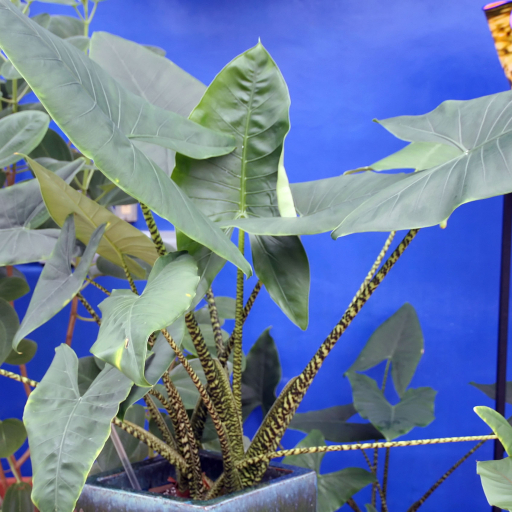
Known as the "Zebra Alocasia" or "Tiger Alocasia," this botanical showstopper is often considered the high-fashion model of the houseplant world. Originating from the humid rainforests of the Philippines, it has traded the typical broad, colorful leaves of its cousins for a pair of the most stylish legs in the plant kingdom. It is a prized centerpiece for collectors who love architectural silhouettes and striking patterns.
🔍 How to Identify
- 🦓 Striking Petioles: The most iconic feature is its long, sturdy stems (petioles) adorned with distinct animal-print patterns of dark green, black, and cream.
- 🏹 Arrowhead Leaves: The foliage is shaped like a sharp arrowhead or a shield, boasting a deep, glossy emerald green color with a smooth, waxy texture.
- 📏 Upright Habit: Unlike some bushy tropicals, the Zebrina grows with a very deliberate, upright structure, making it look like a living sculpture.
🏡 In Your Garden (or Living Room)
- 💧 The "Goldilocks" Hydration: This plant is sensitive to "wet feet." Because its thick stems store quite a bit of water, it prefers its soil to dry out halfway down the pot before being watered again to avoid root rot.
- ☁️ Humidity Hunter: Coming from Philippine jungles, it craves high humidity. If the air is too dry, you’ll notice the leaf tips turning brown and crispy; a nearby humidifier or a pebble tray is often a necessity.
- 💤 Dormancy Deeds: Don't panic if it drops a few leaves in winter. Alocasia zebrina can go into a semi-dormant state during colder months, requiring much less water and a bit of patience until the spring growth spurt.
⚠️ Safety & Toxicity
- 🚫 Toxic to All: Like most members of the Araceae family, the Zebrina contains insoluble calcium oxalate crystals.
- 🐱 Pets & Kids: If ingested, it causes immediate mouth irritation, swelling of the throat, and digestive upset. Keep it on a high shelf or plant stand away from curious nibblers.
- 🧤 Skin Sensitivity: The sap can be a mild skin irritant for some people; it is best to wear gloves when pruning or repotting.
✨ Fun Fact
In its native habitat, Alocasia zebrina is actually considered an endangered species due to over-collection and habitat loss. While it is widely available in nurseries today thanks to tissue culture, owning one is a reminder of the incredible biodiversity found in the Philippine rainforests!

Detailed Care Instructions
Under the right conditions, it is considered a fast-grower and can grow a new leaf every 1 to 2 weeks during the active growing period.
Why is my Alocasia zebrina not growing?
If your plant is not showing signs of growth, it is likely due to a lack of light or moisture, or improper fertilization. Remember that this Alocasia requires bright, indirect light; regular watering; and monthly fertilization during the spring and summer.
Can I propagate Alocasia zebrina by leaf cuttings?
Unlike other tropical aroids such as pothos and some philodendrons, Alocasias cannot be propagated by leaf cuttings. If you wish to propagate your Alocasia zebrina, you must do so by division or by harvesting and growing its corms.
| Color | White |
| Soil Ph | 5.5-6.5 |
| Humidity | High |
| Lighting | Full Sun |
| Toxicity | Poisonous |
| Soil Type | Mix Of Compost, Peat, And Perlite |
| Bloom Time | November To February |
| Difficulty | Hard |
| Plant Type | Bulb |
| Hibernation | Cold Period |
| Mature Size | Up To 3 Feet Plus |
| Native Area | Southeast Asia |
| Temperature | 18°C - 25°C |
| Sun Exposure | Prefers Bright, Indirect Light But Can Handle Full Shade |
| Hardiness Zones | 9 - 12 |
To grow your Alocasia Zebrina plant successfully, you can follow these steps:
- Choose the right pot and soil: Use a pot with good drainage holes and choose a well-draining potting mix or soil. You can use a mix of equal parts of potting soil, perlite, and peat moss.
- Find the right location: Alocasia Zebrina plants prefer bright, indirect light. Avoid direct sunlight as it can scorch the leaves. Find a location with bright, filtered light, such as near a north-facing window or under a sheer curtain.
- Maintain the ideal temperature and humidity: Alocasia Zebrina plants thrive in warm temperatures between 60-85°F (15-29°C). Maintain humidity levels between 60-70%, as these plants prefer a humid environment. You can use a humidifier or place a tray filled with water near the plant to increase humidity.
- Water appropriately: Water your Alocasia Zebrina when the top inch of soil becomes dry. Make sure not to overwater as it can lead to root rot. Water thoroughly and allow the water to drain out completely from the drainage holes.
- Fertilize regularly: Feed your Alocasia Zebrina plant with a balanced houseplant fertilizer once a month during the growing season (spring and summer). Follow the instructions on the fertilizer packaging for the correct dosage.
- Prune and remove yellowed or damaged leaves: As your plant grows, you can prune any yellowed or damaged leaves to maintain its appearance. Use clean pruning shears to remove the leaves close to the base.
- Repot when necessary: Alocasia Zebrina plants prefer slightly cramped conditions, so they don't require frequent repotting. However, if the plant outgrows its pot or the roots start to become crowded, you can repot it into a larger container using fresh potting mix.
- Monitor for pests: Keep an eye out for common houseplant pests such as aphids, mealybugs, and spider mites. If you notice any infestation, treat it with organic or chemical insecticides according to the instructions.
With proper care and attention, your Alocasia Zebrina plant will grow healthy and vibrant. Remember to adjust watering and care according to the specific needs of your plant as environmental conditions can vary.

Place in a window with dappled sun or a spot in the middle of a room. Or directly in a window facing west or east.

To water this plant, it is important to first let the soil dry out moderately between watering sessions. When watering, make sure to thoroughly saturate the soil until water runs out of the drainage holes at the bottom of the pot. Avoid letting the plant sit in standing water, as this can cause root rot. It is also important to maintain high humidity around the plant by misting its leaves or placing a humidifier nearby. When watering, use room temperature water or water that has been left out for a few hours to allow any chlorine or fluoride to evaporate.
- Use a balanced fertilizer with equal amounts of nitrogen, phosphorous, and potassium.
- Dilute the fertilizer to half strength before application.
- Apply the fertilizer to the soil around the base of the plant, making sure not to get any on the leaves.
- Water the plant thoroughly after fertilizing.
- Fertilize every 4-6 weeks during the growing season (spring and summer) and stop fertilizing in the fall and winter when the plant is dormant.
In order to cultivate Alocasia Zebrina plant, it is recommended to use well-draining soil that is rich in nutrients, such as loamy soil or sandy soil amended with organic matter. The pH level of the soil should be acidic to neutral, ideally between 5.5 to 7.0. The plant prefers moist soil but it should not be too wet or waterlogged. To improve drainage, perlite or coarse sand can be added to the soil mix. It is also important to ensure adequate drainage holes at the bottom of the pot or container to prevent water from accumulating. Fertilizer can be applied every two to four weeks during the growing season to support healthy growth and foliage.
Propagation of this plant can be achieved by dividing the underground rhizomes or by collecting and planting its seeds.
To propagate through rhizome division, first, gently remove the parent plant from the soil and use clean, sharp pruning shears to cut the rhizome. Each division should have at least one healthy stem and several smaller roots. These can then be potted in individual containers with well-draining soil and watered thoroughly.
To collect and plant seeds, allow the plant to bloom and produce fruit. Once the fruit has matured and turned brown, collect the seeds and gently remove the tough outer layer. Plant the seeds in a container filled with moist, well-draining soil, and wait for them to germinate.
Propagation can be done at any time of the year, although it is best to do it during the plant's growing season, which is usually in the spring and summer months.
Common pests of the zebra alocasia include Mealybugs, spider mites, fungus gnats, aphids, thrips. Make a habit of checking your zebra alocasia frequently for pests so that any infestations can be caught and managed early.








