Plant Overview
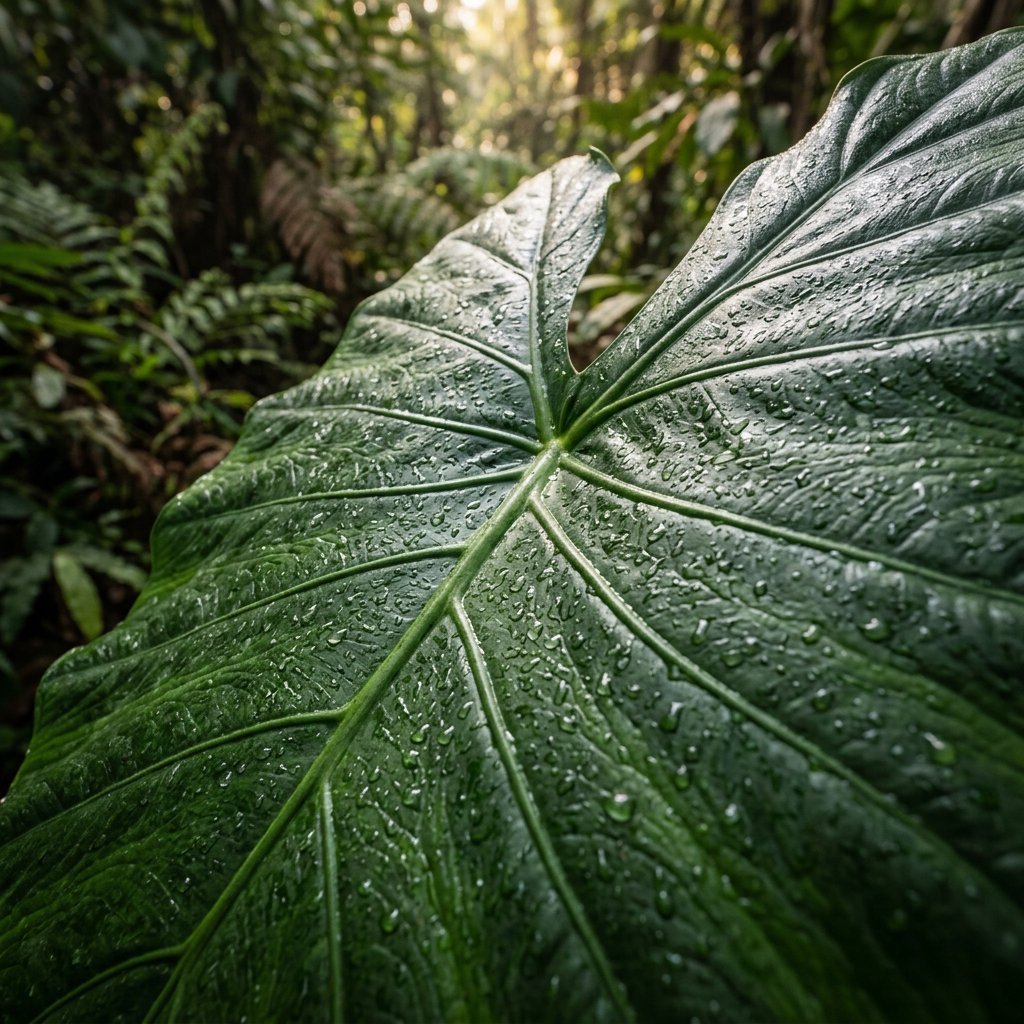
Known as "Elephant Ears" or "African Mask Plants," Alocasias are the crown jewels of the tropical plant world. These architectural wonders hail from the humid rainforests of Southeast Asia and Australia, where their massive leaves have long been a symbol of exotic beauty. While they are often considered "divas" by indoor gardeners, their dramatic, sculptural foliage makes them an unbeatable statement piece for any collection.
🔍 How to Identify
- 🐘 Leaf Shape: Look for large, dramatic leaves shaped like hearts, shields, or arrows, often with wavy or scalloped edges.
- 🧬 The Vein Map: Most varieties feature thick, prominent veins that contrast sharply with the leaf color—appearing like a white or silver skeletal pattern against deep green.
- 📏 The Petioles: The leaves sit atop long, fleshy stems that emerge from a central bulbous rhizome, giving the plant a tall, upright, and airy silhouette.
🏡 In Your Garden
- 🌥️ Filtered Sunlight: Because they live on the rainforest floor, they crave bright, indirect light; direct sun will scorch their "masks," while too much shade can make them spindly and sad.
- 💧 Humidity is Key: These plants "breathe" through their leaves. They thrive in high humidity, so a bathroom or a spot near a humidifier is their version of a spa day.
- 🪴 The Dormancy Cycle: Don't be alarmed if your Alocasia drops its leaves in the winter! These plants often go into a "nap" during colder months, storing energy in their bulbs until the warmth of spring returns.
⚠️ Safety & Toxicity
- 🚫 Highly Toxic: Every part of the Alocasia contains needle-like calcium oxalate crystals that can cause intense pain if ingested.
- 🐾 Pets and Children: Keep this plant on high shelves or in inaccessible areas. If chewed, it causes immediate swelling of the mouth, throat, and tongue, making it dangerous for curious cats, dogs, and toddlers.
✨ Fun Fact
In the wild, some Alocasia species can grow leaves large enough to be used as emergency umbrellas during tropical rainstorms—though we wouldn't recommend testing that with your indoor potted version!

Detailed Care Instructions
These large plants are relatively fast growers and can reach their full height in a few years. If you have purchased a very small plant or have started it from seed, it will take many years before the plant reaches its full height of 6 feet.
Should you mist Alocasia Regal Shield?
Alocasia Regal Shield requires high humidity levels to thrive. Misting is a fun and easy way to give this plant the humidity it needs. If misting does not prove to be enough, try placing a humidifier near the plant.
Can Alocasia Regal Shield be grown indoors?
These popular tropical plants can be grown both outdoors and indoors and can be a houseplant star with their oversized leaves. Because they can reach up to 6 feet tall, it is important to give them plenty of space when keeping them indoors.
To grow an Alocasia plant, you can follow these steps:
- Choose a suitable location: Alocasia plants prefer bright, indirect light. Place them in a spot that receives filtered sunlight or is shaded from direct sunlight.
- Select the right soil: Alocasia plants require well-draining soil that retains some moisture. Use a mixture of potting soil, peat moss, and perlite or sand to create a loose and well-aerated soil mixture.
- Choose a container: Select a container with drainage holes to prevent waterlogging. Alocasia plants prefer to be slightly root-bound, so choose a pot that is slightly smaller than the plant's current size.
- Planting process: Carefully remove the plant from its current pot and gently loosen the roots. Place it in the new pot and add soil around the roots, ensuring that the plant sits at the same level it was previously planted.
- Watering: Alocasia plants like to be kept consistently moist, but not overly wet. Water the plant when the top inch of soil feels dry. It is essential not to let the plant sit in standing water as it can cause root rot.
- Humidity and temperature: These plants thrive in high humidity environments. To increase humidity levels, place the plant on a tray filled with water and mist the leaves regularly. Alocasias prefer temperatures between 60-85°F (15-29°C).
- Fertilizer: Apply a balanced houseplant fertilizer at half the recommended strength every two weeks during the growing season (spring and summer). Reduce frequency to once a month during the dormant period (fall and winter).
- Pruning: Prune any yellow or wilted leaves regularly to maintain a healthy appearance and improve airflow around the plant.
- Repotting: Alocasia plants generally require repotting every 2-3 years. Choose a larger pot each time, following the same planting process as described above.
Also, ensure to research the specific care requirements of the particular Alocasia variety you have, as they may have slight variations in care needs.

Place in a dark room with little light, like a dark bedroom or a spot far away from a window or directly in a north-facing window.

To water this plant, it is important to keep the soil moist but not waterlogged. This plant prefers to be watered deeply when the top layer of soil feels dry to the touch. When watering, it is important to pour water slowly around the base of the plant, ensuring that water reaches all areas of the soil. It is best to avoid getting the leaves wet as this can lead to fungal growth. During the growing season, it is important to water this plant more frequently as it will be actively growing and using up more water. In the winter months, it is important to reduce watering and allow the soil to dry out slightly before watering again. It is also important to avoid using water that is too cold or too hot as this can shock the plant.
To fertilize an Alocasia plant, use a balanced, water-soluble fertilizer with a ratio of 20:20:20. Dilute the fertilizer to half-strength and apply every two to three weeks during the growing season (spring to fall). During the dormant season (winter), reduce fertilization to once a month. Avoid over-fertilizing, as it can cause burning of the plant's leaves. Always water the plant thoroughly before and after fertilization.
Alocasia plants thrive in well-draining, moist soil that is rich in nutrients. The ideal soil for an Alocasia plant contains a mixture of peat moss, perlite, and humus. The peat moss provides the necessary moisture retention, while the perlite ensures good drainage and aeration. The humus adds organic matter and nutrients to the soil.
It is important to avoid soil that is too compact or waterlogged, as this can lead to root rot and other issues. Additionally, Alocasia plants prefer slightly acidic soil, with a pH of around 6-6.5.
In terms of fertilization, Alocasia plants benefit from regular feedings with a balanced fertilizer during the growing season. A slow-release fertilizer can also be added to the soil in the spring to provide ongoing nutrition.
Overall, the key to a healthy and thriving Alocasia plant is to provide it with well-draining, nutrient-rich soil that is kept consistently moist but not waterlogged.
To propagate this plant, you will need to divide the rhizomes in the spring. First, gently remove the plant from its pot and shake off any excess soil. Using a clean and sharp knife, carefully cut the rhizome into several sections, making sure there is at least one healthy root and one shoot on each section. Plant each section in a moist and well-draining potting mix, providing plenty of indirect light and maintaining consistent moisture until new growth emerges. You can also propagate through stem cuttings, but this method is less reliable and may require the addition of a rooting hormone.







