Plant Overview
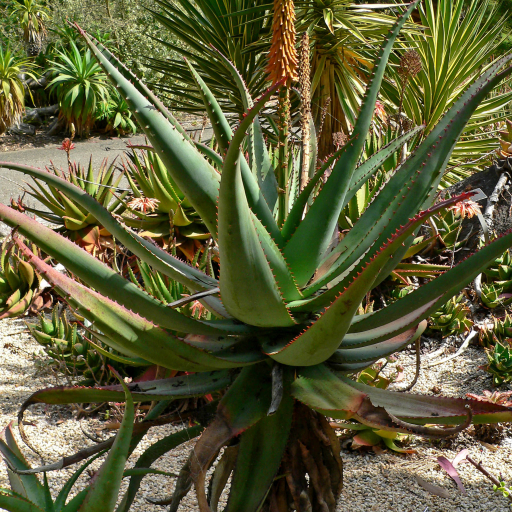
Known as the Uitenhage Aloe, this striking succulent is a architectural masterpiece from the Eastern Cape of South Africa. Unlike many sprawling aloes, Aloe africana grows with a dignified, tree-like posture, often holding a "skirt" of dried old leaves around its trunk. It is a favorite for those looking to add vertical interest and a touch of wild African landscape to their collection.
🔍 How to Identify
- 🍃 Recurved Leaves: The grey-green leaves have a distinct downward curve towards the tips, giving the rosette a graceful, fountain-like appearance.
- 🦷 Reddish Teeth: The margins (edges) of the leaves are armed with small, sharp, reddish-brown teeth that provide a sharp contrast against the pale skin of the leaf.
- 🎺 Curved Flowers: Its tall flower spikes feature unique, tubular blooms that are distinctly curved. They typically start as orange buds and fade to a greenish-yellow as they open.
🏡 In Your Garden
- 🧱 Structural Longevity: Because this aloe eventually forms a sturdy single trunk, it is best placed as a focal point where it won't need to be moved. It develops a deep root system that dislikes being disturbed once the plant reaches maturity.
- 🐦 Winter Color: While most of the garden sleeps, this aloe bursts into bloom during the winter months. Its nectar-rich flowers act as a vital "fast food station" for pollinators and nectar-feeding birds.
- 🏜️ Drainage is King: In its natural habitat, it thrives on rocky slopes. In a home setting, it requires gritty, fast-draining soil; sitting in cold, damp earth is the quickest way to cause root distress.
⚠️ Safety & Toxicity
- 🐾 Mildly Toxic: Like many members of the Aloe family, the sap contains saponins and anthraquinones which are toxic if ingested.
- 👶 Irritant: Keep out of reach of curious pets and small children. Ingestion can lead to digestive upset, lethargy, or tremors. The sharp teeth on the leaf edges can also cause physical scratches to the skin.
✨ Fun Fact
The specific curve of the Aloe africana flower is no accident—it has evolved perfectly to match the beak shape of the Greater Double-collared Sunbird, ensuring that as the bird sips nectar, it is perfectly positioned to pollinate the plant!

Detailed Care Instructions

Place in a bright room that is sun drenched almost all day. Or directly in a south-facing window.

To water this plant, ensure that the soil is slightly dry before watering. Use a watering can or hose to water the plant directly at the base, avoiding the leaves. Allow the excess water to drain off completely and do not let the plant sit in standing water. Water once every two weeks, adjusting the frequency depending on the humidity and temperature of the plant's environment. It is important to not overwater the plant as it can lead to root rot.
A suitable soil mixture for this particular plant should be well-draining to avoid waterlogging and root rot. It should be composed of a mix of organic matter, such as peat moss or compost, and inorganic matter, such as sand or perlite, to ensure proper drainage. The soil pH should range between 6.0 and 7.5 to maintain optimal nutrient uptake and avoid mineral deficiencies. It is also recommended to add some slow-release fertilizer to the soil mixture to promote healthy growth and development.








